
The modern history of Japanese koi breeding: from rice farmers to international show winners
Modern Japanese koi breeding is one of the most remarkable stories in the history of animal breeding. In roughly 200 years, a small group of rice farmers in one mountainous region of Japan turned an ordinary food fish — the common carp, raised in rice paddies for protein — into a refined ornamental fish that today sells for tens of thousands of dollars and is judged at international shows with the same seriousness as thoroughbred horses. The story is a story of patience, of geographic isolation, of family tradition, of selective pressure that lasted for many human generations, and of a small number of key breeders whose names are still known in the koi community today. In this article I will walk through the early history, the development of the Gosanke, the key breeders, the internationalization, the genetic principles that made the modern koi possible, and the implications for the hobbyist who keeps koi today.
The early history: from Magoi to colored carp
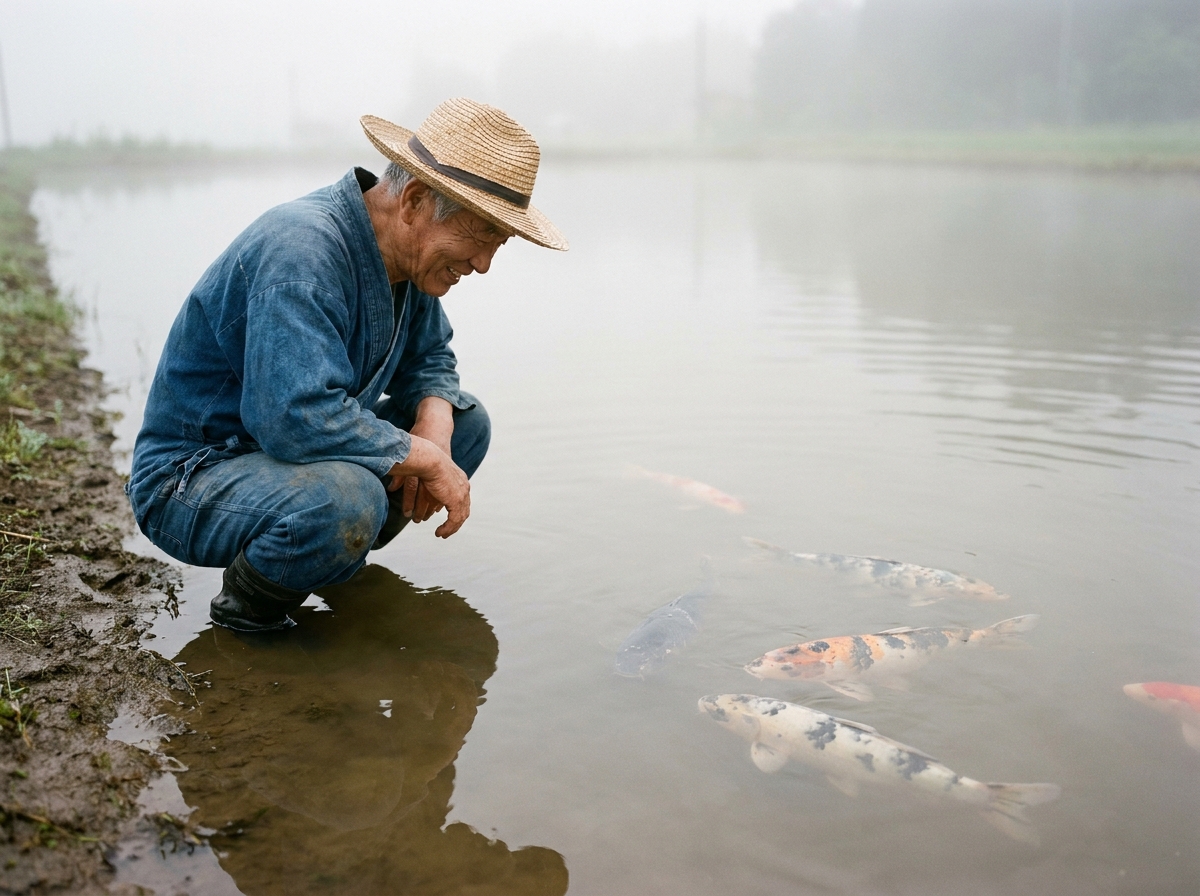
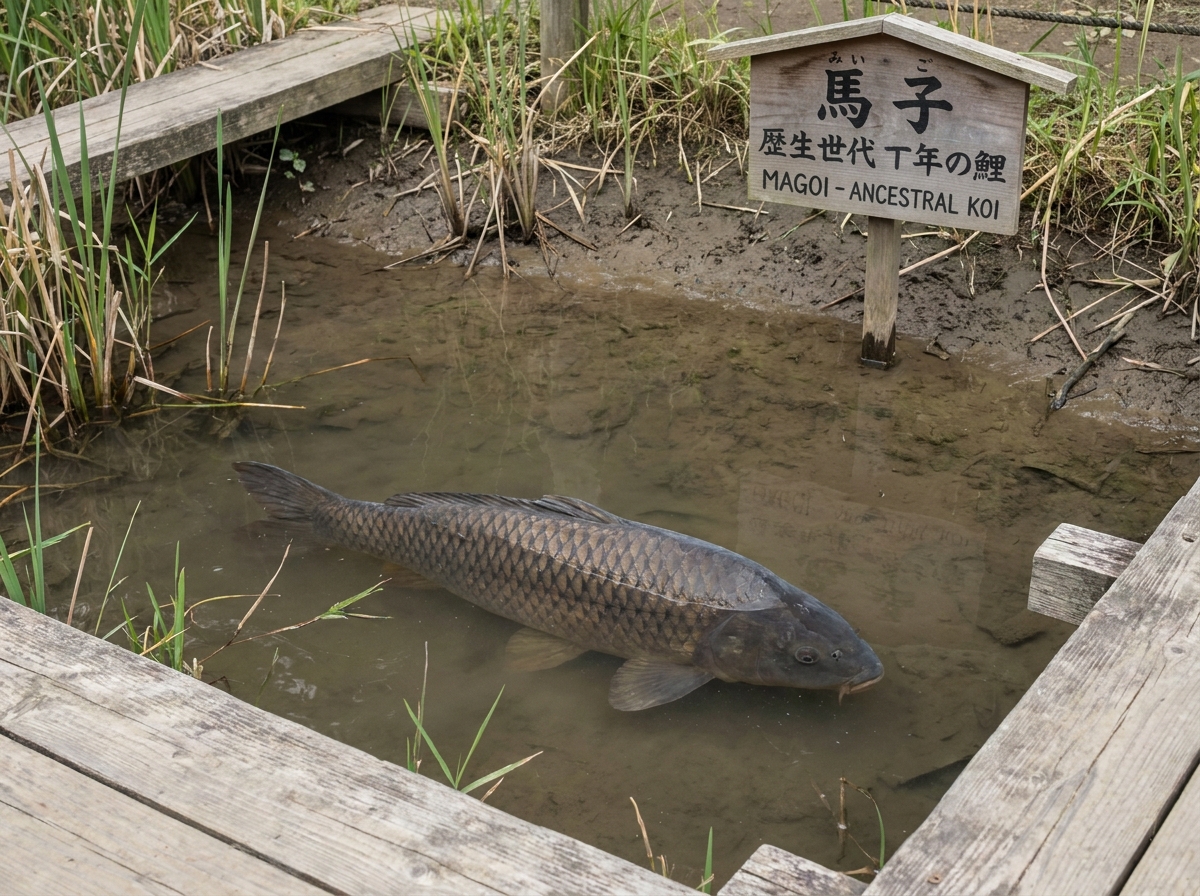
The common carp (Cyprinus carpio) is native to Asia and was introduced to Japan from China approximately 2,000 years ago. The carp was raised as a protein source in the rice paddies of Japan, particularly in the mountainous regions where the rice paddies could also be used as fish ponds. The Japanese rice-fish culture, which is still practiced in some regions today, was the foundation of the koi breeding.
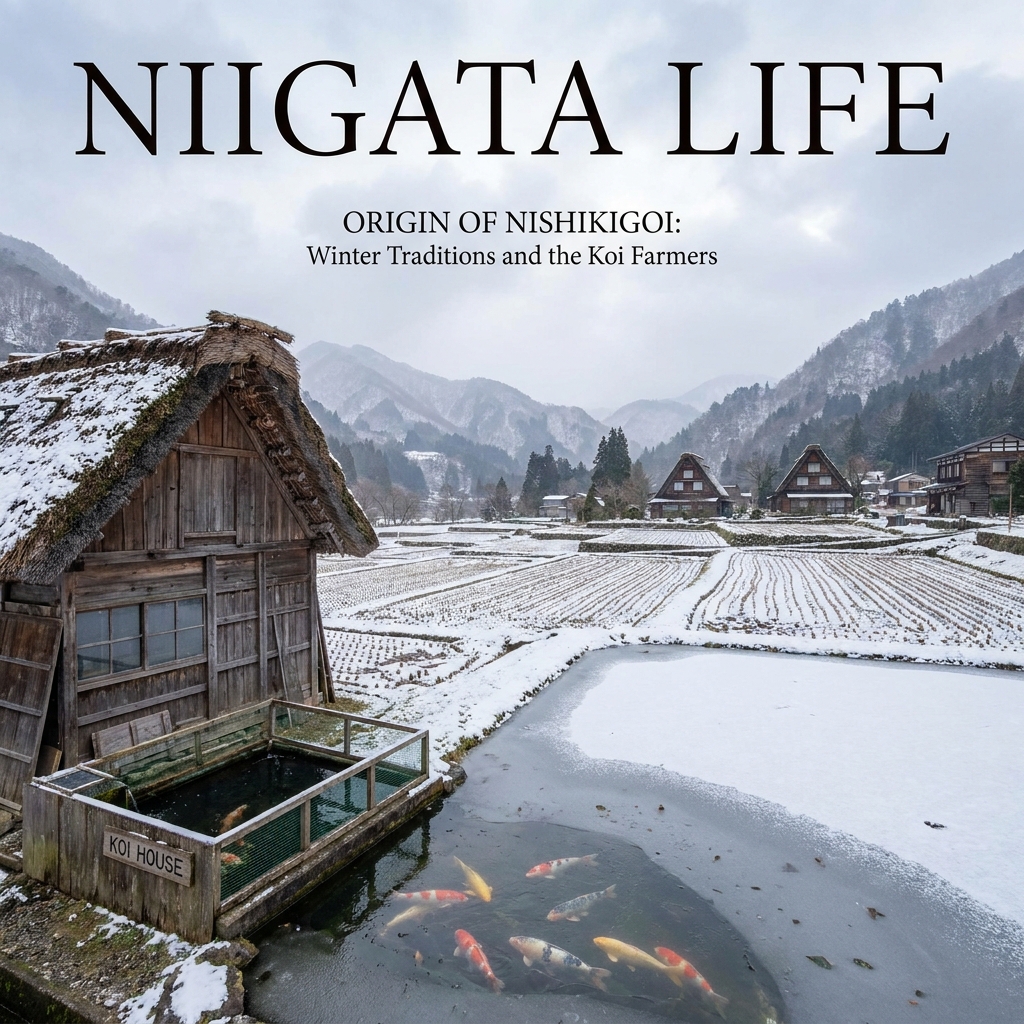
The first colored mutations appeared spontaneously in the common carp population. The first documented colored carp in Japan dates to the early 1800s, in the Nigata Prefecture (specifically in the area around the town of Ojiya and the village of Yamakoshi). The farmers noticed the colored fish in their rice paddies, and the farmers began to keep the colored fish in separate ponds. The colored fish were no longer food fish; the colored fish were ornamental fish. The shift from food to ornamental is the first chapter of the koi history.
The early colored fish were mostly red, white, and yellow. The first red and white carp (the precursor to the modern Kohaku) was bred in the 1820s-1830s, and the first yellow and red carp (the precursor to the modern Sanke and Showa) was bred in the 1830s-1840s. The early breeding was not systematic; the early breeding was the farmer keeping the fish that looked interesting and breeding the interesting fish to the interesting fish. The mutations accumulated over the decades, and the modern koi varieties emerged from this accumulation.
The Niigata region: the geographic foundation
The Niigata region, particularly the area around Ojiya, Yamakoshi, and Nagaoka, became the center of the koi breeding for several reasons. The region has heavy snowfall in the winter (which means the koi ponds are covered with snow for several months, and the koi are kept in a relatively dormant state). The region has cold winters and hot summers (which produces the seasonal temperature variation that is part of the koi's natural cycle). The region has the mountainous terrain (which limits the agricultural options and pushes the farmers to find a more profitable use of the rice paddies). The region has the entrepreneurial culture (the Niigata farmers were known for their willingness to experiment and to invest in new ventures).
The Niigata region produced the key breeders of the 19th and 20th centuries, and the Niigata region is still the center of the high-quality koi production today. The famous koi breeders of Niigata: the Mano family, the Hoshino family, the Isa family, the Dainichi family, the Sakai family, the Marudo family, the Omosako family, the Matsue family, the Kawakami family. Each family has been breeding koi for multiple generations, and each family has developed its own bloodline and its own specializations.
The families compete with each other at the Niigata shows, and the families cooperate with each other through the All Japan Nishikigoi Promotion Association (the ZNA, founded in 1960) and the Zen Nippon Airinkai (the ZNA-affiliated show organization). The cooperative structure of the Niigata breeders is what has allowed the koi breeding to develop consistently over the decades, and the cooperative structure is what has maintained the quality standards of the koi varieties.
The development of the Gosanke
The Gosanke — the Kohaku, the Sanke, and the Showa — are the three varieties that have been the focus of the Niigata breeding for over a century. Each variety has its own history of development.
The Kohaku. The Kohaku (white with red) is the oldest and most fundamental of the Gosanke. The Kohaku was developed in the 1820s-1830s, and the Kohaku has been the standard against which the other varieties are measured. The famous Kohaku breeders of Niigata: the Mano family (the most famous of all, with the "Kohaku" bloodline that has been developed over multiple generations), the Dainichi family, the Sakai family, the Marudo family. The Kohaku judging is the most refined of the Gosanke judging, and the Kohaku breeder who produces a show-winning Kohaku is the most respected of the koi breeders.
The Taisho Sanke. The Sanke (white with red and small black) was developed in the 1910s-1920s, during the Taisho era in Japan. The Sanke was developed from the Kohaku line by introducing the small black markings, and the Sanke has been bred for the balance between the white, the red, and the black. The famous Sanke breeders: the Torazo family, the Dainichi family, the Momotaro family. The Sanke judging is the second most refined of the Gosanke judging, and the Sanke breeder who produces a show-winning Sanke is the second most respected.
The Showa. The Showa (black with red and white) was developed in the 1920s-1930s, during the Showa era in Japan. The Showa was developed from the Sanke line by emphasizing the black, and the Showa has been bred for the dramatic contrast between the black, the red, and the white. The famous Showa breeders: the Omosako family (the most famous of all, with the "Kindai Showa" bloodline that has been developed over multiple generations), the Dainichi family. The Showa judging is the most dramatic of the Gosanke judging, and the Showa breeder who produces a show-winning Showa is the most respected of the dramatic-variety breeders.
The key breeders: the family dynasties
The key breeders of the modern koi are the families that have maintained the breeding programs over multiple generations. The key families and their contributions:
The Mano family. The most famous Kohaku breeders in the world. The Mano family has been breeding koi for 8 generations, and the Mano Kohaku is the standard against which the other Kohaku breeders are measured. The famous Mano koi: the "Mano S" bloodline, the "Mano M" bloodline, the "Mano Y" bloodline. The Mano family has produced multiple All Japan Grand Champions.
The Dainichi family. The most versatile breeder in the koi world. The Dainichi family has produced show winners in all three Gosanke varieties, and the Dainichi koi is known for the high quality across the variety spectrum. The famous Dainichi koi: the "Dainichi Kohaku," the "Dainichi Sanke," the "Dainichi Showa." The Dainichi family has produced multiple All Japan Grand Champions.
The Sakai family. The famous Kohaku and Sanke breeders. The Sakai family is known for the high-quality white and the high-quality red, and the Sakai koi is the standard for the clean white and the deep red. The famous Sakai koi: the "Sakai Kohaku," the "Sakai Sanke."
The Omosako family. The famous Showa breeders. The Omosako family has developed the "Kindai Showa" bloodline, which is the most popular Showa bloodline in the world. The famous Omosako koi: the "Kindai Showa." The Omosako family has produced multiple All Japan Grand Champions.
The Momotaro family. The famous Sanke and Showa breeders. The Momotaro family is the largest koi farm in the world, with the largest breeding stock and the largest production. The Momotaro koi is known for the consistent quality across the production.
The Sakai, Isa, Mano, Hoshino, Marudo, Dainichi, Omosako, Momotaro, and other families have been the foundation of the modern koi breeding, and the families continue to be the foundation today. The koi hobbyist who is interested in the breeding history will find the family stories to be the most interesting and the most important part of the koi history.
The internationalization: from Japan to the world
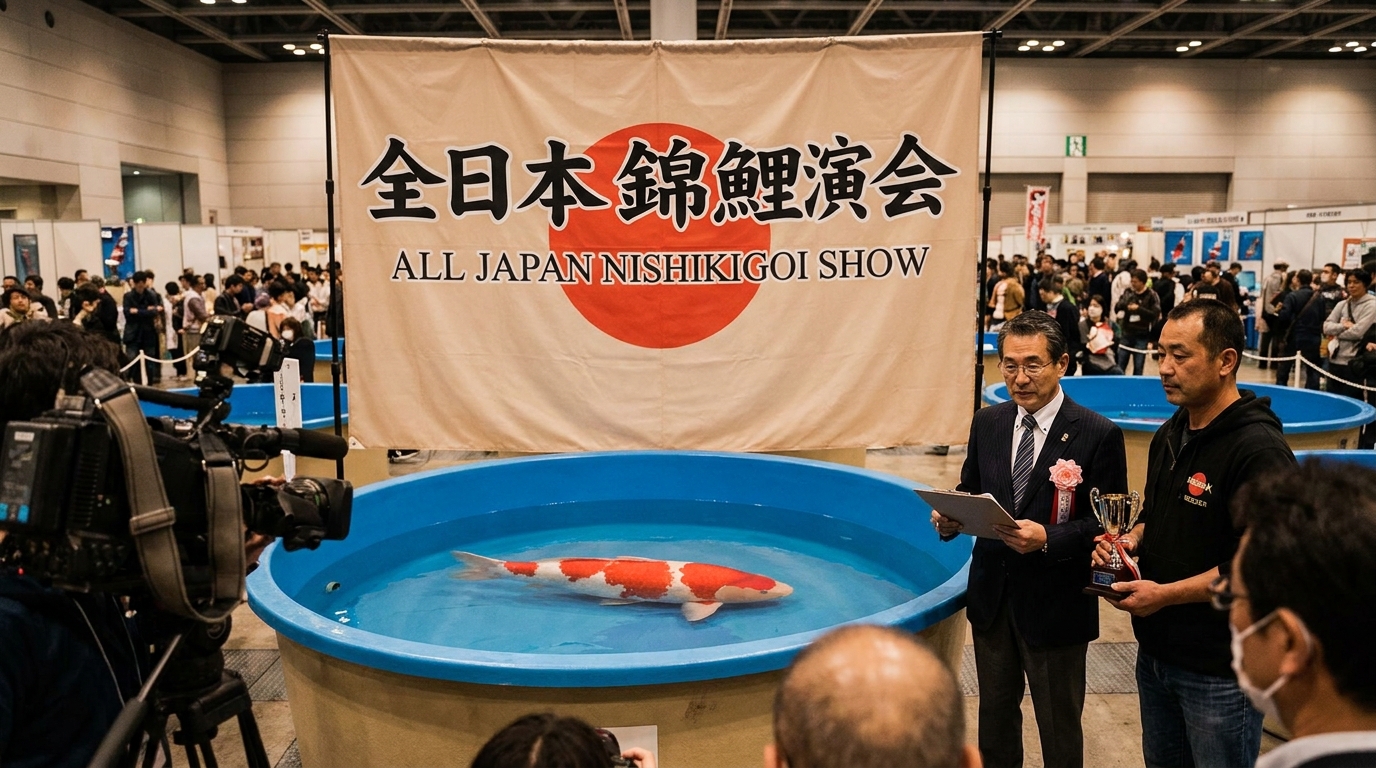
The koi hobby was a Japanese hobby for most of its history, and the koi breeding was concentrated in the Niigata region. The internationalization of the koi hobby began in the 1960s-1970s, when the American and the European hobbyists began to import the Japanese koi and to develop the koi shows outside Japan. The first major international koi show (the All Japan Show in Tokyo, which is the most prestigious) was held in 1960, and the first major Western koi show (the BKKS National in the UK, the ZNA North American Koi Show) was held in the 1980s.
The internationalization has had two effects on the koi breeding. The first effect: the koi market has expanded dramatically, with the demand for the high-quality koi from the international hobbyists driving up the prices and encouraging the breeders to produce more high-quality koi. The second effect: the international hobbyists have developed their own breeding programs, with the koi bred in the US, Europe, and Asia competing at the international shows. The international koi scene is now a global community, with the Niigata breeders at the top of the quality hierarchy but with the international breeders closing the gap.
The genetic principles
The koi breeding has been successful because of the application of the selective breeding principles over many generations. The principles:
The line breeding: the breeder who wants to concentrate the genes of a specific superior ancestor breeds the descendants back to the ancestor, and the concentration of the genes produces the consistent offspring. The line breeding in the koi world is what has produced the famous bloodlines (the Mano Kohaku, the Kindai Showa, the Sakai Sanke).
The outcrossing: the breeder who wants to introduce new genetic material to the line breeds the line to an unrelated individual, and the outcrossing introduces the new genes that the line may need. The outcrossing in the koi world is what has produced the new bloodlines and the new variations on the established varieties.
The culling: the breeder who wants to maintain the quality of the line culls the offspring that do not meet the standard, and the culling produces the consistent quality. The culling in the koi world is what has produced the high quality of the famous bloodlines (the 90-95% cull rate is the standard for the show-quality koi).
The selection: the breeder who wants to improve the line selects the best offspring for the breeding, and the selection produces the improvement over the generations. The selection in the koi world is what has produced the modern koi from the original Magoi (the dark common carp).
The implications for the hobbyist
The modern koi hobbyist has access to the koi that is the product of 200 years of the selective breeding. The koi that is sold at the pet store is the koi that is the product of the breeding that is the modern koi industry, and the koi that is sold at the koi show is the koi that is the product of the breeding that is the top of the koi industry. The hobbyist who is interested in the koi breeding has access to the breeding stock from the famous bloodlines, and the hobbyist who is interested in the koi showing has access to the shows at the local, regional, and international level.
The hobbyist who is interested in the high-quality koi should expect to pay more for the koi from the famous bloodlines, and the hobbyist who is interested in the show-quality koi should expect to pay even more. The koi that is the show-quality koi is the koi that is the product of the years of the breeding, and the koi that is the show-quality koi is the koi that is the most expensive. The hobbyist who is interested in the koi as a hobby should start with the lower-priced koi and the lower-stakes shows, and the hobbyist who is interested in the koi as a serious pursuit should work with the breeder to develop the breeding program that produces the show-quality koi.
The honest summary
The modern koi breeding is a 200-year story of one region, one rice fish, and a few families. The Niigata region produced the key breeders of the Gosanke, the internationalization spread the koi to the world, and the genetic principles of the line breeding, the outcrossing, the culling, and the selection produced the modern koi from the original Magoi. The hobbyist today has access to the koi that is the product of this 200-year story, and the hobbyist who understands the history is the hobbyist who appreciates the koi. The history is the work. The history is what makes the koi what it is.