

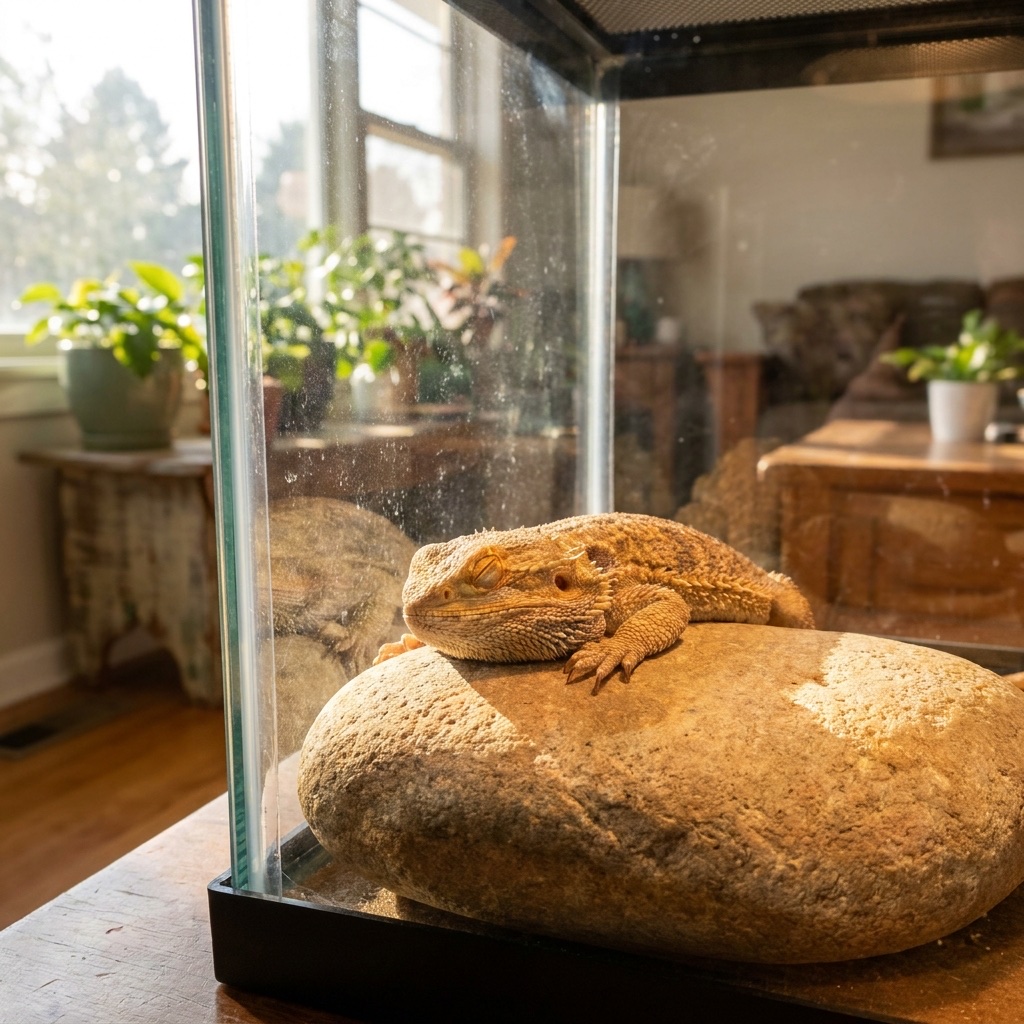
Reptile anorexia: 12 causes and what to do when your snake or lizard stops eating
A reptile that misses one feed is a reptile being a reptile. A reptile that has refused food for two, three, or six weeks is showing you a problem, and the cause is almost always one of twelve things. Most are husbandry. A handful are medical. One or two are seasonal and not a problem at all if you know what to look for. The job of a careful keeper is to walk down the list in order before reaching for the syringe.
The 12 causes, ranked by frequency
These are not in strict numerical order — "1" is not necessarily the most common — but they are in the order I check them on a triage call, because the cheap and reversible ones come first.
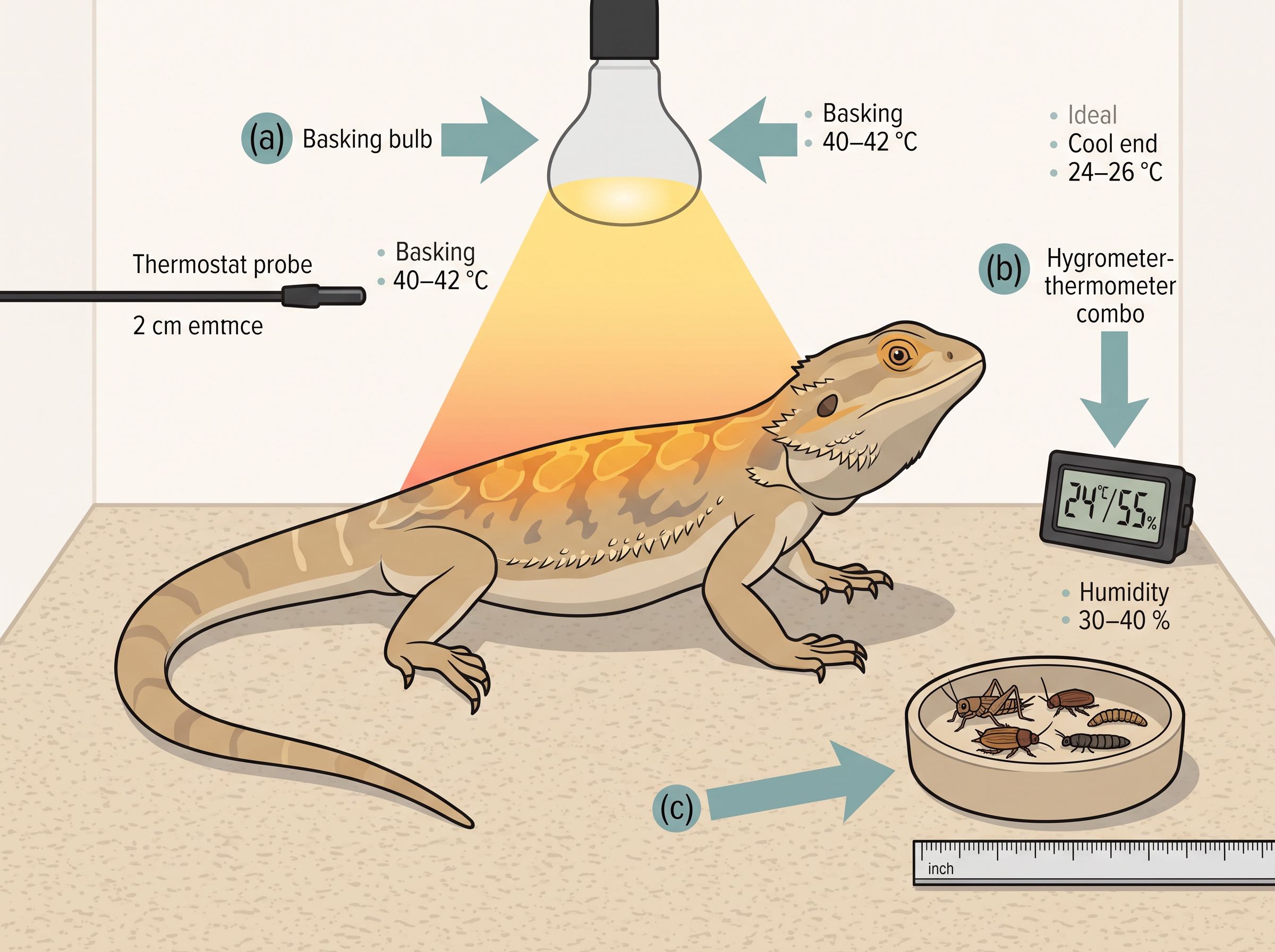
1. Enclosure temperature too low. This is the single most common cause across species. Reptile digestion is temperature-dependent. A leopard gecko at 22 °C cannot move a meal through its gut; a ball python at 24 °C will often refuse a rat because its body has not signalled "feeding conditions met." Check the basking surface with an infrared probe thermometer (the Zoo Med ReptiTemp or a generic KT-type infrared gun) and verify the cool end. For bearded dragons: basking 40–42 °C, cool end 24–26 °C. For leopard geckos: warm end 28–32 °C, cool end 22–24 °C. For ball pythons: ambient 27–29 °C, basking spot 32 °C, cool end 24–25 °C. If any of these are off by 3 °C or more, fix the gradient before doing anything else.
2. Temperature too high. Less common, but over-zealous keepers running a 150 W halogen bulb on a thermostat with a faulty probe routinely cook their basking zone to 50 °C. The animal retreats and refuses food. The fix is a dimming thermostat (Habistat or Inkbird ITC-306) and a probe-mounted directly under the basking spot.
3. Humidity wrong for the species. Ball pythons at 30 % ambient humidity will refuse food and enter a defensive, non-feeding posture. They need 55–65 % ambient with 70–80 % during shed. Crested geckos below 50 % stop eating. Leopard geckos below 30 % do too, often in the same season the central heating is turned on.
4. New environment, new animal. A reptile moved into a new enclosure will often refuse food for 7–14 days. This is normal settling behaviour, not a pathology. Do not handle, do not offer food every day. Settle the animal for 5–7 days, then offer a meal in the late evening, in low light, with no eye contact.
5. Stress from cohabitation, handling, or visual contact. Two male leopard geckos in a 90 cm enclosure will both stop feeding within a month. A bearded dragon that can see its reflection in glass for 12 hours a day will black-beard and refuse. A ball python being handled every other day in the first month will refuse. The fix is enclosure re-design, not food. House most reptiles separately and add visual barriers.
6. Brumation (normal seasonal fasting). From November to February, healthy adult bearded dragons, Russian and Hermann's tortoises, and many adult ball pythons will fast for 4–12 weeks. The animal is alert, hydrated, has good body weight, and the cool end of the enclosure is dropping below 18 °C at night naturally. This is not anorexia. It is brumation. Confirm with a vet visit and a faecal screen before assuming — parasitic load and brumation look identical until they do not — but do not panic-feed.
7. Breeding behaviour, especially in males. Male bearded dragons will head-bob, black-beard, and refuse food for the entire breeding season (March–September). Male ball pythons go off feed while searching for a mate. The animal looks alert, eyes clear, body weight stable. Do not force-feed. Reduce handling. Wait it out.
8. Incorrect prey size or type. A ball python offered a weaner rat at 12 months old (when it should be on small adult mice or small weaner rats, depending on weight) will refuse. A bearded dragon offered a superworm 4 days in a row will refuse. A leopard gecko offered a mealworm that is too large will drop and ignore it. Match the prey: ball python, prey item 10–15 % of body weight; bearded dragon, insects no wider than the space between the eyes; leopard gecko, insect 80 % of head width maximum.
9. Impaction or constipation. A leopard gecko on loose sand, a bearded dragon on a calcium-sand substrate, a ball python on aspen shavings with humidity too low — any of these can produce an intestinal blockage. Signs: no faeces for 3+ weeks, hard belly, lethargy, food refusal. A warm 28–30 °C soak for 10 minutes, twice daily, plus a drop of olive oil on the snout, can resolve mild impactions. Severe cases (animal is gaping, dragging hind limbs) are an emergency vet visit, not a home fix.
10. Parasites. Pinworms, coccidia, and flagellates (especially in leopard geckos and bearded dragons) suppress appetite. There is no way to diagnose these at home. A vet faecal screen is £25–45 and rules in or out the four most common parasites in one sample. If the animal is a recent acquisition, screen before doing anything else.
11. Mouth rot (infectious stomatitis). Discoloured gum tissue, cheese-like plaques, swelling along the jawline, and a single food refusal after a month of normal feeding — this combination is mouth rot until proven otherwise. Reptile vets treat it with injectable antibiotics and chlorhexidine flushing. Home treatment does not work.
12. Respiratory infection. Wheezing, bubbles from the mouth or nares, an open-mouth posture, an animal that has stopped eating and is sitting with its head elevated. The enclosure is usually too cold or too humid for the species. A vet visit is required; untreated respiratory infections are the most common cause of premature reptile death I see.
The home triage: 72 hours, then decide
When a healthy-looking reptile skips a meal, the keeper's job is to verify five things before escalating. Spend 72 hours confirming each one in turn.
- Verify the temperatures with an infrared probe at the basking surface and a digital thermometer at the cool end. Log for 48 hours. If a number is off, fix the gradient and re-offer at the next feed.
- Verify humidity with a digital hygrometer (Exo Terra Combometer or Govee H5179 with a remote probe). Adjust to the species target.
- Check the body condition. A healthy leopard gecko has a thick tail base. A healthy ball python has a rounded, muscle-heavy body. If the animal is visibly thinner than two months ago, skip the triage and call the vet.
- Inspect the mouth, eyes, vent, and belly. Plaques, discharge, swelling, or a hard belly each point to a specific item in the list above.
- Audit the substrate, lighting, and recent changes. A new UVB bulb, a new background, a new household pet, a recent move — any of these can suppress feeding for 2–4 weeks.
If the animal is alert, hydrated, of good body weight, and the five checks pass, the next step is a single meal offer at dusk, in the dark, with a warmed prey item (5 minutes in warm water, patted dry, offered with tongs). One refused meal is data, not a problem. Three refused meals across three weeks in a healthy-weight adult is when you call the vet.
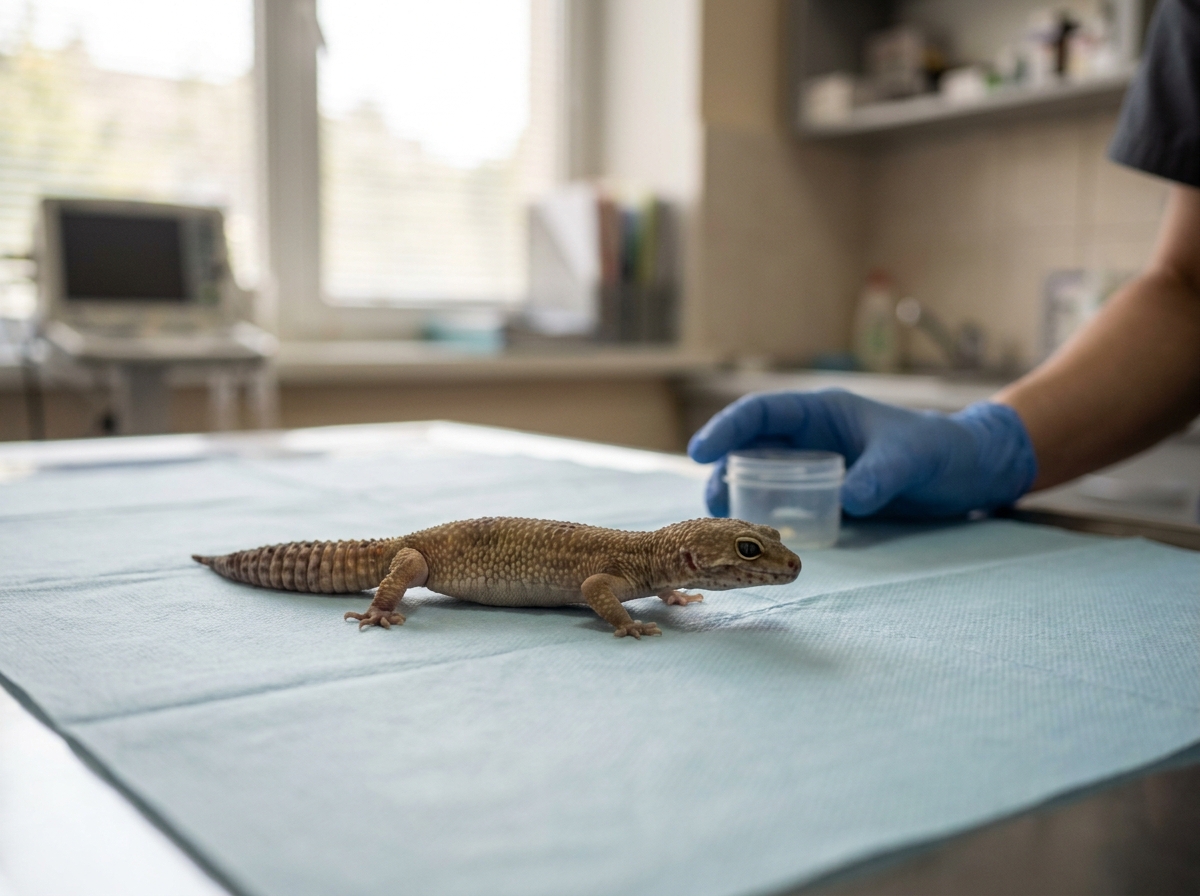
When the vet visit cannot wait
Some signs bypass the home triage entirely. A reptile in any of these states should be seen within 48 hours, sooner if the symptoms are paired:
- Visible weight loss — sunken eye sockets, prominent hip bones, deflated tail in leopard geckos
- Open-mouth breathing, bubbles from the nares, audible wheeze — respiratory infection
- Cheese-like plaques in the mouth, swollen jaw — mouth rot
- Hard, swollen belly; no faeces in 3+ weeks; dragging hind limbs — severe impaction
- Lethargy plus refusal in an animal that was feeding the previous week — system-wide illness
Bring a fresh faecal sample (last 24 hours, refrigerated, not frozen) and a photo of the enclosure setup including the thermometer/hygrometer readings. A vet who works with reptiles can usually narrow the cause in a single 20-minute consult.
Assist-feeding: when, what, and how
For a healthy-weight adult reptile in seasonal brumation or breeding fasting, do not assist-feed. For an underweight adult or a juvenile that has refused for 3+ weeks, assist-feeding buys time while you find the underlying cause. For bearded dragons and leopard geckos: a critical-care formula such as Repashy Grub Pie, Oxbow Critical Care, or Emeraid Herbivore, mixed to a thick paste and offered 1–2 % of body weight per day on the snout with a 1 ml syringe. Force-feeding a stressed reptile almost always makes the underlying problem worse — the animal associates the keeper with the syringe and stops feeding on its own for weeks afterwards. Use the syringe as a rescue tool, not a routine.
Species-specific red flags
A handful of combinations are diagnostic on their own:
- Bearded dragon, under 18 months old, not eating for 2+ weeks — adenovirus, parasites, or impaction. Vet visit, not home care. Juveniles do not brumate.
- Ball python, female, off feed through winter — could be breeding, but rule out ovulation follicles with a vet ultrasound. A female carrying follicles will fast for the entire 30–40 day follicle development phase.
- Leopard gecko, juvenile, refusing food and dropping tail — parasite load plus stress. Quarantine, faecal screen, lower handling to zero for 2 weeks.
- Russian or Hermann's tortoise, refusing food in October — almost certainly brumation prep. Confirm with a vet visit, then drop the night temperature to 15 °C and let the animal wind down naturally over 4–6 weeks.

Prevention: the routine that catches problems early
Anorexia in captivity is almost always a slow-build problem, not a sudden event. A keeper who weighs the animal monthly, logs the basking temperature weekly, and screens faeces every 6 months will catch the early stages of every one of the 12 causes on this list. The keepers who call me in a panic have usually skipped the monthly weigh-in and did not notice the 5 % body-weight loss that would have told them something was off three months earlier.
Temperature, humidity, and stress account for roughly two-thirds of every anorexia case I have triaged. The remaining third is split between brumation/breeding (which is not a problem if you know what to look for) and the medical list, which all require a vet. Walk down the list in order, spend 72 hours verifying the first five items, and bring a faecal sample to the vet if you reach item 10. The animal will usually be back on food within a week.