

Brumation in reptiles: what it is, how to support it, and using a cool period for breeding
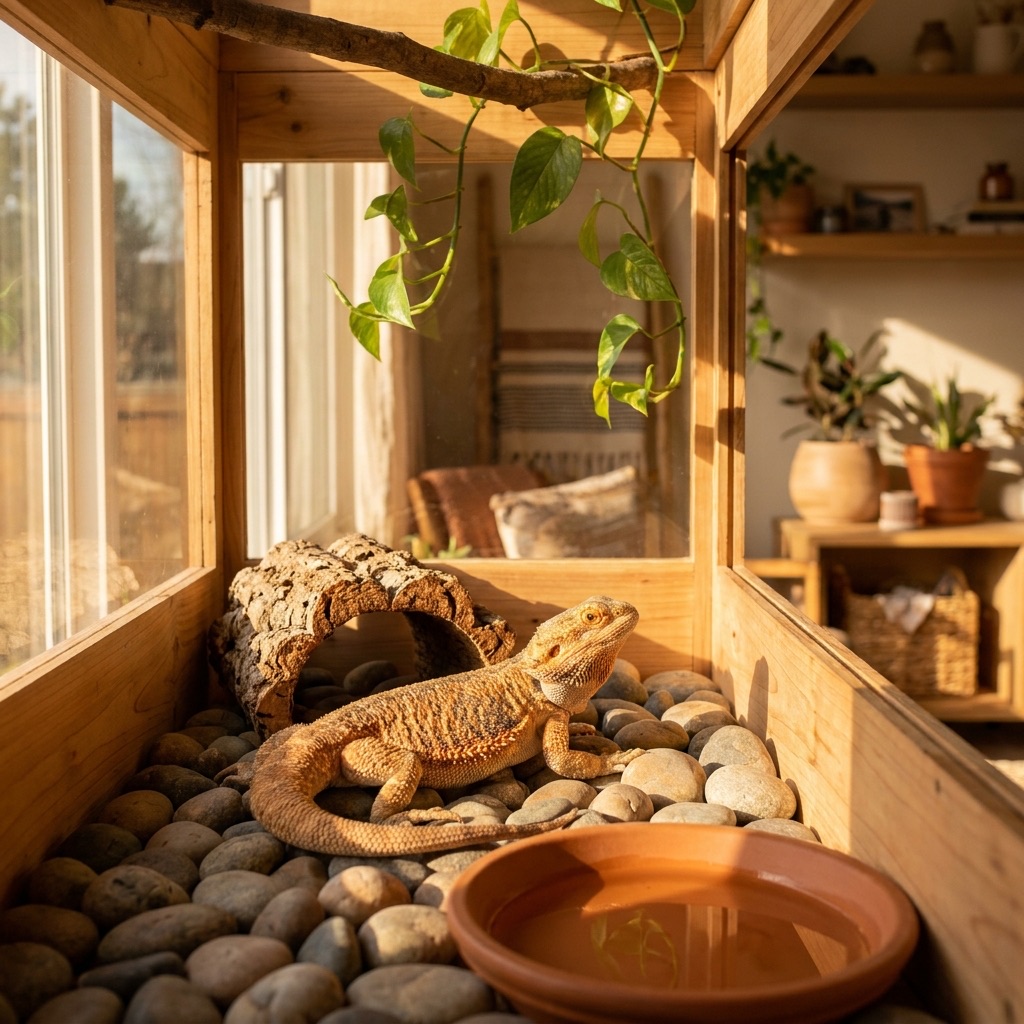
A bearded dragon that buries itself in November and refuses food for ten weeks is not sick. A Russian tortoise that stops eating in October and sleeps under the heat lamp for four months is not dead. An adult corn snake that disappears into the aspen in winter is not a vet case — at least not yet. All three are doing the same thing: brumating, a cool-season, low-metabolic state that has been the reptilian answer to winter for 250 million years. The job of a modern keeper is to recognise it, support it safely, and use it when breeding is the goal.
What brumation actually is
Brumation is not hibernation. Mammalian hibernation drops core body temperature close to ambient and reduces heart rate to a few beats per minute. Brumation in reptiles does not — a brumating reptile still moves, still drinks, still reacts to handling, and still maintains a body temperature several degrees above ambient by basking intermittently. The animal eats nothing, slows digestion to a near-halt, reduces activity, and reroutes energy away from growth and reproduction. In the wild, brumation synchronises the breeding cycle: ovulation, mating, and egg-laying all land in spring when food is abundant.
Three things distinguish a brumating reptile from a sick reptile:
- Body weight is good going in. A reptile that has lost visible weight before going off food is sick, not brumating. Weigh the animal monthly from October onwards. A bearded dragon should not enter brumation below 350 g; an adult ball python should not enter below 1,200 g for a typical 1.2–1.5 m female.
- Eyes are clear, no discharge, no bubbles from the nares. A brumating reptile breathes slowly and silently. Wheezing, mucus, gaping, or any sign of respiratory infection is not brumation.
- The animal is responsive to handling. Sluggish but not limp — it will lift its head, flick its tongue, walk weakly. A limp, unresponsive animal that has not eaten for weeks is a dead-or-dying animal: get to a vet.
The triggers: photoperiod, temperature, and barometric pressure
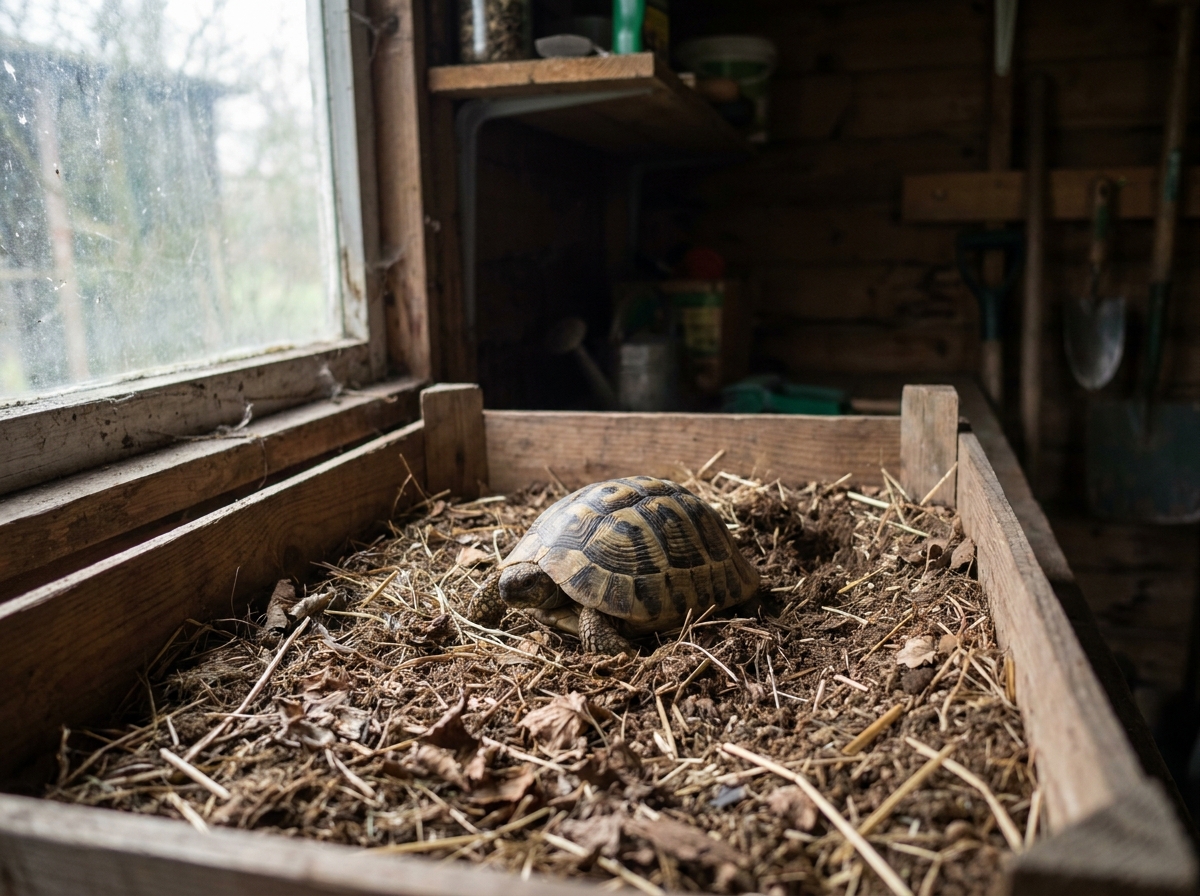
Brumation is triggered primarily by a shortening photoperiod — fewer than 12 hours of daylight combined with a drop in ambient temperature below 18 °C at night. Secondary triggers include a drop in atmospheric pressure (an approaching cold front), reduced food availability in the wild (which captive reptiles still respond to), and the social signals of conspecifics (a group of three will all wind down at the same time within a fortnight; a single female housed alone may not brumate reliably).
In captivity, you control the trigger. Drop the photoperiod from 14 hours in September to 10 hours in November, reduce basking by 3–5 °C, and let the night-time ambient fall to 15–18 °C. For bearded dragons, drop the basking spot from 40–42 °C to 33–35 °C and the cool end from 24–26 °C to 18–20 °C. For Russian and Hermann's tortoises, the ambient room drops to 13–16 °C with a night drop to 8–10 °C. For ball pythons, ambient stays at 24–26 °C with the basking spot off and night drops to 20–22 °C.
If you do not want to brumate — a juvenile under 12 months, a sick or underweight animal — keep the photoperiod at 12 hours and the basking temperatures at species target. The photoperiod is your lever.
Species-by-species: who brumates, who does not
The temperate-zone species brumate reliably. The tropical species do not. Within a brumating species, adults brumate; juveniles typically do not, or do so lightly. The working list:
- Bearded dragon (Pogona vitticeps): Adults 18 months and older brumate 6–12 weeks from late November to early February. Juveniles under 12 months should be discouraged by keeping basking at full strength. Sub-adults 12–18 months may lightly brumate; vet check and body weight above 350 g is the gate.
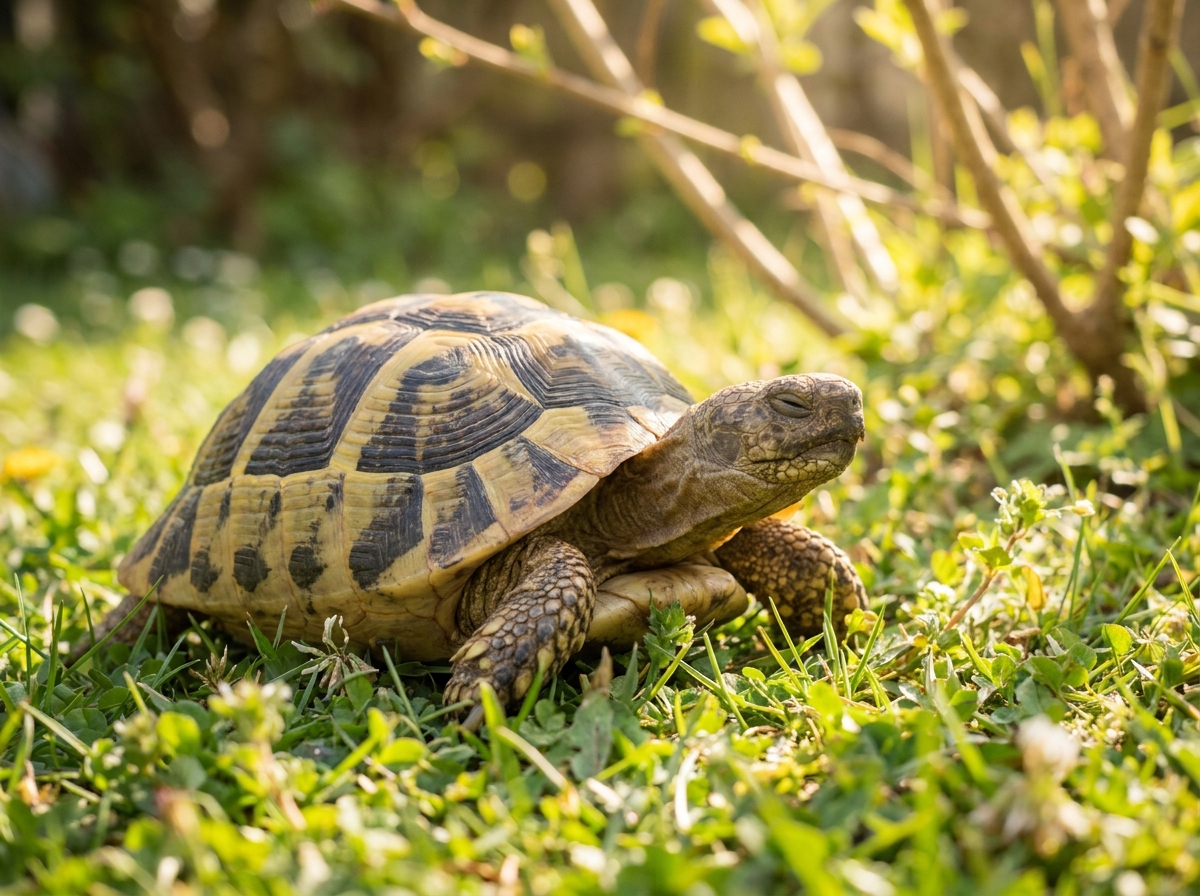
- Russian tortoise (Testudo horsfieldii) and Hermann's tortoise (Testudo hermanni): Both brumate reliably for 8–16 weeks. Outdoor animals brumate naturally; indoor animals need a fridge or cellar protocol at 4–6 °C for 8–12 weeks. Hatchlings under 3 years should not brumate.
- Corn snake (Pantherophis guttatus): Adults from temperate North American stock brumate 8–14 weeks at 10–15 °C. Tropical-bloodline captive-bred lines may not brumate reliably and should be kept at full temperature year-round.
- Ball python (Python regius): Adults brumate lightly 4–10 weeks at 22–24 °C with night drops to 18–20 °C. Milder than a corn snake or tortoise brumation. Juveniles under 18 months should not brumate.
- Leopard gecko (Eublepharis macularius): Adults brumate 6–10 weeks. Captive-bred lines vary; some will not brumate at all. If yours does, follow the bearded dragon cool-down protocol.
- Garter snake (Thamnophis sirtalis): Strong brumation, 12–16 weeks at 4–8 °C. One of the few species that genuinely needs a cold period for long-term health and breeding success.
Tropical species — crested gecko, blue-tongued skink from Indonesian stock, red-eared slider — do not brumate in the wild and should not be cooled in captivity. A "cool period" for these is keeping the night drop at 22 °C, not 14 °C.
The pre-brumation checklist
A reptile going into brumation needs three things confirmed by a vet within the previous 30 days: a clean faecal screen, a body weight in the healthy range, and no respiratory symptoms. A parasite load that is benign in summer becomes a fatal load when the immune system is suppressed by 12 weeks of cool temperatures. The October vet visit is the single most important husbandry appointment of the year for a temperate reptile keeper.
The pre-brumation fasting window is the second gate. A reptile going into brumation with food in its gut will rot: the food ferments, the gut flora shifts, and the animal either wakes up to vomit or does not wake up at all. For bearded dragons and leopard geckos, stop feeding 7–10 days before the drop. For tortoises, 14–21 days. For snakes, 5–7 days from last feed to first drop, with a final warm soak 24 hours before.
The cool-down protocol: 14 days, in three steps
The temperature drop is not a cliff. It is a ramp. A reptile moved from a 40 °C basking spot to a 15 °C room overnight will go into shock and either die or wake up immediately. The standard 14-day cool-down is:
- Days 1–5: Reduce basking temperature by 1 °C per day. For a bearded dragon, 40 °C to 35 °C over five days. Reduce photoperiod by 30 minutes per day from 14 to 12 hours.
- Days 6–10: Reduce basking by 1 °C per day to species target (33 °C for adult beardies, 22–24 °C for ball pythons, 15 °C for Russian and Hermann's tortoises). Photoperiod drops to 10 hours.
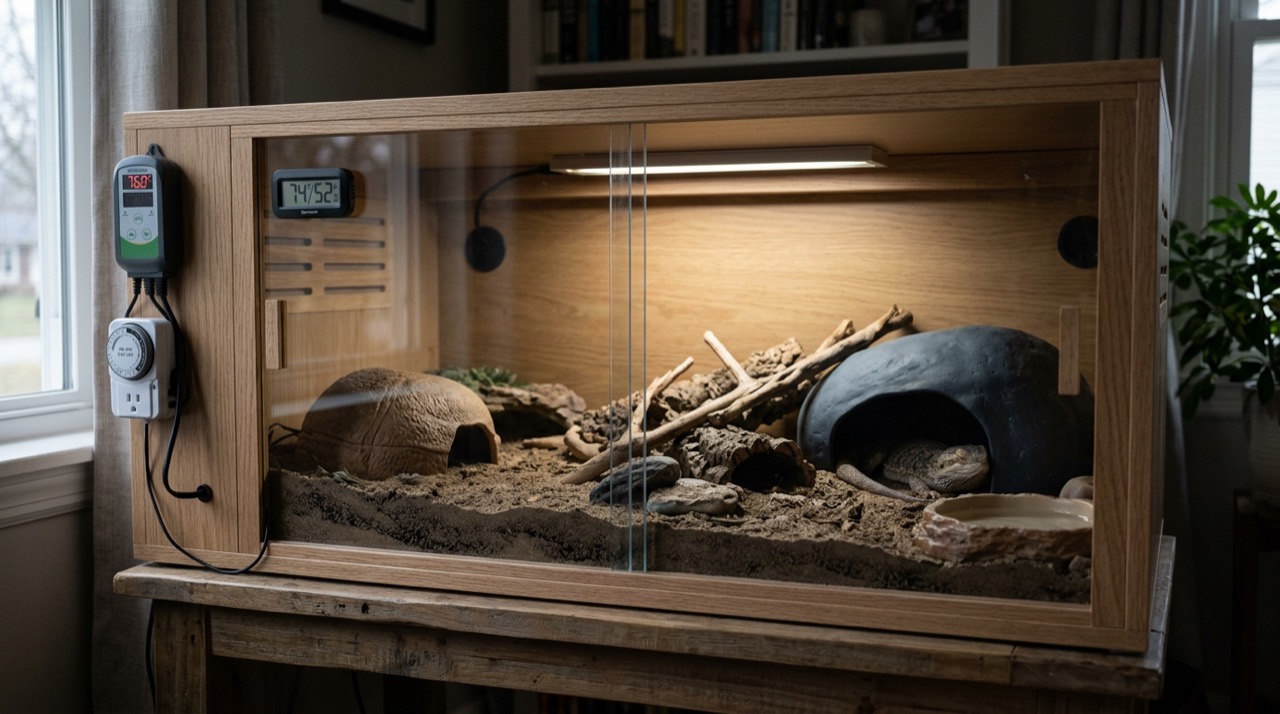
- Days 11–14: Turn off the basking lamp. The animal is now in a thermogradient room — warm end at ambient (18–22 °C), cool end at ambient. For snakes and tortoises, the next step is a dedicated brumation chamber (a wine cooler set to 12–14 °C, or a frost-free fridge with the door cracked for airflow) for the duration.
Throughout the cool-down, the animal should still have access to fresh water. Soak tortoises every 5–7 days in shallow 28 °C water for 10–15 minutes. Snakes can be offered water but rarely drink — that is normal.
Waking up, and what to do if something goes wrong
A brumation that needs to be cut short is rare but real. Wake the animal immediately if any of the following occur: weight loss of more than 10 % from the pre-brumation baseline, discharge from the eyes, nose, or mouth, prolonged soaking in the water dish, or any sign of mites. The wake-up is the reverse of the cool-down: raise basking by 1 °C per day for 14 days, extend the photoperiod back to 14 hours, and offer a small meal on day 7. A reptile that wakes up to a sudden 30 °C jump will refuse food for weeks. The ramp matters.
A brumation that ends naturally is signalled by the animal moving to the warm end, basking, and showing interest in water. Resume normal temperatures over 7–10 days, offer the first meal at the end of week one, and book a post-brumation vet visit within 30 days. A post-brumation faecal screen is cheap insurance — 12 weeks of suppressed immune function can let a low-level parasite load bloom in the first 2–3 weeks of normal feeding.
Brumation as a breeding trigger
For breeding projects — bearded dragons, leopard geckos, Russian and Hermann's tortoises, corn snakes, garter snakes, and most temperate colubrids — a controlled cool period is the most reliable natural trigger for ovulation, mating, and (in females) follicle development. The mechanism is hormonal: a 6–12 week cool period resets the hypothalamic–pituitary–gonadal axis and synchronises the male's spermatogenesis cycle with the female's ovulation. Without it, a healthy pair may simply ignore each other.
The breeding cool period is the same protocol as a maintenance brumation, with one addition: a 2–4 week warm-up phase in spring, then a single introduction of male to female, supervised, on a clean flat surface, in the morning when both animals are warm and alert. Beardies: 4–6 days of introductions. Tortoises: 2–3 days, separated at night. Corn snakes: 1–2 introductions, separated and re-fed between meetings. Garters: 2–3 week cohabitation after brumation, with a feeding separation to prevent the male eating the female's prey.
A successfully mated female will ovulate 3–6 weeks after introduction, lay eggs 4–6 weeks after that, and the eggs incubate 50–70 days at 28–30 °C in vermiculite or perlite at 1:1 water-to-medium by weight. The cool period is the start of a 4–5 month chain ending in hatchlings. Skip it and the chain does not start.