
Rabbit GI stasis: a home emergency guide that buys you time
Gastrointestinal stasis in rabbits is the most common emergency presentation I see in exotic practice, and it is also the one where the home response in the first 12 hours most directly determines the outcome. A rabbit that is treated early in the stasis cycle, with the right home protocol and a fast vet visit, usually recovers in 2-5 days. A rabbit that is treated late — 24-48 hours after the first sign of reduced appetite — has a much higher risk of developing hepatic lipidosis (fatty liver disease), a complication that turns a survivable condition into a fatal one. In this article I will walk through what stasis actually is, the early signs every rabbit owner should be able to recognize, the home protocol that stabilizes the rabbit during the first 12 hours, the vet visit that follows, and the prevention that reduces the chance of recurrence.
What stasis actually is
GI stasis in rabbits is not constipation. Constipation is a mechanical blockage. Stasis is a functional shutdown of the gastrointestinal motility — the gut slows or stops moving food, water, and gas through the digestive system. The result is a backup of stomach and intestinal contents, gas accumulation, pain, and a cascade of physiological changes that can become fatal within 24-48 hours. The rabbit stops eating because the gut is full of material that is not moving. The rabbit stops producing stool because nothing is moving through the colon. The rabbit's gut bacteria shift toward gas-producing species, which makes the bloat worse. The rabbit becomes dehydrated, which makes the intestinal contents drier and harder to move. The pain causes the rabbit to stop eating even more. The cycle, once started, accelerates.
The underlying cause is almost always one of four things: insufficient dietary fiber (the rabbit is not eating enough hay, which is the propellant for the gut), dental pain (the rabbit wants to eat but cannot chew, often from molar spurs or root elongation), stress (a predator event, a move, a temperature change, a new pet in the house), or a primary illness that suppresses appetite (respiratory infection, abscess, arthritis). All four pathways lead to the same final state: a rabbit that is not eating, is producing little or no stool, and is becoming progressively more hunched and painful.
The early signs every rabbit owner should know
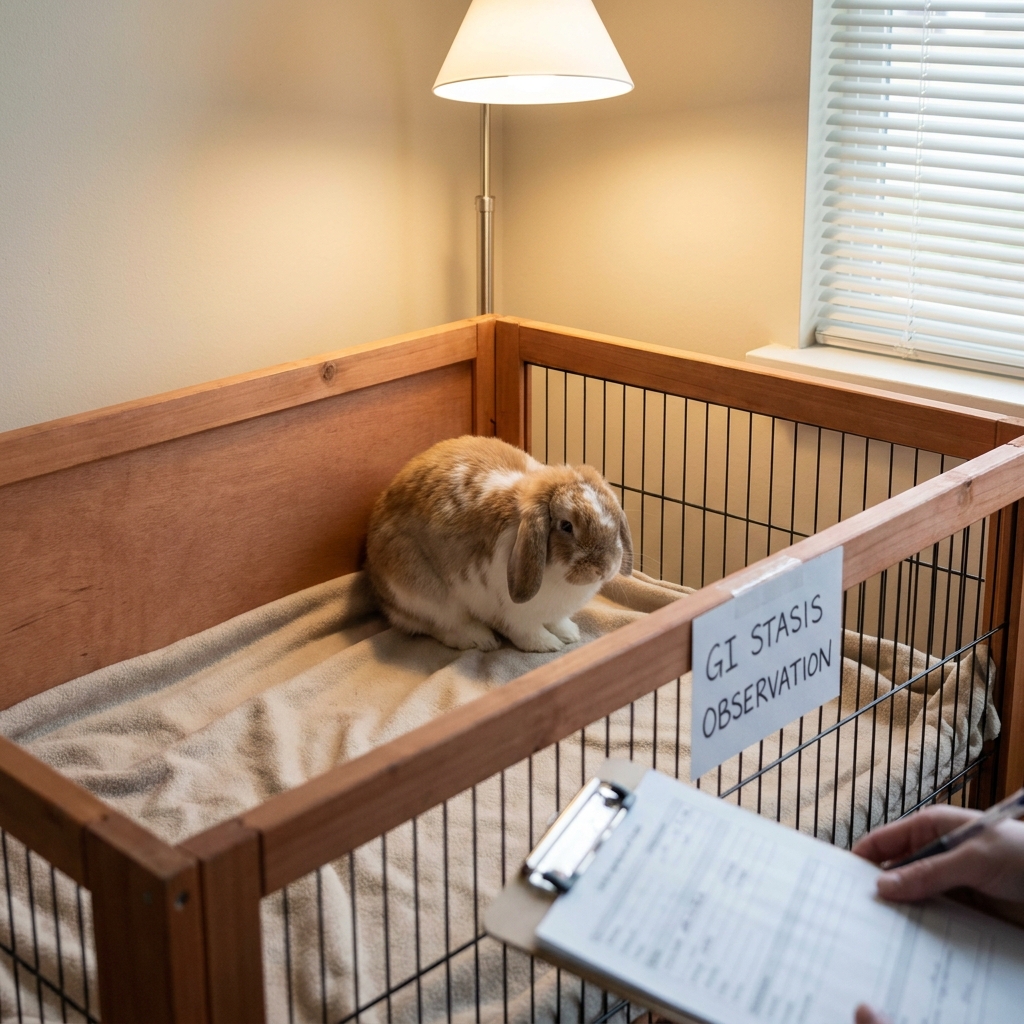
The first sign is the one most owners miss. A rabbit in early stasis is not dramatically ill. The rabbit is just a little quieter than usual. The food bowl is still full. The rabbit is sitting in the corner, not in the usual loaf position but a slightly hunched position, and is not interested in the hay that was put down an hour ago. By the time the rabbit is obviously sick — refusing favorite treats, grinding teeth, sitting hunched in pain — the stasis is already 12-24 hours old. The owner who catches the early sign has bought the rabbit 12-24 hours of treatment time. The owner who catches the late sign has bought the rabbit almost nothing.
The five signs to watch for, in order of severity: the rabbit is producing fewer fecal pellets than usual (a healthy rabbit produces a steady stream of round, moist pellets; a stasis rabbit produces fewer, smaller, drier pellets), the rabbit is sitting hunched in a corner, the rabbit is not eating hay (the first thing to go), the rabbit is not eating favorite greens or treats, the rabbit is grinding teeth (a sign of pain, not contentment — this is the late sign). The owner who notices any of the first three should start the home protocol immediately. The owner who notices the fourth or fifth should also start the home protocol and call the vet now.
The home protocol for the first 12 hours
The goal of the home protocol is to keep the rabbit hydrated, keep some food moving through the gut, and reduce pain until the vet visit. The five steps, in order.
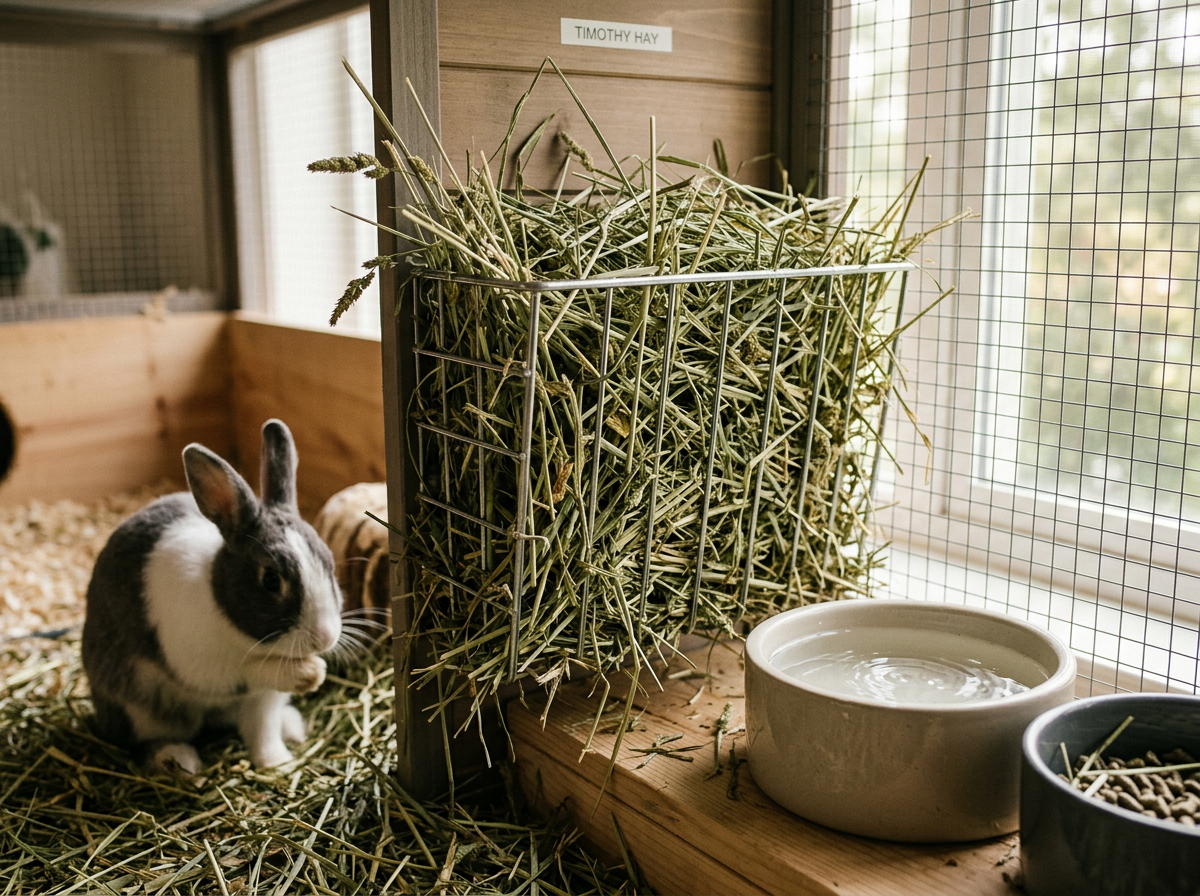
Step 1: remove all pellets and treats from the enclosure. The rabbit in early stasis will pick at the highest-calorie, lowest-fiber foods first, and those are exactly the foods that make stasis worse. Hay is the only food that should be available. Fresh hay, multiple types, placed in multiple locations — the rabbit's normal hay plus a new smell of orchard grass or botanical hay, in case the rabbit is bored of the usual hay. The point is to keep the rabbit eating fiber.
Step 2: offer water in multiple formats. A heavy ceramic bowl, a water bottle, fresh greens rinsed and lightly moistened. Rabbits in stasis are dehydrated, and a rabbit that drinks is a rabbit that is keeping some gut motility. Some rabbits drink more from a bowl than a bottle; offer both.
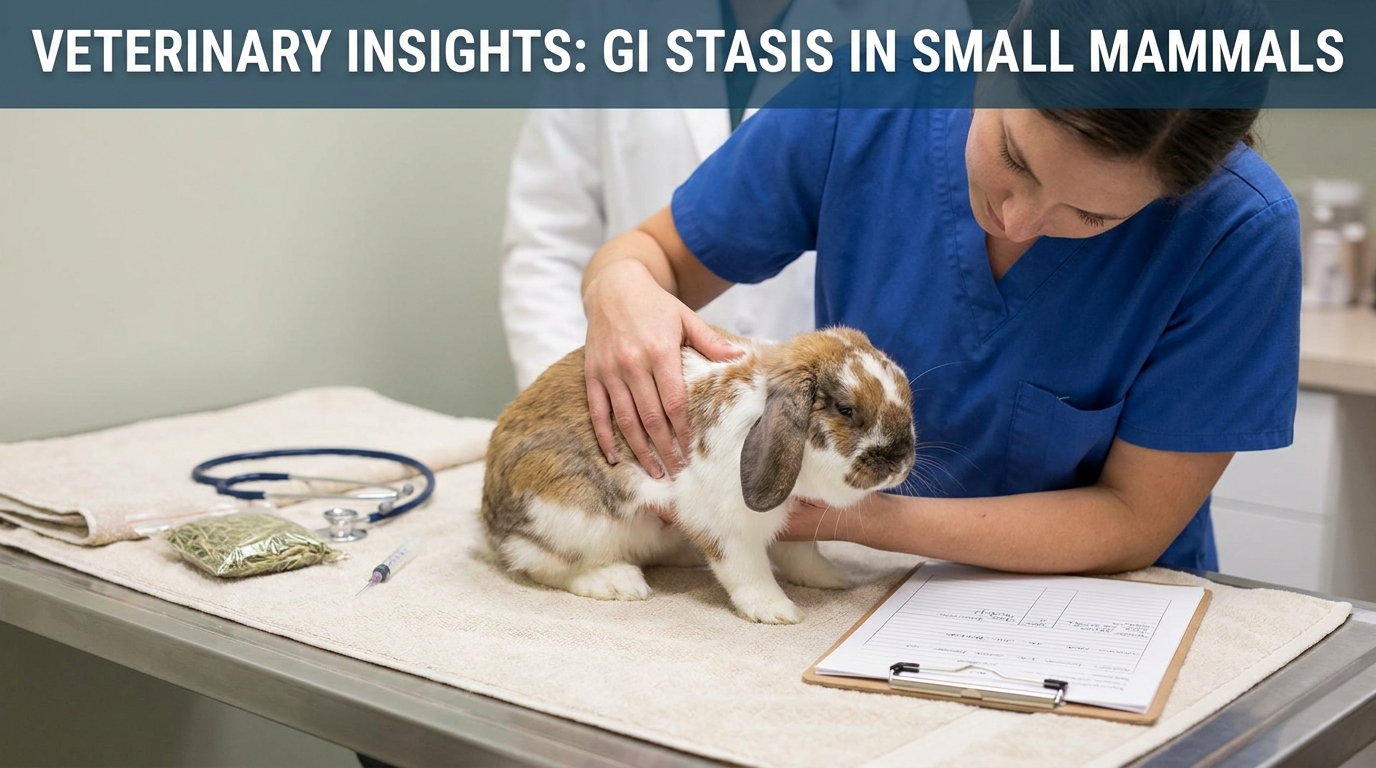
Step 3: gentle abdominal massage. With the rabbit on a towel on a stable surface, use the flat of your fingers to gently massage the abdomen in a clockwise direction, following the path of the colon. The pressure should be light — the rabbit should not tense or struggle. The massage helps move gas and stimulates the gut motility. Five minutes, two to three times during the first 12 hours.
Step 4: keep the rabbit warm. A rabbit in stasis often has a slightly low body temperature. A heating pad on low, with a towel between the pad and the rabbit, or a warm water bottle wrapped in a towel, placed next to the rabbit in the enclosure. The rabbit should be able to move off the heat source if it gets too warm. The warmth is comfort and supports the gut motility.
Step 5: assess stool output. Count the fecal pellets the rabbit produces over the 12-hour window. A rabbit in stasis that produces 5-10 small pellets in 12 hours is responding to the home protocol and may not need a vet visit, or may need a routine visit. A rabbit that produces zero pellets in 12 hours needs a vet visit the same day.
The vet visit: what to expect
The vet visit is not optional. The home protocol is a bridge, not a treatment. The vet will perform a physical exam, palpate the abdomen to feel for gas and intestinal contents, examine the mouth for dental issues (a common underlying cause), and likely take radiographs to confirm the stasis and rule out a mechanical obstruction. The blood work will check for dehydration, electrolyte imbalances, and early signs of hepatic lipidosis. The treatment usually includes subcutaneous or intravenous fluids, an appetite stimulant (mirtazapine or a similar drug), a GI motility stimulant (metoclopramide or cisapride, depending on the case), pain medication (meloxicam or a stronger opioid for severe pain), and a high-fiber critical care formula fed by syringe if the rabbit is not eating on its own.
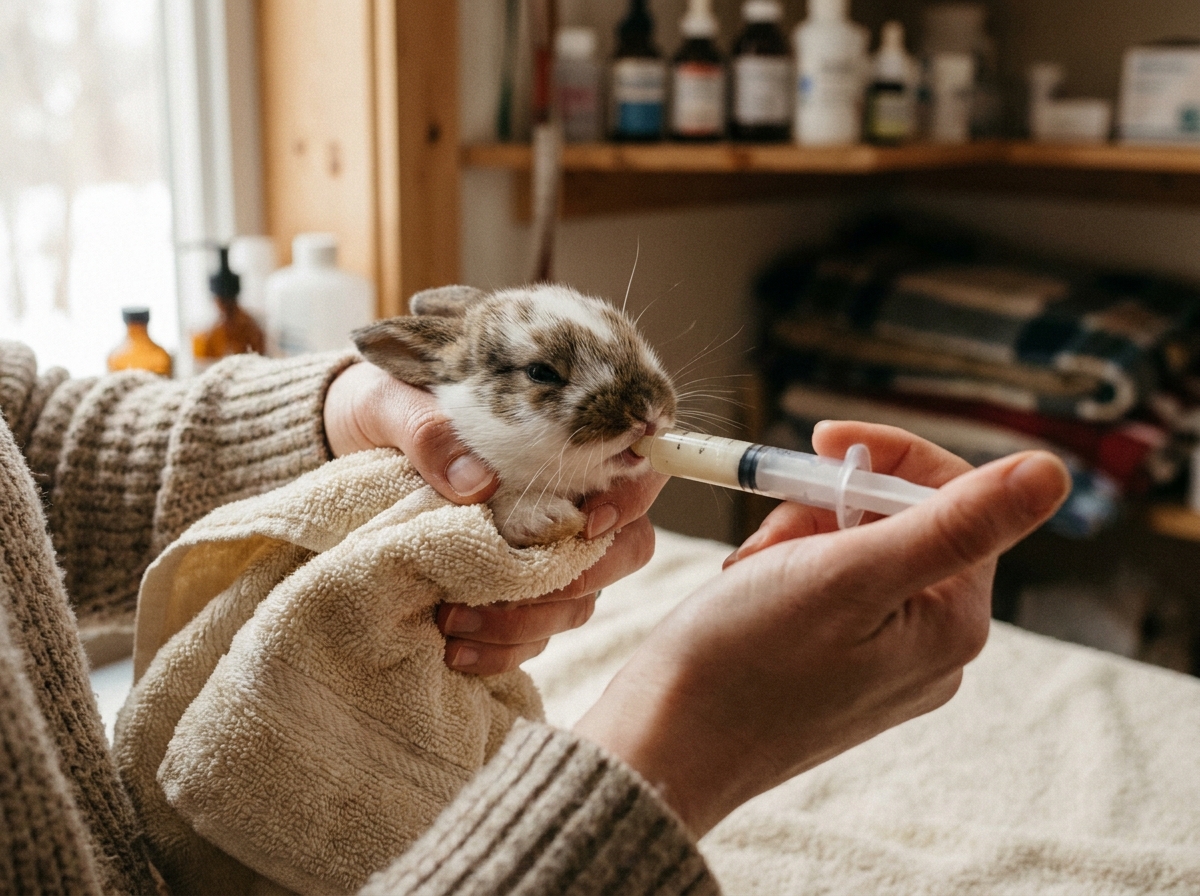
The critical care formula is the home protocol's clinical cousin. It is a powdered complete nutrition product that is mixed with water to a paste consistency and fed by syringe. The fiber content is high, the caloric density is moderate, and the hydration benefit is significant. A rabbit that refuses all food will accept critical care from a syringe for 2-3 days while the underlying stasis is treated. Most rabbits will eat critical care voluntarily if it is offered in a small dish; the syringe is for the rabbit that is too painful or too weak to eat on its own.
Hepatic lipidosis: the complication that turns survivable into fatal
A rabbit that stops eating for 24+ hours is at high risk for hepatic lipidosis, also called fatty liver disease. The mechanism: a rabbit that is not eating mobilizes body fat for energy. The mobilized fat is processed by the liver. In a rabbit, the liver is not efficient at processing the mobilized fat, and the fat accumulates in the liver cells, causing liver dysfunction and eventually liver failure. The timeline is 24-72 hours from the start of anorexia to the start of clinically significant hepatic lipidosis. The condition is reversible if caught early and treated aggressively, but the mortality rate is significant if it is allowed to progress.
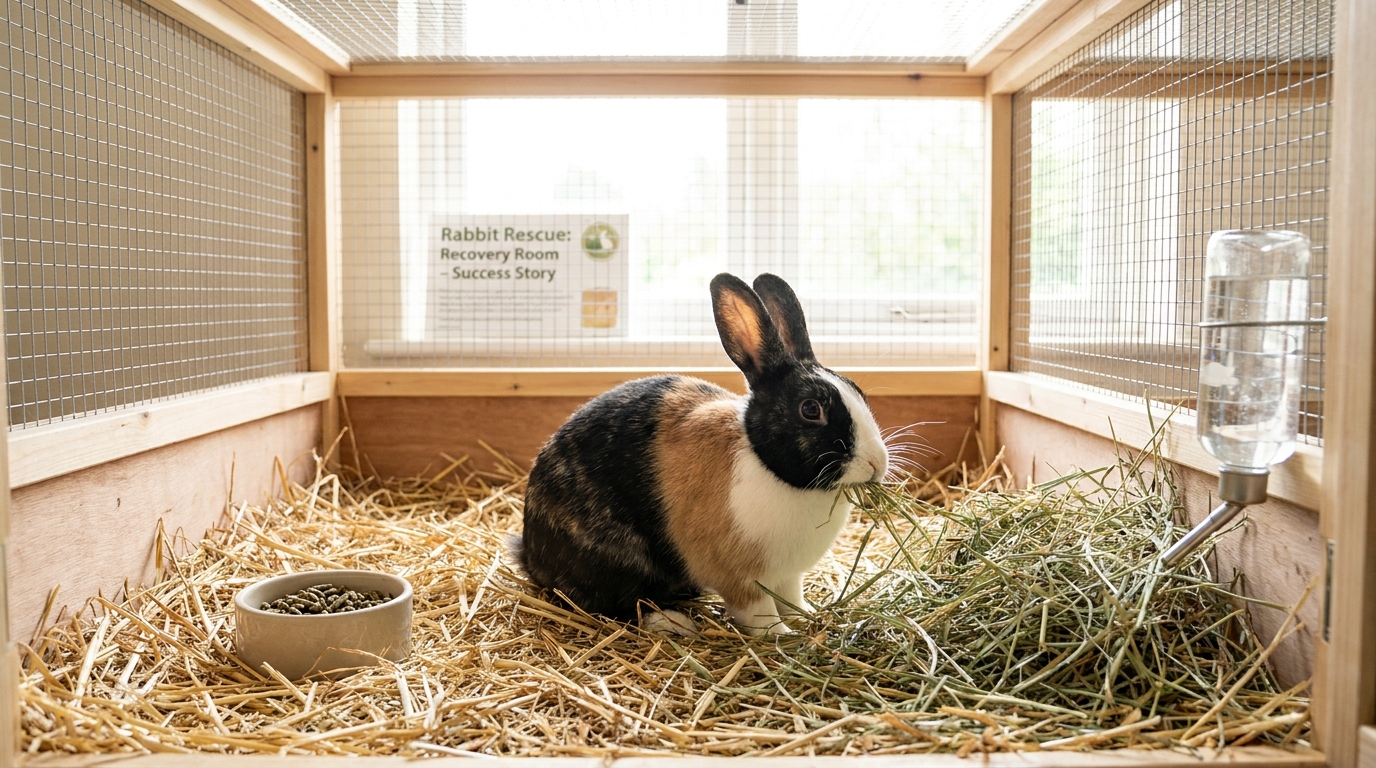
The prevention is the entire point of the home protocol. A rabbit that is kept eating, kept hydrated, and kept moving through the gut during the first 12-24 hours of stasis is a rabbit that does not develop the severe anorexia that triggers hepatic lipidosis. A rabbit that is not eating by hour 24 is a rabbit that needs aggressive treatment, not just a vet visit. The aggressive treatment is usually 2-5 days of hospitalization with IV fluids, syringe feeding, and liver support.
The prevention: hay, hay, and more hay
The single most important prevention for GI stasis is hay. A rabbit's diet should be 80% hay by volume — timothy hay for adults, alfalfa hay for juveniles under 6 months. The hay is the fiber that propels the gut, the fiber that wears the teeth, and the fiber that keeps the gut bacteria healthy. A rabbit that eats plenty of hay rarely develops stasis. A rabbit that prefers pellets and treats over hay is a rabbit that is at high risk.
The other prevention is regular dental checks. Rabbits' teeth grow continuously, and dental problems are the second most common cause of stasis after inadequate hay. A vet check every 6 months, including a quick look at the molars, catches dental issues before they cause pain and anorexia. The other prevention is environmental: keep the rabbit's routine stable, avoid sudden diet changes, and keep the rabbit's living space free of stressors. A stressed rabbit is a rabbit that is more likely to develop stasis.
The single sentence to remember
If your rabbit is producing fewer fecal pellets than usual, is sitting hunched, or is not eating hay, start the home protocol and call the vet the same day. The first 12 hours are the window. The rabbit that gets help in the first 12 hours is the rabbit that goes home. The rabbit that gets help in the second 24 hours is the rabbit that may not.