
Parrot diet: seed vs pellets vs fresh — what the evidence actually says
The "seed vs pellets" debate is one of the most polarised in avian medicine. Owners and even some vets take strong positions on both sides. The truth, as is so often the case, is more nuanced than either camp presents. This article walks through the evidence, the species-specific considerations, and the diet I actually recommend for the most commonly kept pet parrots.
What the all-seed diet actually does
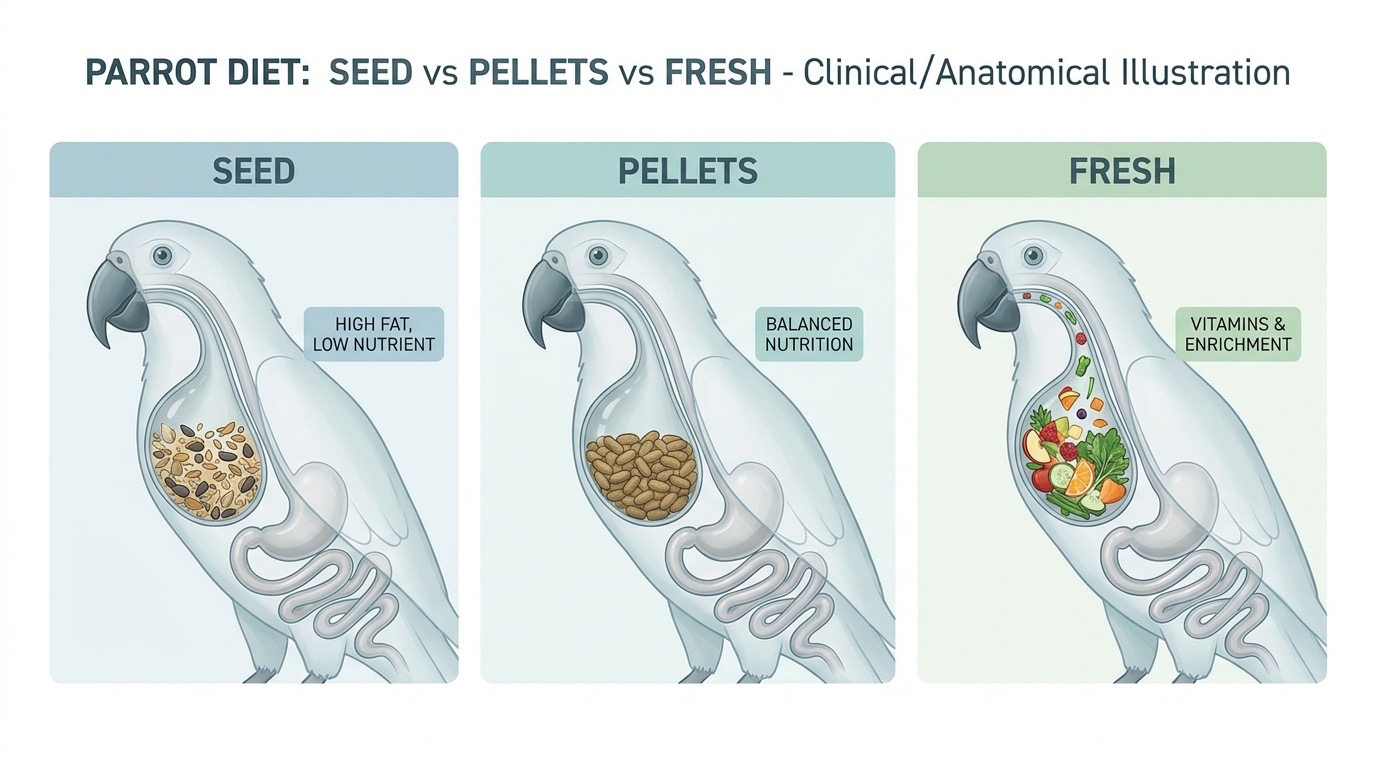
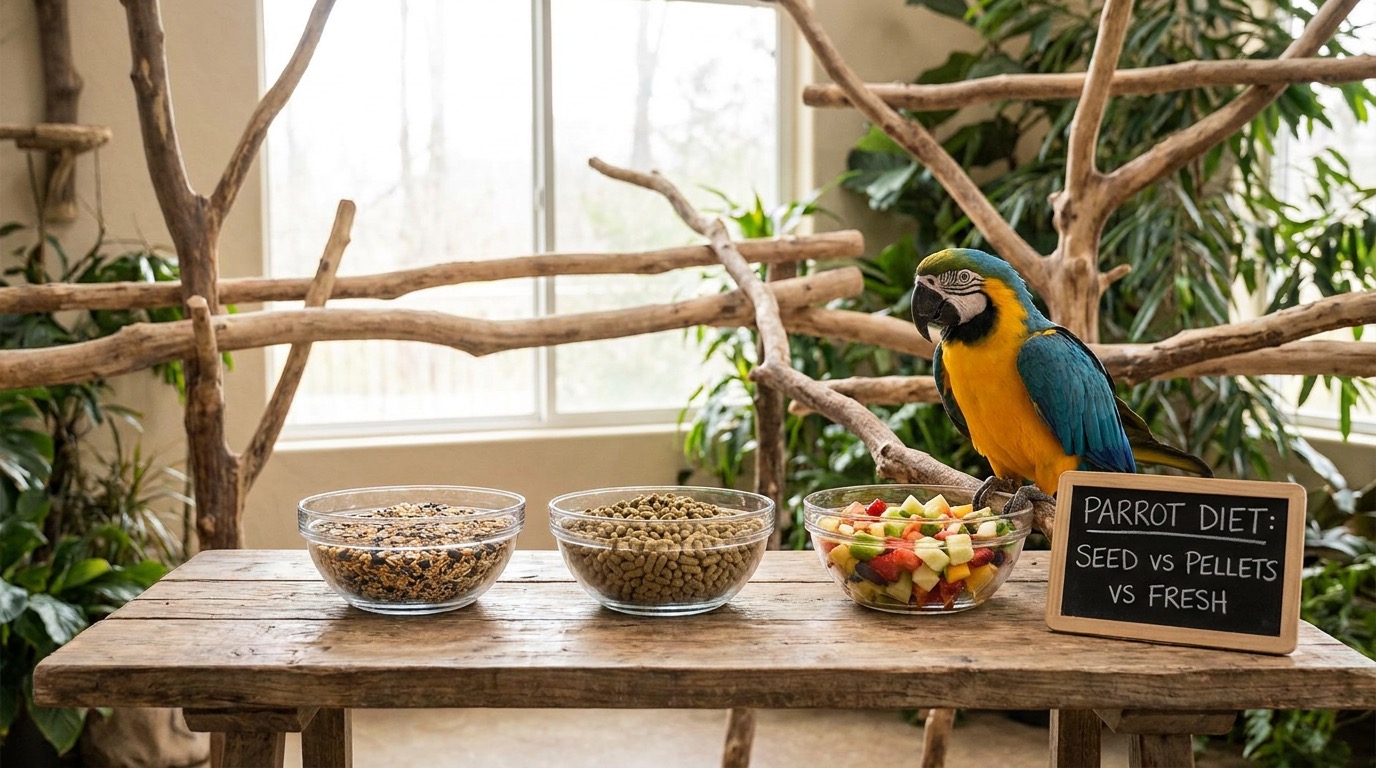
A typical parrot seed mix (sunflower, safflower, peanuts, millet, dried fruit) is:
- High in fat: 25–40% by weight. Wild parrots eat a much lower-fat diet
- Low in vitamin A: severely deficient. Most seeds are vitamin-A poor
- Low in calcium: high phosphorus, low calcium. Inverted Ca:P ratio is bad for bone and kidney health
- Low in iodine: most seeds are iodine-poor
- Variable in vitamin D: depends on the seed, generally low
The clinical consequences of long-term all-seed feeding in parrots are well-documented:
| System | Consequence |
|---|---|
| Liver | Hepatic lipidosis (fatty liver), hepatic fibrosis |
| Pancreas | Pancreatitis, diabetes mellitus (especially in Amazons and African greys) |
| Skin/feathers | Poor plumage, chronic moult, feather discoloration |
| Immune | Impaired immune function |
| Reproduction | Egg binding, infertile eggs, chick deformities |
| Cardiovascular | Atherosclerosis (especially in Amazons and African greys on sunflower-heavy diets) |
| Behaviour | Increased screaming, feather-destructive behaviour, sexual frustration |
Most of these are reversible if caught early. Many become irreversible after 5+ years on an all-seed diet.
What the all-pellet diet actually does
Pellets were developed in the 1980s and 1990s specifically to address the deficiencies of seed diets. A high-quality pellet (Harrison's, Roudybush, TOPs, Lafeber, Zupreem Natural) is:
- Balanced: formulated to AAFCO or similar nutritional standards for psittacines
- Complete: provides protein, vitamins, minerals, and fats in the right ratios
- Convenient: no daily prep needed
Pellet diets resolve most of the deficiencies of seed diets. They produce visible improvements in feather quality, energy, and behaviour within 6–12 weeks of conversion.
The trade-offs:
- Less natural foraging behaviour: pellets are easy to eat; the bird spends less time working for food. Reduced foraging leads to boredom, which leads to behaviour problems
- Lower moisture: pellets are dry. Birds on all-pellet diets drink more water but still have less hydration than birds eating fresh foods
- Less phytonutrient diversity: pellets are formulated for macronutrients; they miss the secondary plant compounds (flavonoids, carotenoids, polyphenols) that fresh foods provide
- Picky eater risk: once a bird is converted to a single pellet brand, switching brands can be very difficult
What the fresh food component actually does
Fresh foods (vegetables, fruits, sprouted seeds, cooked grains, cooked legumes) provide:
- Moisture: vegetables and fruits are 70–95% water
- Phytonutrients: antioxidants, anti-inflammatory compounds, immune-supporting flavonoids
- Variety: different colours and textures stimulate foraging and prevent boredom
- Behavioural enrichment: shredding, holding, manipulating whole foods
The downside:
- Time: chopping and preparing fresh food daily takes 10–15 minutes
- Spoilage: fresh food left in the cage for more than a few hours grows bacteria
- Selective eating: many parrots preferentially pick out colourful foods (corn, carrot, fruit) and ignore the rest
The diet I actually recommend
For all commonly kept pet parrots, the recommendation is a 50/30/20 split:
- 50% formulated pellet — Harrison's, Roudybush, TOPs, or Lafeber Nutriberries as primary pellet
- 30% fresh vegetables — cooked or raw, chopped daily, varied across the week
- 20% fruits, sprouts, and treats — including seeds, nuts, and table foods in moderation
Adjustments by species:
Budgerigars and cockatiels
- 60% pellet (these birds convert to pellets more readily than larger parrots)
- 25% fresh vegetables — leafy greens, broccoli, carrot, sweet potato
- 10% seeds and millet — budgies especially need some seed; complete elimination often causes stress
- 5% fruit — apple, berries, orange
African greys
- 55% pellet (Harrison's High Potency is the classic African grey choice)
- 30% fresh vegetables
- 10% sprouted seeds and legumes (excellent for African greys)
- 5% nuts and fruit
African greys are particularly prone to hypocalcaemia and atherosclerosis on seed diets. They also benefit from sprouted foods (increased vitamin content, live enzymes).
Amazons
- 50% pellet — Amazons are prone to obesity and atherosclerosis on high-fat diets, so pellets should not be over-fat
- 30% fresh vegetables — emphasis on low-starch vegetables
- 10% whole grains and legumes (cooked)
- 10% fruit and limited nuts — Amazons should not have free access to high-fat nuts
Macaws and cockatoos
- 45% pellet (cockatoos are notoriously difficult to convert to pellets)
- 30% fresh vegetables and sprouted nuts
- 15% nuts in shell — macaws especially benefit from foraging on whole nuts
- 10% fruit and cooked grains
Conures, parakeets (Indian ringneck, etc.), lorikeets
- 55% pellet
- 30% fresh vegetables
- 15% fruit, sprouts, and limited seeds — lorikeets in particular are nectarivorous and need a different balance (50% nectar/30% pollen/20% fruit, with limited seed)
Conversion from seed to pellet
The hardest part of the diet change is the conversion itself. A seed-addicted parrot will often refuse pellets for weeks. The conversion protocol:
Week 1–2: introduction
- Mix 25% pellets into the seed mix, 75% seeds
- The bird picks out seeds and may ignore pellets. That's OK
- Provide pellets in a separate bowl in case the bird investigates
- Weigh the bird weekly. A bird losing more than 10% body weight needs intervention
Week 3–4: shift
- 50% pellets, 50% seeds
- Most birds start eating some pellets during this phase
- Some birds need pellets moistened with warm water or fruit juice to make them more attractive initially
Week 5–6: majority pellet
- 75% pellets, 25% seeds
- The bird should be eating mostly pellets
- Watch for signs of conversion success: brighter feathers, more active behaviour, more vocalisations
Week 7+: complete
- 90% pellets, 10% seeds and treats
- Continue to offer fresh vegetables daily
- Maintain this ratio long-term
Conversion typically takes 6–10 weeks for the average parrot. Larger parrots (macaws, cockatoos) may take 3–6 months. Some birds never fully convert — and that is acceptable. A bird eating 50% pellets and 50% seeds is in a much better place than a bird eating 100% seeds.
Tricks for difficult converters
- Eat the pellets in front of the bird. Parrots are flock eaters; if you eat, they eat
- Mash pellets into warm mashed vegetables (sweet potato, squash) so the bird gets pellets accidentally
- Sprinkle seeds on top of pellets so the bird has to dig through pellets to reach seeds
- Offer pellets in foraging toys — the bird has to manipulate the toy to reach pellets
- Try different brands — some birds prefer Roudybush over Harrison's or vice versa
- Switch to smaller pellet sizes for small birds (budgies, cockatiels)
Common mistakes
- Sudden diet switch — dropping seed completely and offering only pellets often leads to a bird that refuses to eat and can develop hepatic lipidosis from the resulting anorexia. Convert gradually over 6–10 weeks.
- All-seed, all-the-time — the leading cause of premature death in captive parrots
- Pellets plus table scraps only — pellets are balanced, but adding only high-fat or salty table scraps (chips, cheese, deli meats) shifts the overall diet off-balance
- Ignoring individual species needs — a macaw and a budgie have different optimal diets
- Treating pellets as complete — pellets are the foundation, but a bird eating only pellets without fresh foods misses the phytonutrient and behavioural benefits
- Free-feeding high-fat seeds and nuts — sunflowers, peanuts, and cashews are essentially parrot junk food. Limit to training rewards and foraging
What about sprouted seeds?
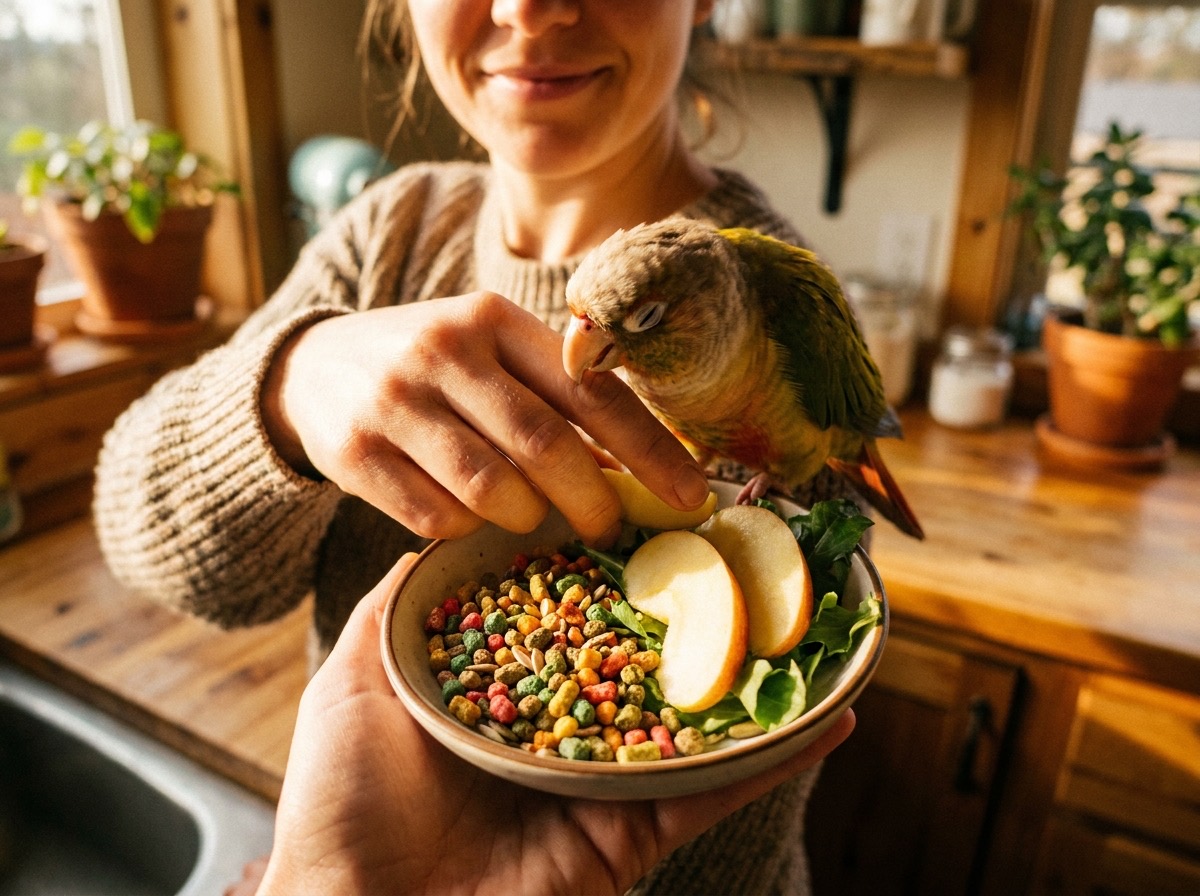
Sprouted seeds are the closest thing to a "superfood" for parrots. The sprouting process:
- Increases vitamin content (especially vitamin A and C)
- Reduces fat content (the seed uses its stored fat to grow)
- Increases protein content
- Provides live enzymes
- Adds moisture
Sprouted seeds can make up 10–20% of the diet for most parrots. To sprout safely:
- Use human-grade organic seeds (avoid seed mixes with chemicals)
- Soak for 8–12 hours
- Drain and rinse 2–3 times daily for 2–3 days until tails emerge
- Refrigerate once sprouted; use within 3–5 days
- Discard if you see mould or sour smell
Common sprouting seeds: sunflower (grey striped), mung bean, lentil, alfalfa, radish, broccoli, quinoa.
Water and supplementation
- Fresh water daily: change at least once a day; twice in warm weather
- Cuttlebone or mineral block: provides calcium and trace minerals; allows beak conditioning
- Vitamin supplementation: rarely needed if the bird eats a balanced pellet and fresh food diet. Adding vitamins to water can promote bacterial growth and cause the bird to refuse the water
- Probiotics: occasional use during stress or antibiotic treatment. Specific avian probiotics (Benebac, Avi-Lyte) are safe
The bottom line
The best parrot diet is a mixed diet: 50% pellets (the nutritional foundation), 30% fresh vegetables (the phytonutrients and moisture), 20% fruits, sprouts, and limited seeds (the variety and behavioural enrichment). The conversion from an all-seed diet takes 6–10 weeks for most birds. Once converted, the diet supports better feather quality, more stable energy, lower disease risk, and longer lifespan — typically 5–10 additional years versus an all-seed diet. The effort of daily fresh food preparation pays back many times in the bird's health.
---
About the author: [Ravi Patel](../Ravi%20Patel.md) is an MSc in Exotic Animal Medicine from Edinburgh with 18 years of practice, and a founding member of the Wildlife and Exotic Animal Veterinary Association (India).