

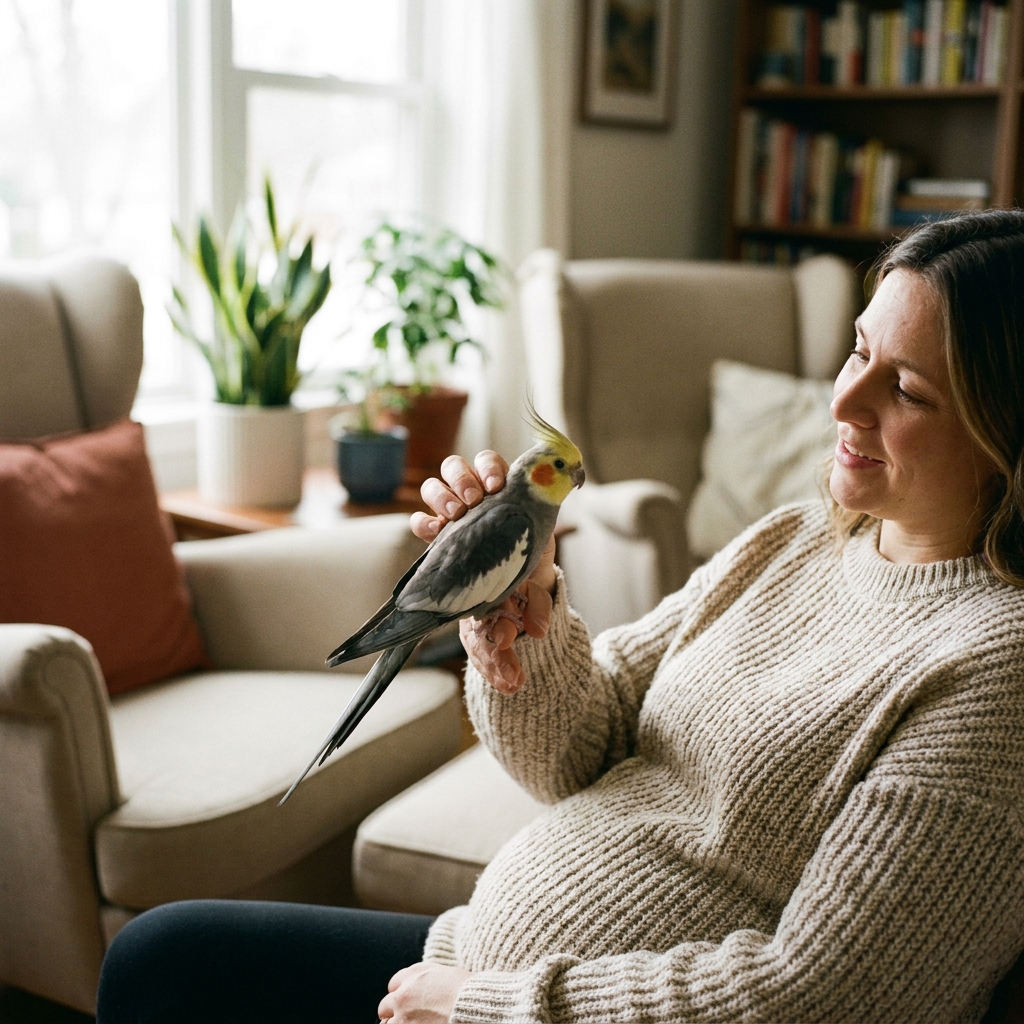
Psittacosis: the risk to pregnant households from pet birds
When a couple is expecting a baby, the conversation about pets usually turns to dogs and cats. Birds are often overlooked. They are quiet, contained, and seem like a low-risk addition to the home. From a public health standpoint, however, psittacosis - a bacterial infection that birds can carry and transmit to humans - is the most important reason to think about the pet bird before, during, and after a pregnancy.
Psittacosis in humans is uncommon but not rare. The infection can range from a mild flu-like illness to a severe pneumonia and, in pregnant women, can cause miscarriage, preterm labor, and severe maternal complications. The infection is treatable with antibiotics, but the diagnosis is often missed because the symptoms look like a routine respiratory infection. The bigger problem is that the pregnant woman does not know she was at risk in the first place, and the source bird in the home was not on the radar.
What is psittacosis
Psittacosis is caused by the bacterium Chlamydia psittaci. The bacterium is an obligate intracellular parasite - it lives inside the cells of its host. In birds, the infection may be silent (no symptoms) or may cause signs ranging from mild respiratory signs to severe systemic disease. In humans, the bacterium causes a respiratory illness that can range from a mild flu-like syndrome to a severe atypical pneumonia.
Birds in the order Psittaciformes are the classic carriers - parrots, parakeets, cockatiels, cockatoos, macaws, conures, lorries, and related species. Other bird species, including pigeons, turkeys, and ducks, can also carry and transmit the bacterium. The risk is highest in households with newly acquired birds, birds from breeding operations, and birds under stress.
How the bacterium is transmitted
Chlamydia psittaci is shed in the bird's droppings, respiratory secretions, and feather dust. Humans acquire the infection by:
- Inhaling aerosolized dried droppings or respiratory secretions. The bacterium becomes airborne when the droppings dry and the dust is disturbed during cleaning, handling, or the bird's natural movement.
- Direct contact with bird tissues. Less common, but possible during necropsy of a deceased bird, or with a bite from an infected bird.
- Person-to-person transmission. Rare but documented. The more important concern in a household is the bird-to-human transmission.
The bacterium is hardy in the environment. Dried droppings can remain infectious for months. Standard disinfectants (1:100 bleach, quaternary ammonium compounds) kill the bacterium, but only if the surface is cleaned first.
The risk in pregnancy
For a non-pregnant adult, psittacosis is treatable with doxycycline or a macrolide antibiotic. The disease is uncomfortable but rarely fatal. For a pregnant woman, the risk profile is different:
- Severe maternal illness. Pregnant women are more susceptible to severe respiratory infection in general, and psittacosis pneumonia can progress rapidly in pregnancy.
- Miscarriage and stillbirth. Chlamydia psittaci can cross the placenta and infect the fetus. Documented outcomes include miscarriage, stillbirth, and preterm delivery.
- Neonatal infection. A baby born to a mother with active psittacosis can develop neonatal pneumonia or sepsis.
The antibiotics of choice for psittacosis - doxycycline and tetracyclines - are contraindicated in pregnancy because they affect fetal bone and tooth development. The alternative - macrolide antibiotics like azithromycin - is safer in pregnancy but less effective against C. psittaci. Treating psittacosis in a pregnant woman is more complicated than in a non-pregnant adult, which is exactly why prevention matters.
What to do if you are pregnant and have a pet bird
The good news: a pet bird does not have to be rehomed during pregnancy. The risk can be managed with practical steps.
Before pregnancy or in early pregnancy
- Get the bird tested. A PCR test on a cloacal or choanal swab can determine if the bird is currently shedding C. psittaci. A negative result does not rule out future shedding, but a positive result allows for treatment.
- Treat any positive birds. A 45-day course of doxycycline (the only reliably effective treatment) clears the infection in most birds. The bird should be re-tested 4-6 weeks after treatment to confirm clearance.
- Have the bird examined by an avian vet. Annual wellness exams for pet birds, with appropriate testing, catch infections before they become symptomatic.
During pregnancy
- Avoid cleaning the cage. Have another household member do the daily cage cleaning. If no one else is available, wear an N95 respirator and gloves, and clean in a well-ventilated area (outdoors if possible).
- Avoid handling bird droppings directly. Even with gloves, hand washing after any contact is essential.
- Avoid bird shows, pet stores, and breeding facilities. These are higher-risk environments for C. psittaci exposure.
- Avoid new birds during pregnancy. Adding a new bird to the household is a known risk factor. Wait until after delivery.
- Watch for respiratory symptoms. If you develop a fever, cough, headache, or muscle aches during pregnancy and you live with birds, mention the bird exposure to your OB. The diagnosis may not be the first thing the OB considers.
The bird side: signs of psittacosis in birds
Many infected birds are asymptomatic carriers. When symptoms appear, they include:
- Lethargy and fluffed feathers
- Poor appetite and weight loss
- Discharge from the eyes or nostrils
- Diarrhea or unusually colored droppings
- Respiratory signs: tail bobbing, open-mouth breathing, sneezing
- Neurological signs in severe cases: tremors, head tilt, seizures
A symptomatic bird should be examined by an avian vet within 24-48 hours. The vet will likely do a PCR test on a swab sample, possibly a blood test for C. psittaci antibodies, and start treatment if indicated.
Treatment in birds
The treatment of choice for psittacosis in birds is doxycycline, either orally or via injection. Treatment duration is typically 45 days. The bird should be isolated from other birds during treatment. Calcium supplementation and probiotics are often recommended to support the bird through the antibiotic course.
The treatment is highly effective. Most birds clear the infection and remain non-infectious to humans after the treatment course. The bird should be re-tested 4-6 weeks after treatment completion to confirm clearance. A small number of birds remain chronic carriers even after treatment and require longer or repeated courses.
The broader context
Psittacosis is reportable in most jurisdictions. A confirmed human case triggers a public health investigation, which often identifies a pet bird or aviary as the source. Most documented human cases in developed countries are linked to pet birds, breeding operations, or occupational exposure (poultry workers, veterinarians, wildlife rehabilitators). The risk to a household member of a typical pet bird is low, but it is not zero, and the consequences during pregnancy are serious enough to warrant attention.
The bottom line
If you are pregnant or planning a pregnancy and you live with a pet bird, talk to your OB about psittacosis risk. Get the bird tested. Have another household member do the cage cleaning. Watch for respiratory symptoms in yourself. The risk is manageable, and the pet bird does not have to leave the home. The goal is informed management, not panic.
If you are considering adding a bird to a household with a pregnant or soon-to-be-pregnant woman, wait. The first 3-6 months of bird ownership is the highest-risk period for psittacosis exposure, and a new bird during pregnancy is a known risk factor.
About the author
Ravi Patel is a small animal and exotic pet specialist based in Mumbai with 16 years of experience in private practice and a particular focus on small mammal husbandry. He has worked with hamsters, gerbils, guinea pigs, rabbits, and chinchillas across South Asia, the Middle East, and Europe, and consults on enclosure design and enrichment for hobby keepers. See his full profile at [authors/Ravi Patel/](../Ravi%20Patel.md).