

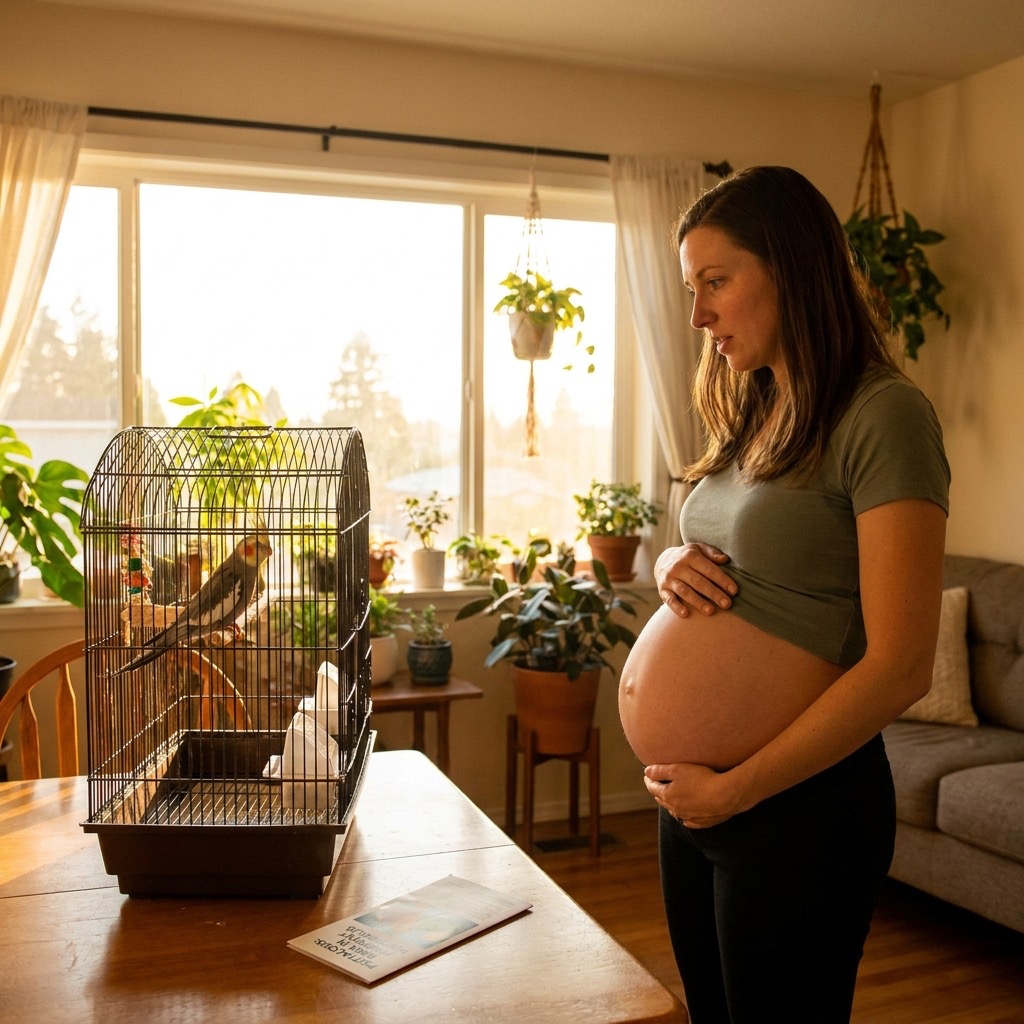
Psittacosis in pet birds: the risk pregnant households need to know about
Of all the zoonotic diseases I screen for in pet bird-owning households, psittacosis is the one that genuinely worries pregnant women and their obstetricians. The concern is not theoretical — Chlamydia psittaci causes a real flu-like illness in humans and is associated with severe complications in pregnancy including miscarriage, preterm labour, and neonatal pneumonia. The good news is that the risk is manageable with information and routine hygiene. The bad news is that the bird often looks healthy while shedding the organism.
This is what every pregnant household with a pet bird needs to know.
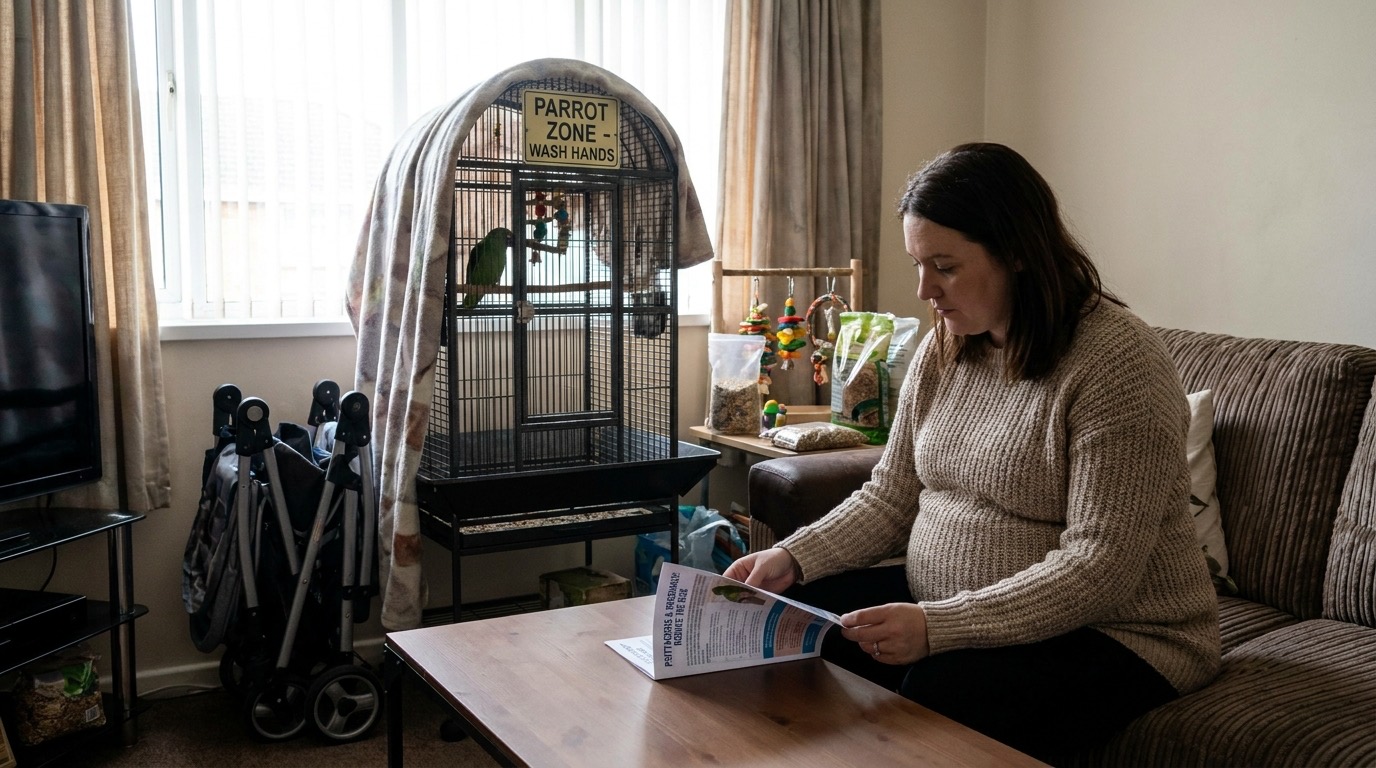
What psittacosis actually is
Psittacosis is a respiratory infection caused by Chlamydia psittaci, an obligate intracellular bacterium that infects birds and (less commonly) humans. The bacterium lives in the bird's respiratory tract, intestinal tract, and feathers. It is shed in:
- Respiratory secretions (droplets from breathing, sneezing)
- Feces
- Urine
- Feather dust (the fine powder produced by cockatoos, cockatiels, African greys, and other powder-down species)
- Crop contents (regurgitated food)
The bacterium is stable in dried bird droppings for months, which is why the airborne route of human infection is so easy.
How humans catch it
Human infection is overwhelmingly through the respiratory route:
- Inhaling dust from dried droppings or feather powder
- Inhaling aerosol from cleaning cages without respiratory protection
- Direct contact with the bird's mouth or beak (kissing, beak-to-beak contact, sharing food)
- Handling infected birds without gloves, then touching the face
The bird does not need to be visibly sick. Asymptomatic carriers shed the organism for weeks or months. Many pet birds carry C. psittaci at low levels indefinitely without showing disease.
Why pregnancy changes the risk
Chlamydia psittaci infection in non-pregnant adults typically causes a flu-like illness (fever, chills, headache, muscle aches, dry cough) that resolves with antibiotic treatment. In pregnancy, the same infection can cause:
- Severe pneumonia requiring hospitalisation
- Miscarriage, particularly in the second trimester (rare but documented)
- Preterm labour and delivery
- Neonatal infection if the baby is exposed during or after birth
The mechanism is not fully understood, but the immune changes of pregnancy make the infection harder to control and increase the risk of severe disease.
The household risk
A typical pet bird-keeping household has measurable C. psittaci DNA in the dust if the bird is a carrier. Studies have found:
- Cockatiels: ~10–20% are asymptomatic carriers
- Budgerigars: ~5–15% are asymptomatic carriers
- African greys: ~5–10% are carriers (despite the species name "psittacosis", African greys are not the highest-risk species)
- Cockatoos: ~10–15%
- Amazon parrots: ~5–15%
- Macaws: ~5–10%
Most pet birds are not tested for C. psittaci at point of sale. A "clean bill of health" from a pet shop does not mean the bird has been screened for chlamydia.
What pregnant households should do
The risk is real but manageable. These are the practical steps that reduce exposure to near zero.
1. Get the bird tested
Ask your avian vet to run a PCR test for C. psittaci on the bird's droppings or a choanal/cloacal swab. The test takes 3–7 days for results.
If the bird tests positive:
- Discuss treatment with your vet. A 45-day course of doxycycline (often administered as a compounded medicated water or by injection in birds) clears most infections
- Repeat PCR testing 4–6 weeks after treatment to confirm clearance
If the bird tests negative: continue routine precautions; retest if the bird becomes ill or if new birds are introduced to the household.
2. Routine hygiene
These steps reduce risk regardless of test status:
- Daily cage cleaning — remove droppings and soiled substrate before they dry
- Wet cleaning — never dry-sweep. Use a damp cloth or wet mop to prevent aerosolised dust
- HEPA air purifier in the bird room — reduces airborne C. psittaci DNA measurably
- Designate one person as the primary bird caregiver — ideally someone other than the pregnant person
- Hand washing after any bird handling
- No face-to-face contact with the bird (no kissing, no beak-to-beak)
- No bird in the kitchen — food preparation areas should be bird-free
3. Cage location and ventilation
- Keep the bird's cage in a well-ventilated room with a window that opens
- Avoid keeping the bird in the bedroom (extended exposure during sleep)
- Consider moving the bird to a separate room during the third trimester if exposure cannot be adequately reduced otherwise
4. Recognise human symptoms
If you are pregnant and own a bird, watch for:
- Sudden fever, chills, headache
- Dry cough that does not resolve in 3–5 days
- Muscle aches, weakness
- Photophobia (light sensitivity)
Tell your OB/GYN that you have a pet bird. They may want to test for C. psittaci specifically if you develop flu-like symptoms. The test is a paired serum sample (acute and convalescent, 2 weeks apart) or PCR on respiratory secretions.
The first-line antibiotic for psittacosis in pregnancy is azithromycin, which is pregnancy-safe. Doxycycline is the standard treatment in non-pregnant adults but is generally avoided in pregnancy (it can affect fetal bone and tooth development). This makes prevention more important than ever.

What about other family members?
Other adults in the household should follow the same precautions as the pregnant person. While they are at lower risk of severe disease, they can be the vector for transmission to the pregnant person if they handle the bird and then have contact with shared surfaces.
Children in the household are at lower risk than pregnant women but can still develop psittacosis. The same hygiene practices apply.
Should pregnant households rehome the bird?
This is the question I get most often. The honest answer:
- If the household is willing to follow the precautions above — testing, hygiene, separate caregiver, no face contact — the risk is very low. I do not recommend rehoming in this case.
- If the household cannot or will not follow the precautions — testing is not feasible, the pregnant person is the primary caregiver, the bird is a cockatiel or cockatoo with high shedding — rehoming to a knowledgeable home during the pregnancy is a reasonable option. The bird can return after the postpartum period.
Many pregnant women choose to keep their birds with proper precautions. Rehoming is a personal decision, not a medical recommendation.
What if the bird becomes sick during pregnancy?
A sick bird (lethargy, ruffled feathers, nasal discharge, green diarrhoea, weight loss) needs an avian vet visit within 24–48 hours. C. psittaci shedding often increases during active disease.
The vet will:
- Test for C. psittaci (PCR)
- Test for other common causes (PBFD, polyomavirus, avian influenza, psittacine beak and feather disease)
- Begin treatment if chlamydia is suspected
The pregnant person should not handle the sick bird or clean its cage until the vet has clarified the diagnosis. If the bird must be handled, wear a fitted N95 mask, gloves, and eye protection.
The bottom line
Psittacosis is a real risk for pregnant bird-keepers, but it is a manageable one. The most important steps: get the bird tested, keep the cage clean with wet methods, designate a non-pregnant primary caregiver, and watch for flu-like symptoms. Following these steps, the risk of psittacosis to the pregnancy is very low — well below the risk of other common exposures during pregnancy. The bird does not need to be rehomed in most households if the family is willing to follow the precautions.
---
About the author: [Ravi Patel](../Ravi%20Patel.md) is an MSc in Exotic Animal Medicine from Edinburgh with 18 years of practice, and a founding member of the Wildlife and Exotic Animal Veterinary Association (India).