

Quarantine protocol for new reptiles
Most reptile keepers do not quarantine. They take the animal out of the shipping box, put it in the display enclosure, and call it settled. Then six weeks later the entire collection is sneezing, has mites, or has a Cryptosporidium problem that cost the breeder three years of work. I have seen it happen often enough that I now treat quarantine as the single most important husbandry decision I make with any new animal.
Quarantine is not about the new animal only. It is about protecting everything else you already have. The two goals run in opposite directions and that tension is exactly why a written protocol helps.
Why the standard "two weeks" is too short
A two-week quarantine, the period you see recommended in older books, is not long enough to surface most of the things you are trying to catch. Internal parasites can have prepatent periods of three to four weeks before they show up on a fecal test. Nidovirus and arenavirus shedding in snakes can be intermittent for sixty days. Ophidian Paramyxovirus may not produce clinical signs in carriers for months. If you release the new animal into the main collection at day 14 and it was carrying something slow, you have already exposed everyone.
I use 60 days as a baseline for snakes and lizards and 90 days for anything arriving from a rescue or a large mixed-source importer. Some keepers go longer. The point is that you need a number you can defend in writing before you are tempted to cut it short.
Set up the room first
Quarantine only works if the room is genuinely separated. Not "different shelves in the same room" - a different room with its own air space, ideally its own air handling if you have a serious collection. The equipment list:
- One dedicated enclosure, freshly purchased or fully sterilized with a 1:10 bleach solution followed by thorough rinsing
- Separate water bowls, hides, and decor - no sharing
- A separate set of feeding tongs
- A dedicated hand sanitizer or wash station at the door
- A scale accurate to 1 gram for weekly weigh-ins
- A digital thermometer-hygrometer with min/max memory
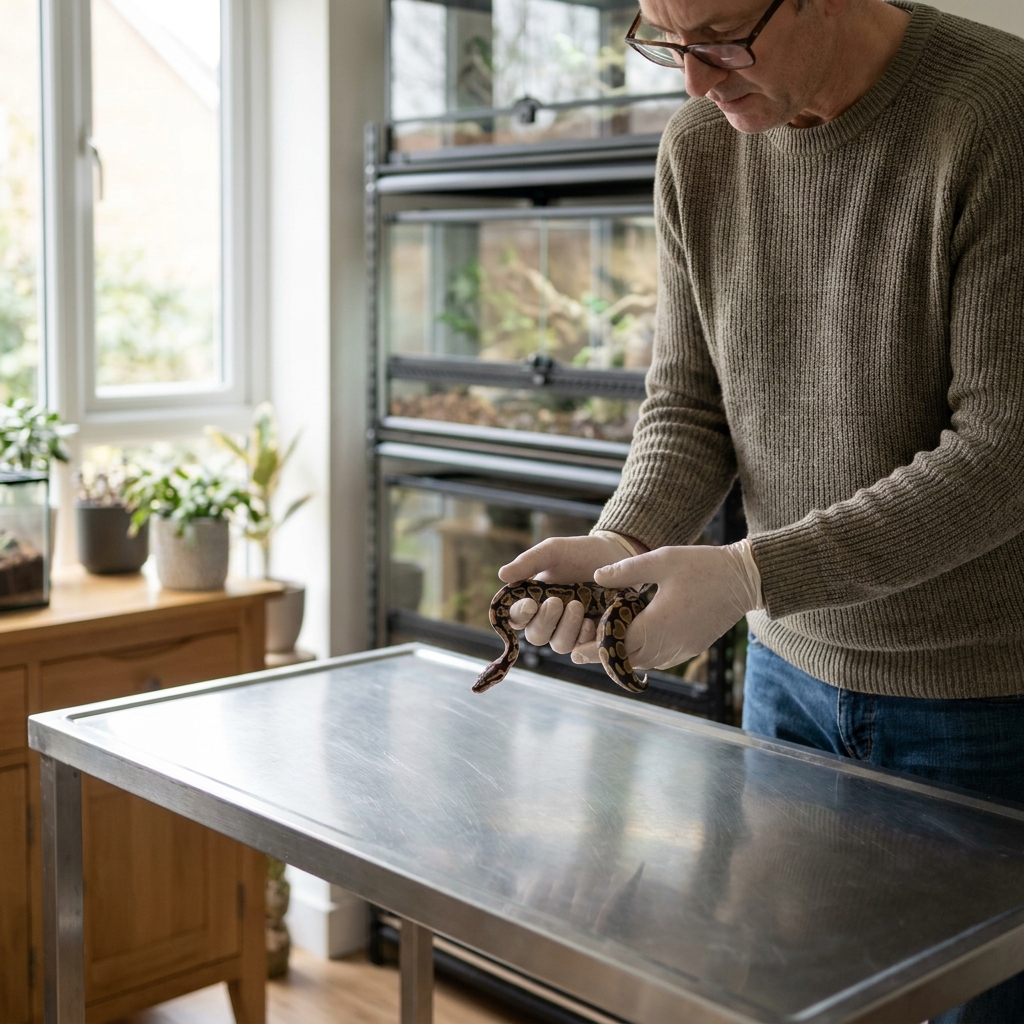
I keep a small folding table next to the quarantine enclosure so all handling happens there. Nothing leaves that table without being wiped down. This sounds paranoid. It is the minimum.
The day-zero intake checklist
When the animal arrives, before you put it in the enclosure, do the following:
- Weigh and photograph the animal from three angles. This becomes your reference baseline.
- Do a visual exam: mouth, cloaca, vent scales, eyes, nostrils. Note anything abnormal in a written log.
- Collect a fresh fecal sample if available and submit it to a reptile-experienced vet for a parasitology panel including *Cryptosporidium* and *Giardia* by PCR, not just a float.
- Quarantine the animal in a simple setup - paper towel substrate, two hides, a water bowl. No loose substrate, no bioactive, nothing that hides feces or complicates cleaning.
- Do not handle the new animal except for brief health checks for the first 7 days. Stress suppresses the immune system and you will get false readings on every parameter.
The schedule I actually follow
This is what 60 days looks like in practice. Adjust to your vet's recommendations and your local disease profile, but the structure is what matters.
- Days 1-7: Acclimation. No handling beyond weigh-in and visual check. Offer water and a single appropriate prey item or food offering. Do not panic if the animal refuses to eat.
- Day 14: First vet visit. Bring the fecal sample results. Discuss prophylactic deworming only if indicated by the fecal - do not deworm "just in case."
- Days 14-30: Observation phase. Watch for nasal discharge, stuck shed, weight loss over 10% of starting weight, abnormal stools, mites visible around the eyes or vent.
- Day 30: Second fecal test, even if the first was clean. Parasites cycle.
- Days 30-60: Continued isolation. By now any acute pathogen should have shown itself.
- Day 60: Final health clearance. If clean, the animal can move into the main collection, but I do one more weigh-in 30 days after integration as a sanity check.
When to break the protocol
Sometimes quarantine cannot be 60 days. Sometimes the animal arrives visibly sick and needs immediate vet attention - in that case you are not "breaking" protocol, you are escalating. Sometimes the only space you have is the same room as the main collection. In that case your realistic options are:
- Skip the new animal
- Board it at the vet or a friend's facility for the quarantine period
- Accept the risk and document it in writing
I would rather lose a sale than lose a collection. Make your own decision and own it.
About the author
Amelia Sterling is a reptile husbandry specialist based in the UK with 14 years of experience working with pythons, boas, geckos, and agamids. She runs a small breeding operation focused on Leopard geckos and Crested geckos, and consults on quarantine and biosecurity for hobby collections across Europe and North America. See her full profile at [authors/Amelia Sterling/](../Amelia%20Sterling.md).