
Parasite screening in captive reptiles: the annual fecal panel that catches what owners miss
Reptile parasites are a category of problem that almost every reptile owner encounters at some point, and almost every owner underestimates. The bearded dragon with a slight weight loss that the owner attributes to "just being a winter slow-down." The leopard gecko that is not eating well, and the owner thinks the temperature is off. The ball python with a normal appetite but a slightly abnormal stool, and the owner assumes it is just shedding. Each of these can be a low-grade parasite load that is not yet producing dramatic signs, but is producing enough internal damage to affect the long-term health of the animal. The annual fecal panel is the only tool that catches these low-grade infections before they become clinical. In this article I will walk through what the panel tests for, the specific parasites that the panel detects, the testing schedule for a captive reptile, the treatment for the most common parasites, and the prevention protocols that keep the parasite load low in the first place.
What the fecal panel tests for
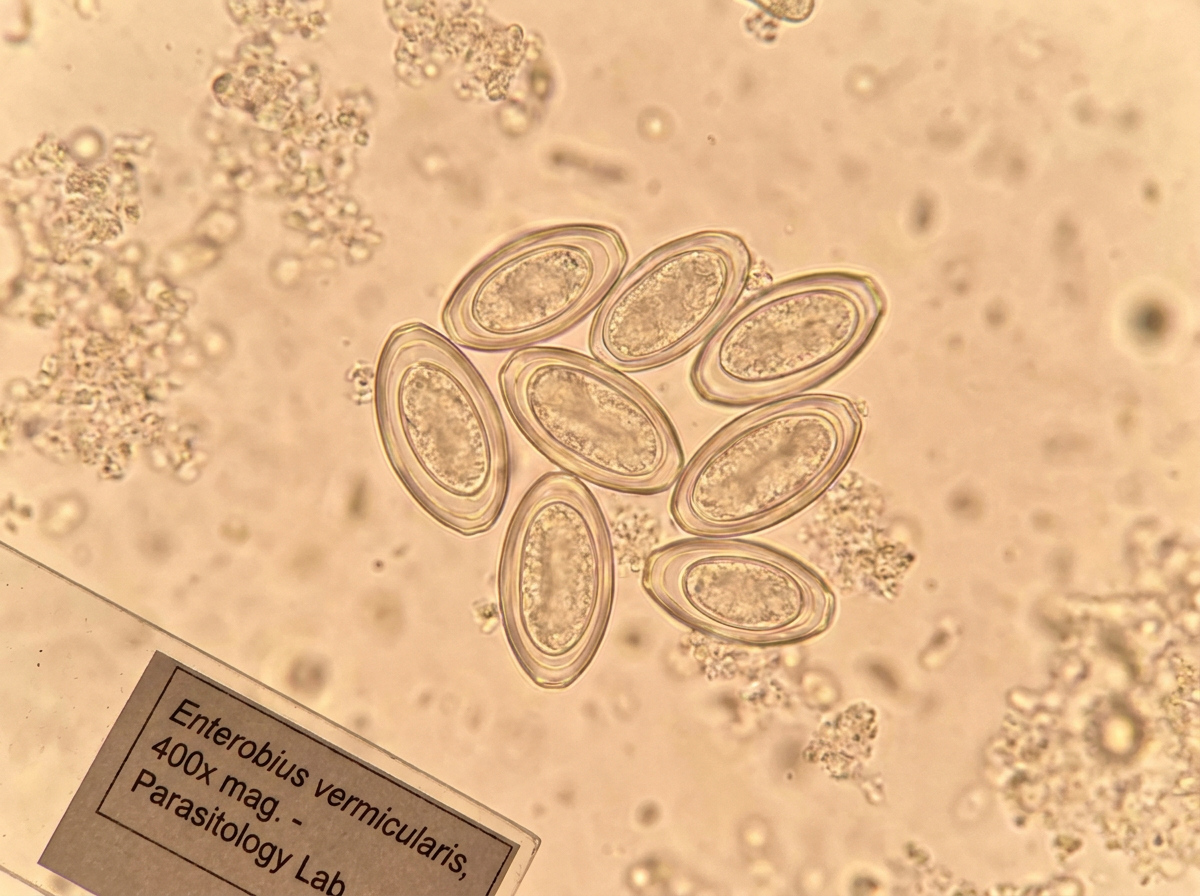
The standard reptile fecal panel tests for five main categories of parasites. The first is nematodes (roundworms), particularly the pinworm (Oxyuris spp.) and the ascarid (Ascaridia spp.). The second is protozoa, particularly coccidia (Isospora spp., Eimeria spp.) and the flagellate Hexamita. The third is cestodes (tapeworms), which are less common in captive reptiles but are still tested for. The fourth is trematodes (flukes), particularly in aquatic and semi-aquatic species. The fifth is cryptosporidium, a particularly difficult-to-treat protozoan that can cause severe weight loss and is the most feared parasite in the reptile-keeping community.
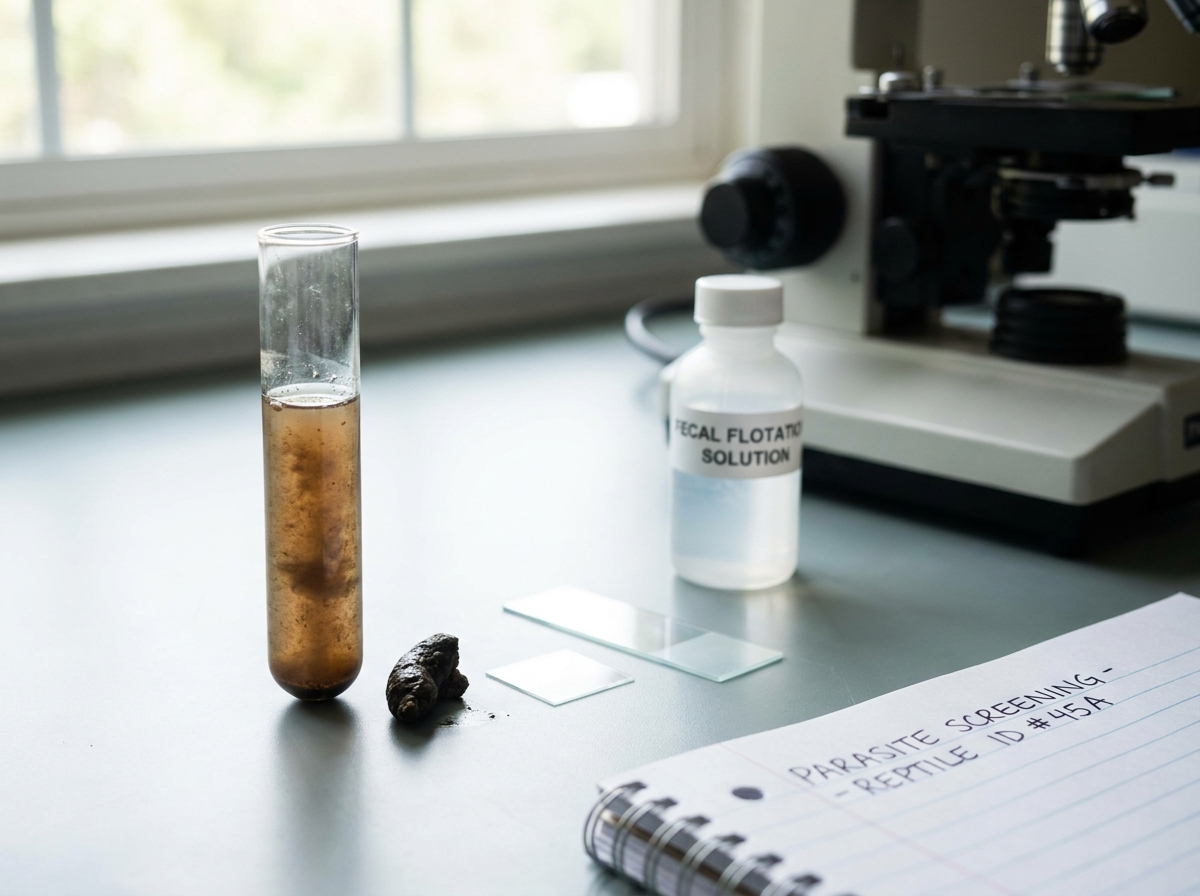
The panel is performed on a fresh stool sample, ideally one that is less than 24 hours old. The sample is examined under a microscope in three ways: a direct smear (a fresh preparation of the stool in saline), a flotation (the stool is mixed with a flotation solution that causes the parasite eggs to float to the top, where they are collected and examined), and a sedimentation (heavier eggs fall to the bottom of a sedimentation column). The combination of the three methods catches the maximum range of parasites. The direct smear is the best for protozoa (which are not eggs but active organisms). The flotation is the best for nematode and cestode eggs. The sedimentation is the best for trematode eggs. The lab that runs all three is the lab that produces the most accurate result.
A negative fecal panel does not guarantee that the reptile is parasite-free. Some parasites shed eggs intermittently, and a single negative sample can be a false negative. The reptile that is showing clinical signs and has a negative fecal panel should have the panel repeated in 2-4 weeks, with a fresh sample each time. The reptile that has a positive fecal panel has the diagnosis confirmed, and the treatment is started.
The most common parasites and what they do
Pinworms (Oxyuris spp.). The most common reptile parasite. The adult pinworms live in the colon. The female pinworms migrate to the anal area at night to lay eggs on the perianal skin. The reptile that has pinworms may show no signs, or may show mild signs: a slight decrease in appetite, a slight weight loss, occasional loose stool. The diagnosis is by fecal flotation or by the perianal tape test (clear tape pressed to the anal area, then examined under the microscope). The treatment is fenbendazole or albendazole, dosed by weight, repeated in 2 weeks. The treatment is highly effective, and the reptile typically clears the pinworm burden within 2-3 weeks.
Coccidia (Isospora spp., Eimeria spp.). A protozoan that lives in the intestinal cells. The reptile with coccidia often has a more pronounced clinical picture: weight loss, diarrhea or loose stool, decreased appetite, and in severe cases, dehydration and lethargy. The diagnosis is by fecal flotation or direct smear. The treatment is sulfadimethoxine (Albon) or trimethoprim-sulfa, dosed for 5-7 days, repeated in 2 weeks. The treatment is effective, but the reptile is susceptible to reinfection if the enclosure is not thoroughly cleaned.
Hexamita (Hexamita spp.). A flagellate protozoan that infects the intestinal tract of lizards, particularly bearded dragons and geckos. The clinical signs are similar to coccidia: weight loss, diarrhea, decreased appetite. The diagnosis is by direct smear of fresh stool (the flagellates are best seen on a wet mount). The treatment is metronidazole, dosed for 5-7 days. The treatment is effective, but the reptile is susceptible to reinfection.
Cryptosporidium (Cryptosporidium spp.). The most feared reptile parasite. The clinical signs are progressive weight loss despite a normal appetite, regurgitation, and chronic diarrhea. The diagnosis is by special staining of the stool (acid-fast stain) or by PCR testing. The treatment is difficult — there is no reliably effective cure. The protocol is supportive care (fluid, nutritional support) and management of the clinical signs. The reptile that is cryptosporidium-positive is a reptile that should not be bred and should not be housed with other reptiles, because the organism is highly contagious and environmentally resistant. Many owners of cryptosporidium-positive reptiles elect euthanasia, because the disease is chronic, progressive, and ultimately fatal.
The testing schedule
The testing schedule depends on the reptile's history. The reptile that was wild-caught or purchased from a source with unknown health status should have a fecal panel at the time of acquisition, repeated in 2-4 weeks, and then annually. The reptile that was captive-bred from a reputable breeder and has a clean history can be tested annually. The reptile that is showing any clinical sign (weight loss, decreased appetite, abnormal stool) should be tested immediately, regardless of the schedule.
The annual fecal panel is the minimum. The reptile that is in a multi-reptile household, or that is exposed to new reptiles, should be tested every 6 months. The new reptile that is added to a household should be quarantined for 60-90 days, with a fecal panel at the start and end of the quarantine period. The reptile that is being introduced to a breeding program should be tested pre-breeding and post-breeding, because the stress of breeding can reactivate latent parasite infections.
The treatment protocol
The treatment for a positive fecal panel depends on the parasite. For pinworms, the standard protocol is fenbendazole at 50 mg/kg orally, repeated in 2 weeks. The reptile should be weighed accurately on a gram scale, because under-dosing is a common reason for treatment failure. For coccidia, the protocol is sulfadimethoxine at 90 mg/kg orally for the loading dose, then 45 mg/kg daily for 5-7 days. For Hexamita, the protocol is metronidazole at 50-100 mg/kg orally for 5-7 days. For cryptosporidium, there is no reliable treatment, and the protocol is supportive care.
The enclosure should be thoroughly cleaned during and after treatment. The substrate should be replaced, the decor should be washed in a dilute bleach solution (1:10 bleach:water) or in a reptile-safe disinfectant (F10 or chlorhexidine), and the enclosure should be allowed to dry completely. The water bowl should be cleaned daily. The reptile should be re-tested 2-4 weeks after the end of treatment to confirm the parasite has been cleared.
The prevention protocols
The single most important prevention for reptile parasites is quarantine. The new reptile that is added to a household without a quarantine period is the most common source of parasite introduction. The quarantine should be 60-90 days, in a separate room, with separate equipment. The fecal panel at the start and end of the quarantine is the test that confirms the new reptile is clean.
The second most important prevention is regular cleaning. The enclosure should be spot-cleaned daily (feces, uneaten food) and thoroughly cleaned monthly (substrate replaced, decor washed, surfaces disinfected). The water bowl should be cleaned daily. The substrate that is left wet is a substrate that harbors parasites and bacteria.
The third is feeding. The reptile that is fed prey items (insects, rodents) that are themselves raised in a clean environment is a reptile that is less exposed to parasites. The cricket that was raised in a cricket farm with proper hygiene is a cricket that is less likely to carry parasites than the cricket that was caught wild. The frozen-thawed rodent from a commercial supplier is a rodent that is less likely to carry parasites than a wild-caught mouse.

The one-page summary
The annual fecal panel is the only tool that catches low-grade reptile parasites before they become clinical. The panel tests for nematodes, protozoa, cestodes, trematodes, and cryptosporidium. The most common parasites are pinworms, coccidia, and Hexamita, all of which are treatable. The cryptosporidium is the most feared, with no reliable cure. The treatment protocols are well-established and effective. The prevention protocols are quarantine, regular cleaning, and careful sourcing of food. The owner who runs the annual panel is the owner who catches the parasite before the parasite catches the reptile.