
Kid-friendly starter reptiles: which species to choose, which to avoid, and why
The "starter reptile for a child" question is one I get asked at least once a week, and the answer is the same: it depends on the age of the child, the commitment of the parents, and the specific reptile. The wrong choice — the impulse-buy hatchling from a pet store that the child is responsible for but the parents are not — is a choice that ends with a dead reptile within 6-12 months and a child who has learned that pets are disposable. The right choice — the species that matches the family's actual commitment and the parents' actual involvement — is a choice that produces a reptile that lives 10-20 years and a child who has learned what responsible pet ownership actually looks like. In this article I will walk through the species that I recommend for families with children of different ages, the species that look kid-friendly but are not, the parent involvement that every successful child-reptile household has, and the lessons that the right reptile can teach a child.
The principles that should drive the choice
The first principle: the reptile that is "easy to keep" is the reptile that has the husbandry requirements that the family can actually meet. The bearded dragon is easy to keep if the family can provide a 4x2x2 enclosure, a UVB tube, a basking bulb, a temperature gradient, daily handling, and a varied diet of insects and vegetables. The bearded dragon is not easy to keep if the family cannot provide these things. The leopard gecko is easy to keep if the family can provide a 20-gallon enclosure, an under-tank heater, a UVB tube, daily handling, and a diet of insects. The crested gecko is easy to keep if the family can provide a vertical enclosure, a UVB tube, misting twice a day, and a commercial crested gecko diet. Each species has a specific list of requirements, and the family has to match.
The second principle: the reptile that is "docile and easy to handle" is the reptile that has been bred for docility over multiple generations. The bearded dragon from a reputable breeder is docile; the bearded dragon from a wild-caught importer is not. The leopard gecko from a captive-bred line is docile; the leopard gecko from a wild-caught importer is not. The reptile that is sold at a pet store as a "captive-bred hatchling" may or may not actually be captive-bred, and the source matters. The owner who buys from a reputable breeder is the owner who gets a docile, healthy animal.
The third principle: the parent involvement is non-optional. The child under 12 cannot be the primary caregiver for a reptile. The child may be involved in feeding, handling, and cleaning, but the parent is the one who ensures the temperatures are correct, the UVB is replaced on schedule, the diet is varied, and the vet visits happen. The reptile that is the child's sole responsibility is the reptile that is being set up to fail. The parent who is committed to the reptile is the parent who makes the reptile-keeping experience work for the child.
The species I recommend for families
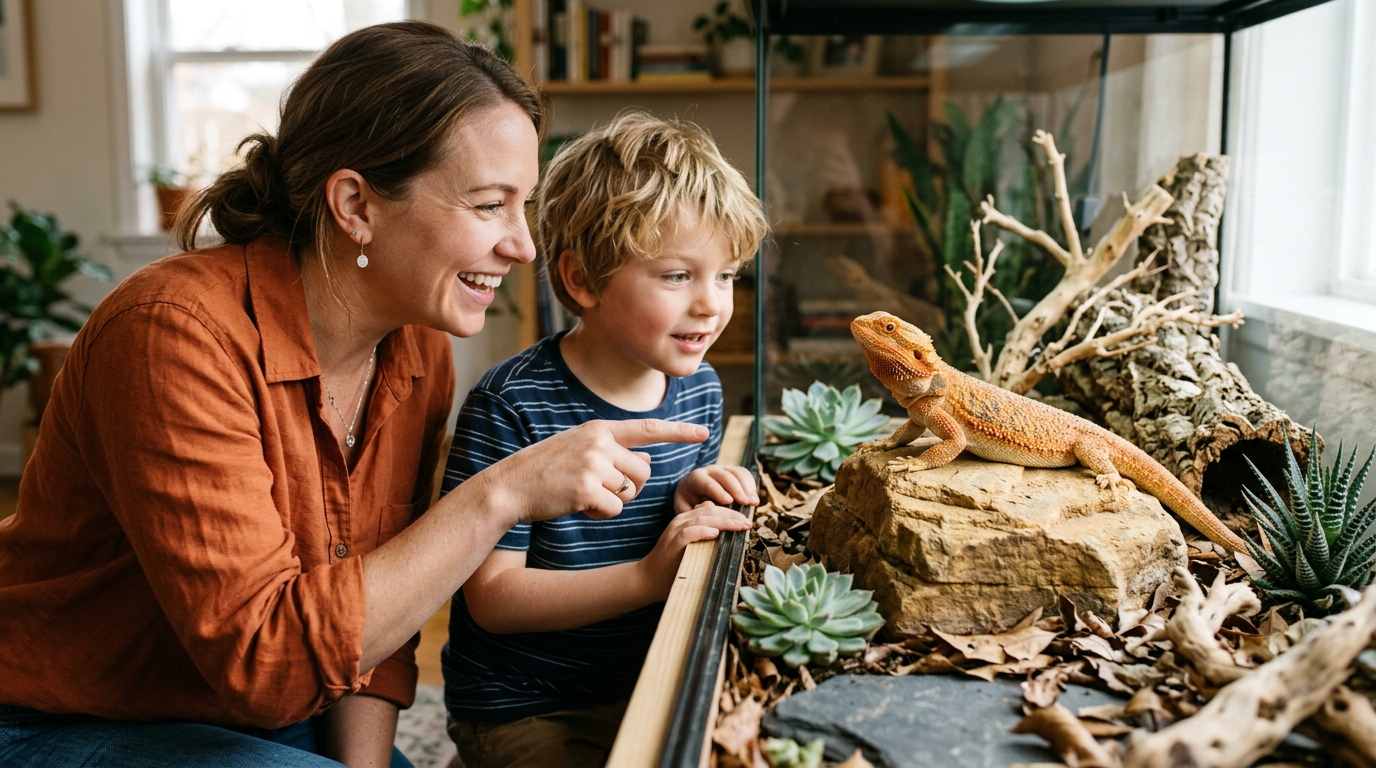
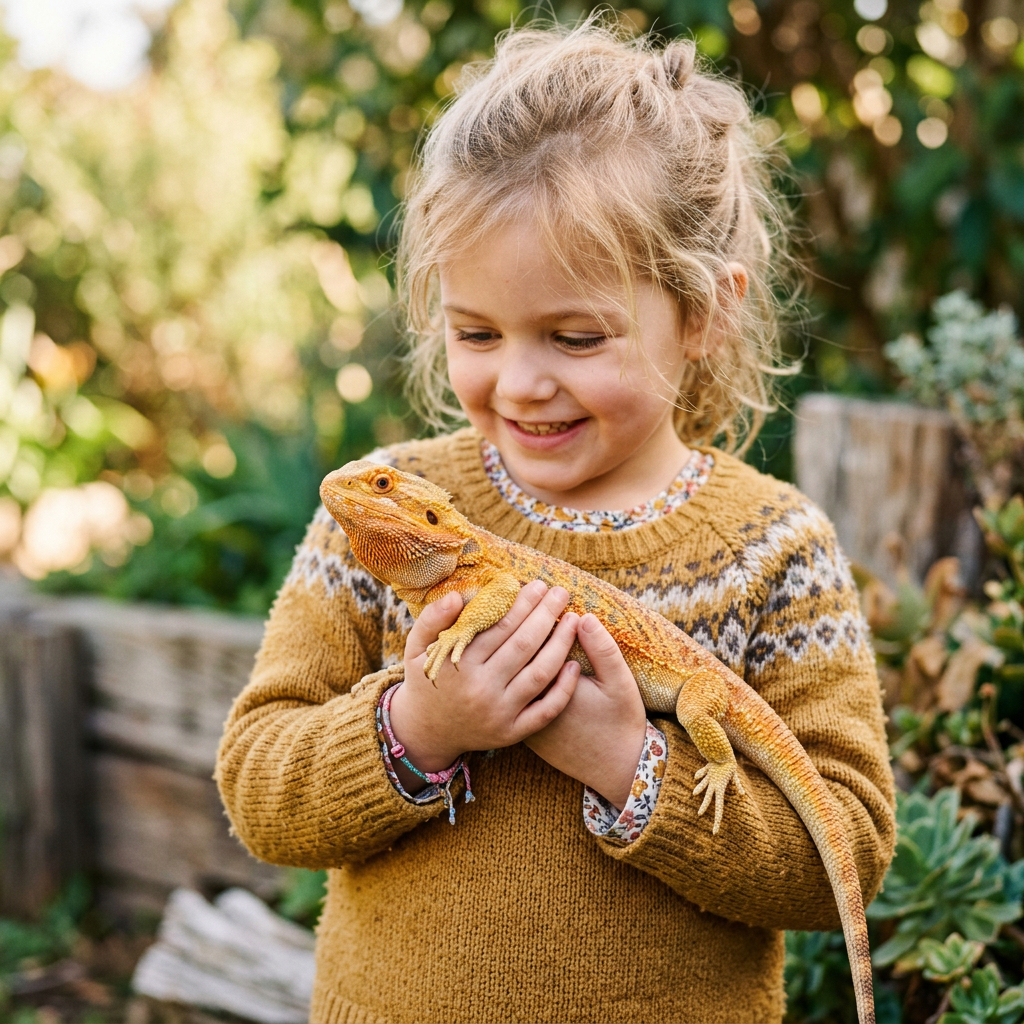
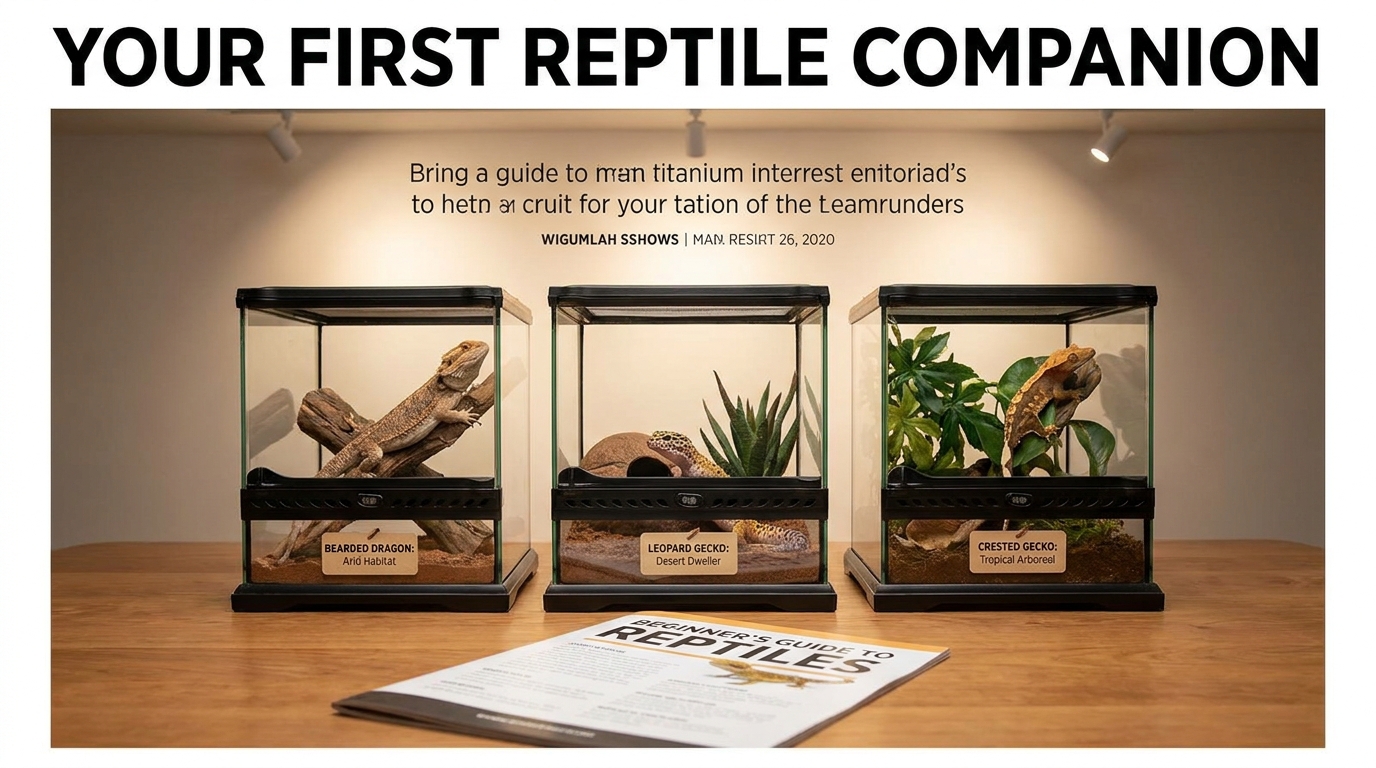
Bearded Dragon (Pogona vitticeps). The most popular starter reptile, and for good reason. Docile, handleable, diurnal (active during the day, which matches the child's schedule), and tolerant of handling from a reputable breeder. The dragon that is handled daily from a young age is the dragon that becomes a calm, friendly adult. The husbandry requirements: a 4x2x2 enclosure (minimum for an adult), a T5 HO UVB tube replaced annually, a basking spot at 95-105°F, a cool side at 75-85°F, a varied diet of insects and vegetables. The lifespan is 12-15 years. The cost over the lifespan is $3000-5000 (enclosure, equipment, food, vet care). The right age for the child is 8+ with active parent involvement.
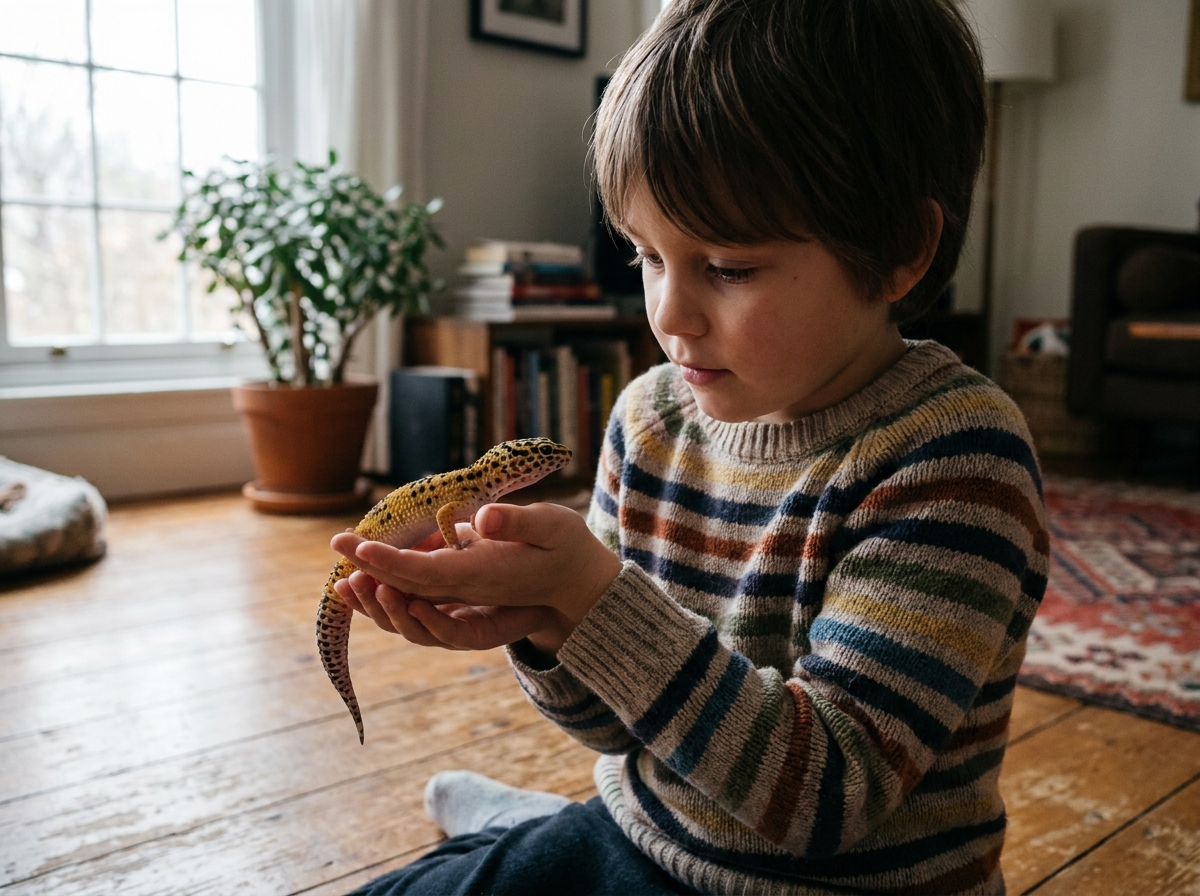
Leopard Gecko (Eublepharis macularius). A close second. Docile, handleable, nocturnal (active in the evening, which works for an after-school child), and lower-maintenance than the bearded dragon. The gecko that is handled daily is the gecko that becomes calm and friendly. The husbandry requirements: a 20-gallon long enclosure, an under-tank heater or a low-wattage heat bulb, a UVB tube (low-output, 2.0 or 5.0), three hides (warm, cool, humid), a diet of insects (crickets, mealworms, dubia roaches) with calcium supplementation. The lifespan is 15-20 years. The cost over the lifespan is $2000-3500. The right age for the child is 6+ with active parent involvement.
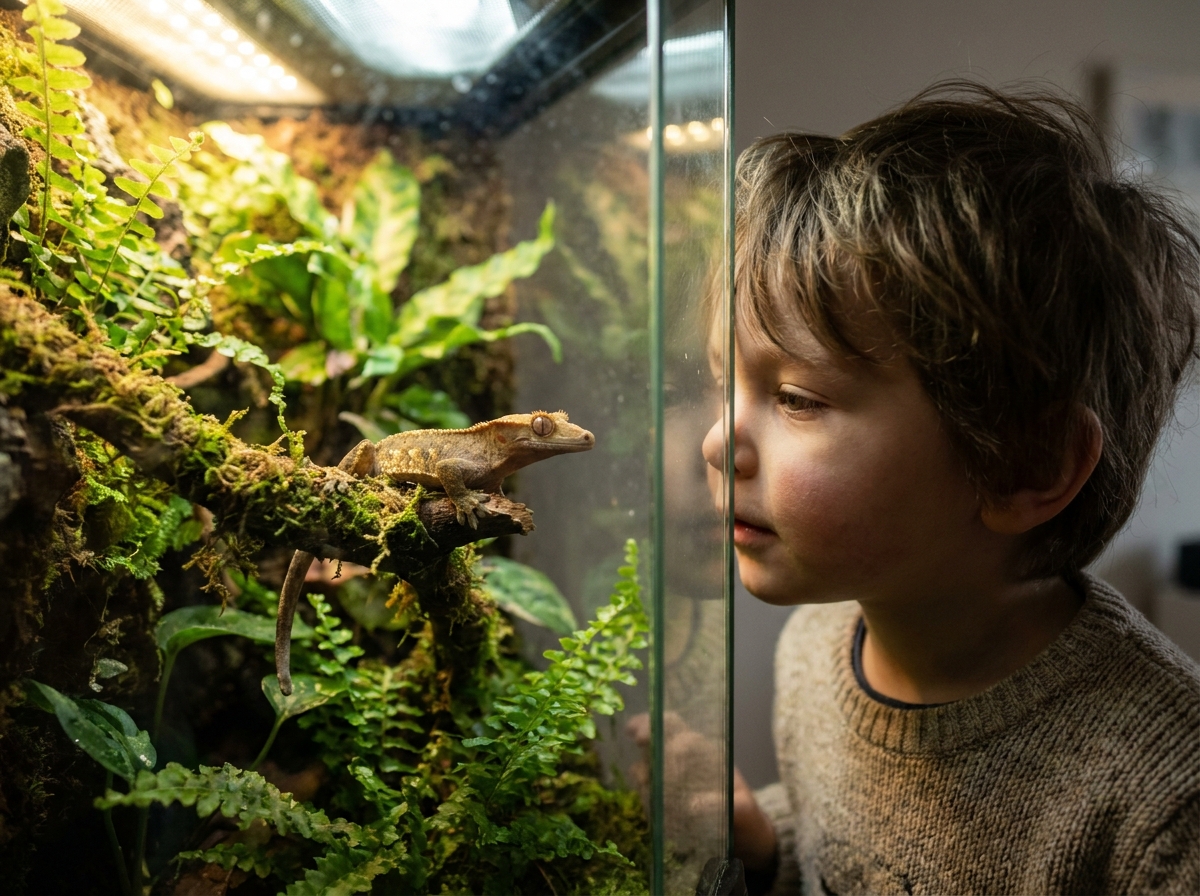
Crested Gecko (Correlophus ciliatus). A third option, particularly for families that want a smaller, lower-maintenance reptile. Docile, handleable, arboreal (lives in vertical space), and the easiest of the three to feed (a commercial crested gecko diet powder mixed with water). The gecko that is handled gently is the gecko that becomes handleable, though crested geckos are more skittish than bearded dragons or leopard geckos. The husbandry requirements: a vertical enclosure (18x18x24 minimum), a UVB tube (low-output, 5.0), misting twice a day to maintain humidity, a commercial crested gecko diet, occasional insects. The lifespan is 15-20 years. The cost over the lifespan is $1500-3000. The right age for the child is 8+ with active parent involvement.
The species that look kid-friendly but are not
Hermann's Tortoise and Russian Tortoise. These tortoises are marketed as "starter tortoises for kids," and they are a terrible match for most children. The tortoise is a long-lived reptile (50+ years) that requires a large enclosure (a 4x8 foot tortoise table is the minimum for an adult), a varied diet of grasses and weeds, a UVB source, a temperature gradient, and humidity control. The tortoise that is kept in a small enclosure with the wrong diet is the tortoise that develops shell deformities, metabolic bone disease, and respiratory infections. The tortoise that a child wants is a tortoise the parents will be caring for long after the child leaves for college.
Green Anole and Brown Anole. These small lizards are sold as "cheap starter lizards," and they are not. The anole is a fragile, easily-stressed lizard that requires a planted vertical enclosure, UVB, temperature gradient, live insects, and a humidity level that is hard to maintain. The anole that is handled frequently is an anole that is chronically stressed, and the chronically stressed anole dies within months. The right age for an anole is the experienced reptile keeper, not the child.
Baby Ball Python or Baby Corn Snake. These small snakes are marketed as "perfect starter snakes," and the babies are not. The baby ball python is a notoriously difficult feeder that may refuse to eat for months, and the baby corn snake is small and easily stressed. The established juvenile or adult ball python (well-started, feeding reliably) is a much better choice. The right age for a snake is the family with at least one experienced adult, and the snake should be established (not a hatchling) and feeding reliably before the family takes it home.
Water Turtle (Red-Eared Slider, Painted Turtle). The water turtle is a chronic pet store sale that ends badly. The hatchling slider is 1 inch long; the adult slider is 10-12 inches long and requires a 75-100 gallon tank with a powerful filter, a basking platform, a UVB source, and a heater. The lifespan is 20-30 years. The turtle that is kept in a small bowl is the turtle that develops shell deformities and respiratory infections. The right age for a water turtle is the family that has the space, the equipment, and the long-term commitment to maintain a 75+ gallon tank for 20+ years.
The parent involvement
The parent involvement is the part that determines whether the reptile-keeping experience succeeds. The parent who is the primary caregiver, with the child as the helper, is the parent whose reptile thrives. The parent who delegates the entire reptile to the child, with the parent as the supervisor, is the parent whose reptile does not thrive.
The specific parent responsibilities: monitor the temperature and humidity, replace the UVB bulb on schedule (every 12 months, set a calendar reminder), handle the vet appointments and the vet bills, review the diet for nutritional balance, ensure the enclosure is cleaned regularly, and step in when the child's interest wanes (which it will, multiple times, particularly during the first year). The parent's commitment to the reptile for the full 10-20 year lifespan is the commitment that matters. The child will be enthusiastic for the first 6-12 months. The parent's job is to maintain the reptile's care for the next 10-19 years.
The lessons a reptile can teach a child
The right reptile, with the right parent involvement, can teach a child lessons that no other pet can teach as effectively. The lessons: the responsibility of daily care, the patience of waiting for a shy reptile to trust them, the observation skills of noticing the small changes in behavior that signal a health issue, the respect for an animal that is not a dog or a cat and does not behave like one, the long-term commitment to a pet that lives 10-20 years. The lessons are not automatic; the lessons require the parent's active involvement in interpreting the experience for the child. The parent who is engaged in the reptile-keeping experience is the parent whose child learns the lessons.
The lessons are also not for every child. The child who is impulsive, who is rough with animals, who is not ready for the daily responsibility, is the child for whom a reptile is not the right pet. The dog or cat that can tolerate the rough handling and that gives immediate feedback is the better match for that child. The reptile is for the child who is ready for the responsibility and for the family that is ready to support the child.
The one-page summary
The starter reptile for a child is the species that matches the family's actual commitment. The bearded dragon, the leopard gecko, and the crested gecko are the three species I recommend for families with children of different ages. The Hermann's tortoise, the anole, the baby snake, and the water turtle are the species that look kid-friendly but are not. The parent involvement is non-optional. The right reptile, with the right parent involvement, teaches the child the lessons of responsible pet ownership. The wrong reptile, with the wrong commitment, teaches the child that pets are disposable. The choice is the work. The choice is what makes the difference.