
Bearded dragon UVB and the temperature gradient: the two factors that decide everything else
The bearded dragon (Pogona vitticeps) is the most commonly kept pet reptile in the world, and the most commonly kept badly. The dragons that are sold at pet stores, taken home in a 20-gallon kit, and given a single basking bulb and a piece of driftwood are the dragons that develop metabolic bone disease (MBD) within their first year of life. The dragons that are kept in a properly designed enclosure with the right UVB and the right temperature gradient are the dragons that live 12-15 years, breed readily, and remain alert and active into their senior years. In this article I will walk through the two non-negotiable factors that determine whether a bearded dragon thrives or fails, the specific equipment that produces the right UVB output, the specific temperatures for the gradient, and the daily and seasonal adjustments that keep the dragon healthy for life.
Why UVB and temperature decide everything else
Bearded dragons, like all reptiles, are ectothermic — they cannot generate their own body heat, and they depend on external heat sources to reach their preferred body temperature. The preferred body temperature, called the preferred optimal temperature zone (POTZ), is the temperature at which the dragon's metabolism, immune function, digestion, and behavior are all functioning at peak. For bearded dragons, the POTZ is roughly 95-105°F (35-40°C) at the basking spot, with a gradient down to 75-85°F (24-29°C) on the cool side, and 65-75°F (18-24°C) at night.
The temperature gradient is not a luxury; it is a survival requirement. The dragon that is too hot cannot cool down, and the dragon that is too cold cannot digest food or fight infection. The dragon that is kept at a uniform temperature across the enclosure is the dragon that is constantly either overheated or underheated, and the chronic stress suppresses the immune system and the appetite.
UVB is the other non-negotiable. Bearded dragons, like most diurnal lizards, require UVB radiation to synthesize vitamin D3 in their skin. Vitamin D3 is required for the absorption of calcium from the gut. Without adequate UVB, the dragon cannot absorb calcium, the blood calcium drops, the body pulls calcium from the bones to maintain the blood level, and the result is metabolic bone disease. MBD is the most common cause of death in captive bearded dragons, and it is almost entirely preventable with the right UVB setup.
The UVB setup that actually works
Three UVB factors matter: the bulb type, the UVB output, and the distance from the dragon. Each factor has to be matched to the other two, and each factor is a common place for mistakes.
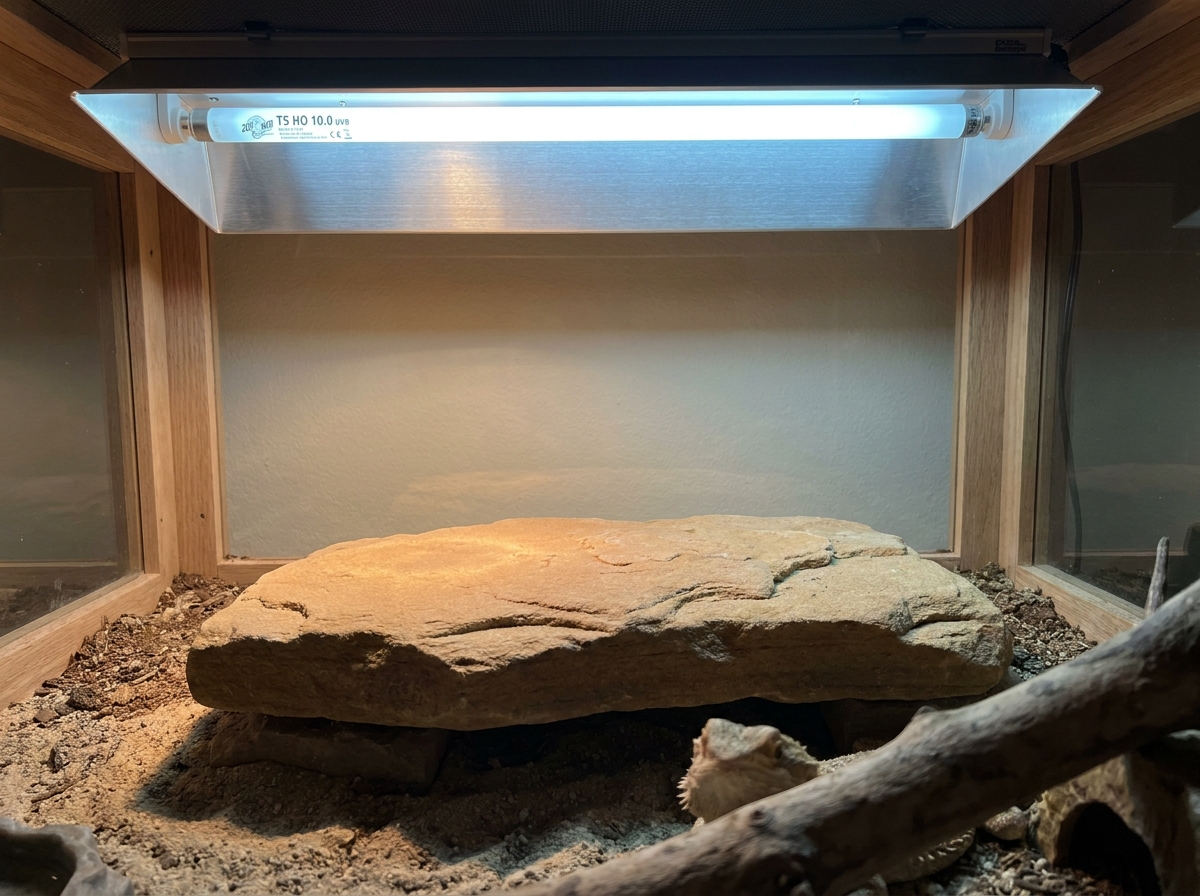
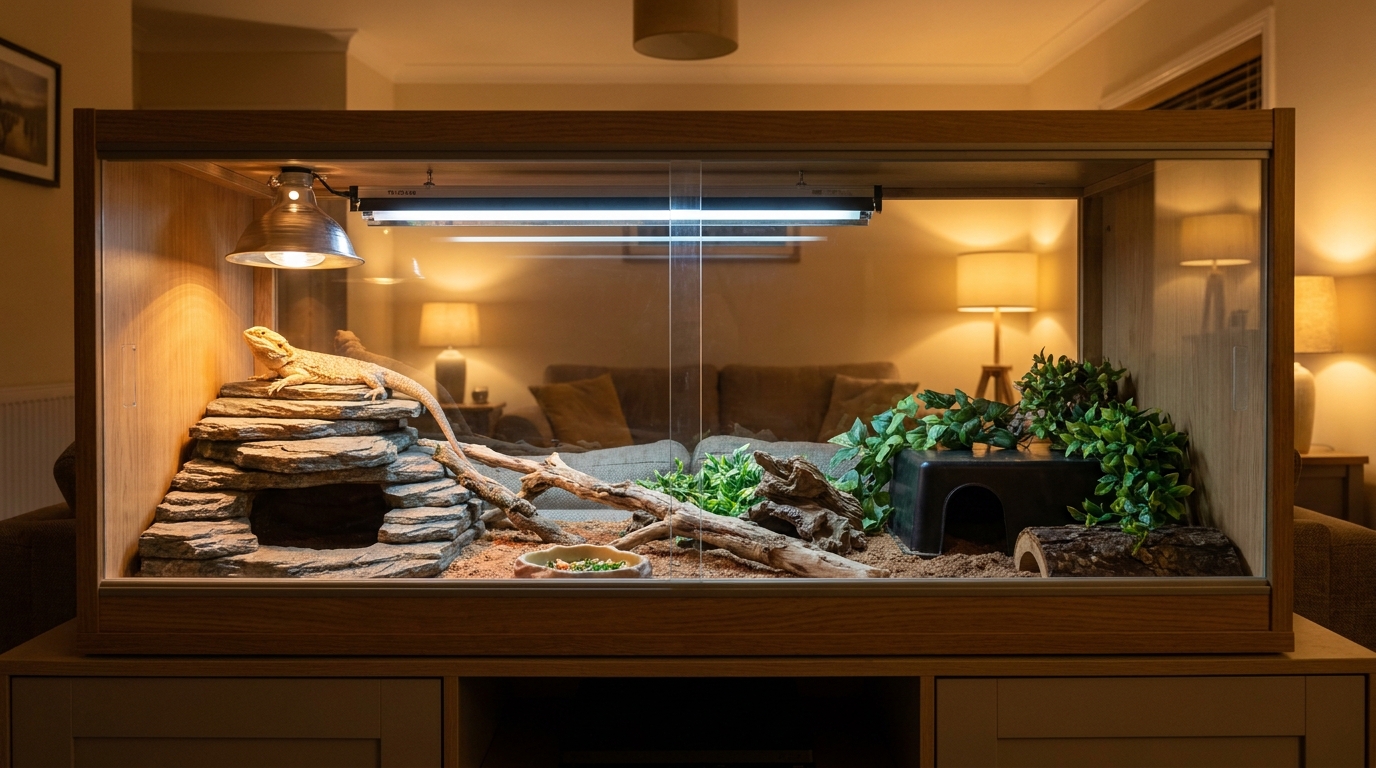
The bulb type. The two main categories are fluorescent tubes and mercury vapor bulbs. The fluorescent tubes (T5 HO linear fluorescent, 10.0 or 12.0 UVB rating) are the most common and most reliable. The mercury vapor bulbs combine UVB and heat in a single bulb, which is convenient but harder to control. For a beginner, the T5 HO fluorescent is the safer choice. The compact fluorescent UVB bulbs that were popular 15 years ago are now considered inadequate — they produce UVB in a narrow cone that does not cover the entire enclosure, and the dragon has to be directly under the bulb to receive the UVB. The T5 HO tube produces UVB across its entire length.
The UVB output. For bearded dragons, the target is a UVI (UV Index) of 3-5 at the basking spot. The UVI is measured with a UVB meter (a Solarmeter 6.5 is the standard). A T5 HO 10.0 bulb at 12 inches from the basking surface produces a UVI of roughly 3-4. A T5 HO 12.0 bulb at the same distance produces a UVI of 4-5. The bulb has to be replaced every 12 months, because the UVB output of a fluorescent tube declines steadily even when the visible light output is unchanged. The dragon on a 2-year-old bulb is a dragon with inadequate UVB.
The distance. The UVB output of a bulb drops dramatically with distance. A T5 HO 10.0 bulb produces a UVI of 5-6 at 6 inches, 3-4 at 12 inches, and 1-2 at 18 inches. The basking spot should be 10-14 inches from the UVB tube, with a decor element (a rock, a branch) that the dragon can climb on to reach the optimal UVI. The dragon that basks on the floor of the enclosure, 24 inches from the UVB tube, is the dragon that is not getting the UVB it needs.
The temperature gradient that actually works
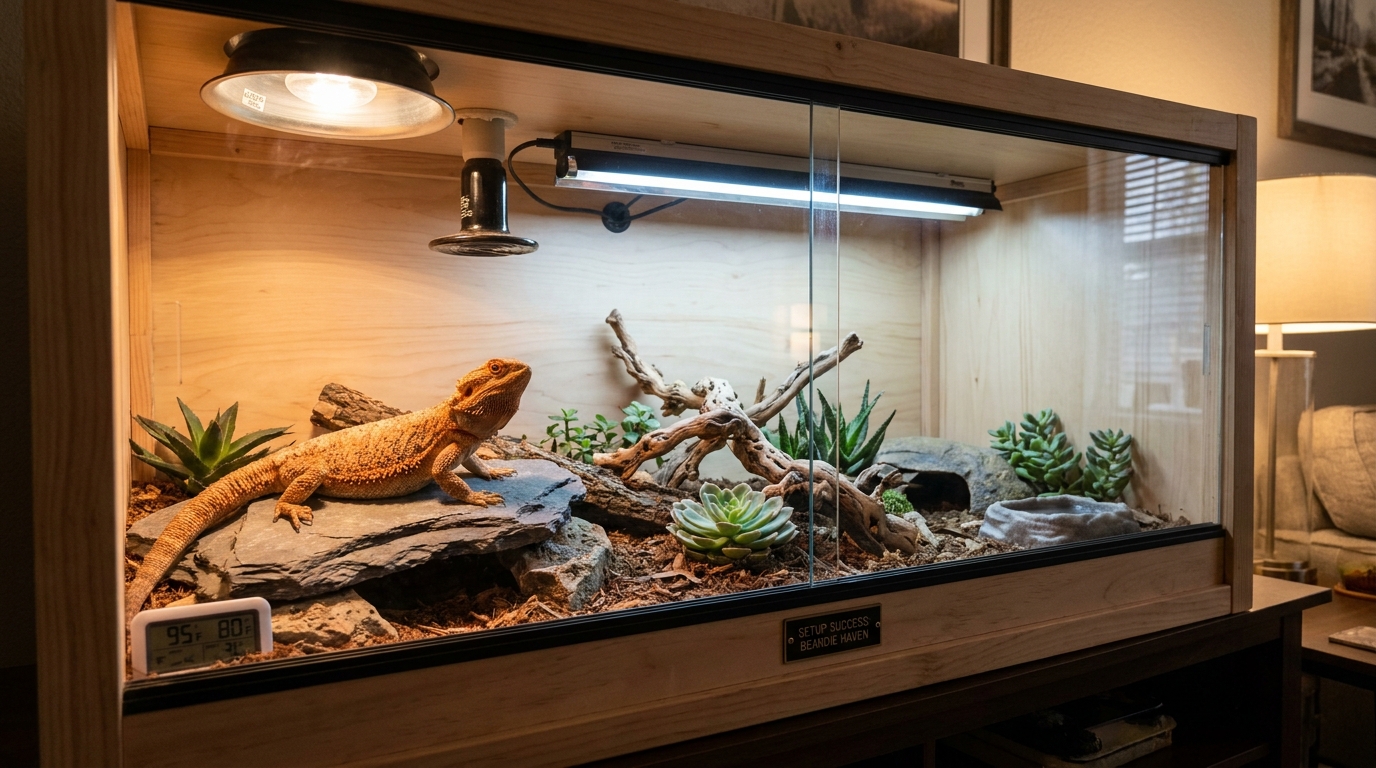
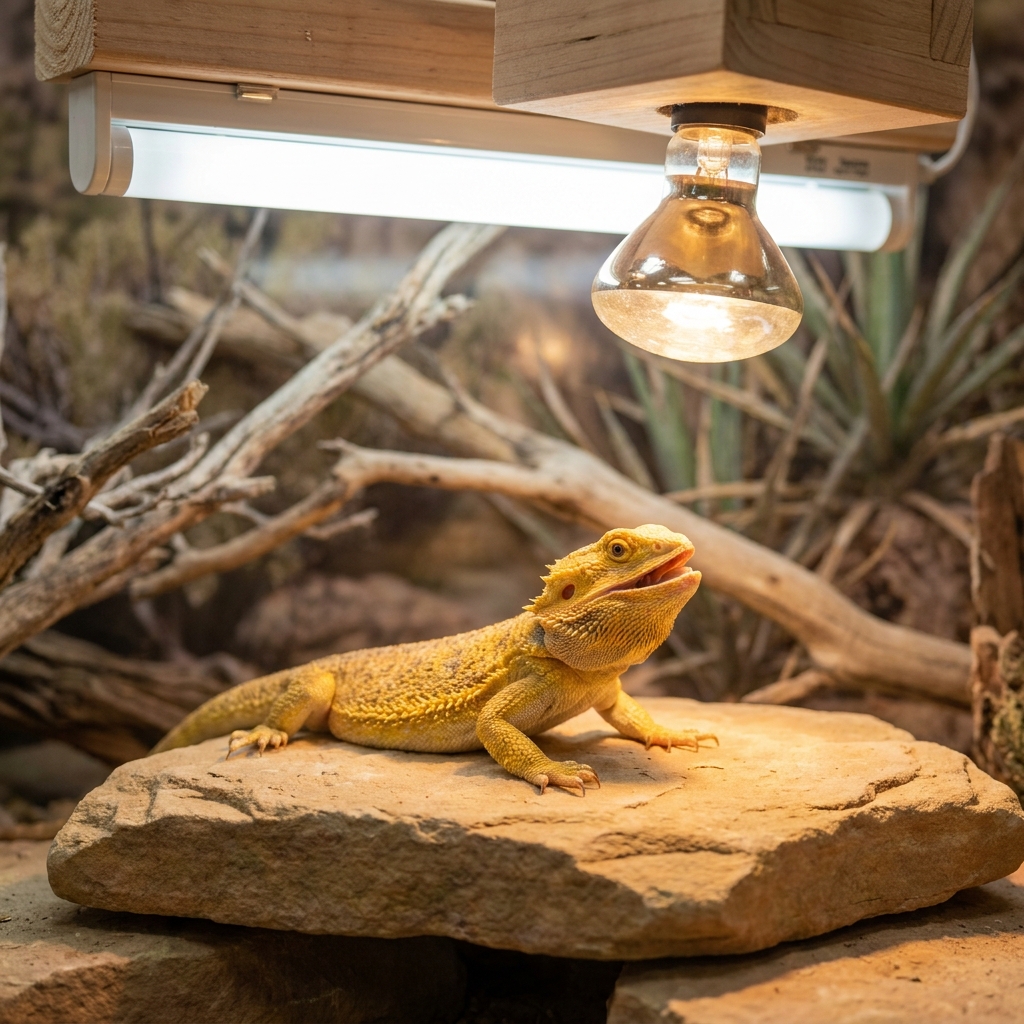
The basking spot temperature: 95-105°F for adults, 105-110°F for juveniles. The basking spot is measured at the surface where the dragon sits, with an infrared thermometer or a digital probe thermometer. The air temperature at the basking spot is 5-10°F cooler than the surface temperature. A halogen flood bulb or a ceramic heat emitter, on a thermostat, is the standard heat source. The wattage depends on the enclosure size and the ambient room temperature; a 100-watt halogen in a 40-gallon breeder enclosure in a 72°F room typically produces a 100°F basking spot.
The cool side temperature: 75-85°F. The cool side is the area of the enclosure opposite the basking spot. The temperature is measured with a digital thermometer at the substrate level. The cool side should not be heated by the basking bulb; if the cool side is too warm, the basking bulb is too powerful for the enclosure, or the enclosure is too small to create a gradient.
The nighttime temperature: 65-75°F. The nighttime drop is natural and beneficial. The enclosure should not be heated at night unless the room temperature drops below 65°F. If the room drops below 65°F, a ceramic heat emitter (CHE) on a thermostat is the right choice. A colored "night bulb" is not appropriate for bearded dragons — the visible light disrupts the dragon's photoperiod and suppresses sleep.
The seasonal variation. Bearded dragons in the wild experience a brumation period in the cooler months. Captive dragons benefit from a similar cool period: 6-8 weeks of slightly reduced temperatures (basking 85-90°F, cool side 70°F) and reduced light duration (10 hours instead of 14). The brumation is not required, but it improves breeding outcomes and may extend lifespan. The dragon that is brumating eats less, moves less, and sleeps more. The dragon that is not brumating maintains its normal routine. The choice depends on the keeper's goals.
The enclosure that supports both
The minimum enclosure for an adult bearded dragon is 4x2x2 feet (120x60x60 cm), with 4 square feet of floor space. The standard 40-gallon breeder (36x18x16) is too small for an adult. The dragon in a too-small enclosure cannot establish a proper gradient, and the dragon that cannot establish a proper gradient is the dragon that is constantly overheated or underheated.
The substrate is the second most important factor after UVB and temperature. The best substrate for an adult bearded dragon is a solid substrate (tile, slate, reptile carpet) or a loose substrate that is not impaction-prone (Jurassic Natural Australian Desert Dragon substrate, a calcified clay). The loose substrates that are commonly sold (calcium sand, walnut shell, ground corn cob) are impaction risks and are not appropriate. The dragon that is kept on calcium sand is the dragon that is at risk for intestinal impaction if the husbandry is off. The dragon that is kept on tile or a calcified clay substrate is the dragon that is not at risk.
The decor: a basking surface (a rock, a branch, a flat surface that absorbs heat) under the basking bulb and the UVB tube. The basking surface should be at the right height to match the UVI and the surface temperature targets. A second decor element on the cool side (a hide, a branch, a small cave) for the dragon to use when it wants to thermoregulate away from the heat.
The diet that works with the UVB and temperature
The diet is downstream of the UVB and temperature. A dragon that is properly heated and receiving adequate UVB can digest and absorb calcium from a varied diet of insects and vegetables. A dragon that is not properly heated or not receiving UVB cannot digest or absorb calcium, regardless of the diet.
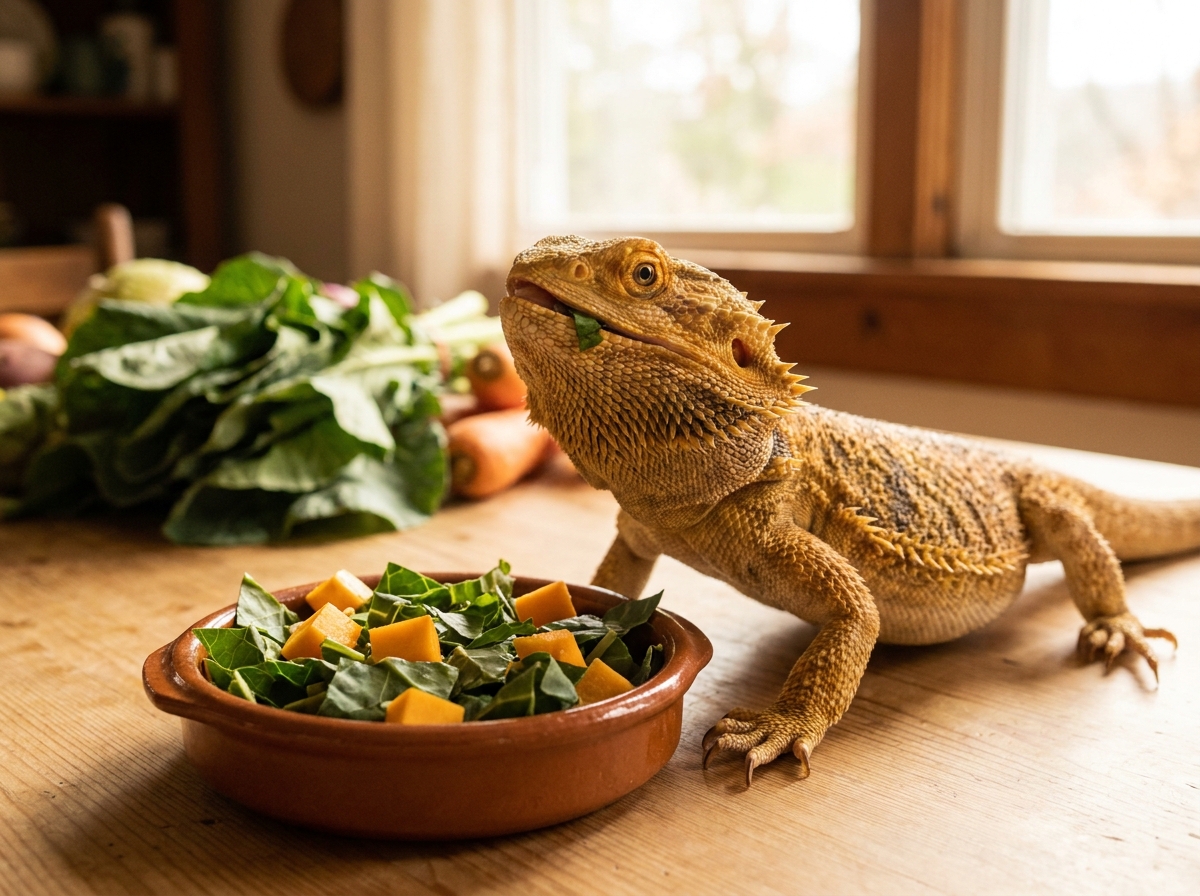
The diet for a juvenile (under 12 months): 70% insects, 30% vegetables. The insects are gut-loaded (fed a high-calcium diet for 24 hours before being offered to the dragon) and dusted with calcium powder (without D3, since the dragon is making its own D3 from the UVB) at most feedings. Multivitamin powder (with D3) once a week. The vegetables are a mix of dark leafy greens (collard, mustard, dandelion), squash, and other low-oxalate vegetables. The diet for an adult (over 12 months): 30% insects, 70% vegetables, with the same supplementation protocol. The adult on a high-insect diet is the adult that is at risk for obesity and gout.
The daily and weekly routine
Daily: spot-clean the enclosure, refresh the water dish, check the basking and cool side temperatures, observe the dragon for appetite and behavior. Weekly: deep-clean the substrate, refresh the vegetables, weigh the dragon, check the UVB bulb age. Monthly: replace the UVB bulb if it is at the end of its 12-month life. Annually: a vet visit with a fecal exam, blood work for calcium and phosphorus, and a physical exam.
The dragon that is on this routine is the dragon that lives 12-15 years. The dragon that is on a "feed it and forget it" routine is the dragon that develops MBD within its first year and dies within 3-5 years. The routine is not optional.
The single sentence to remember
The UVB and the temperature gradient are the two factors that decide whether a bearded dragon lives 3 years or 15 years. Get them right with a T5 HO UVB tube replaced annually, a basking spot at 95-105°F, a cool side at 75-85°F, and a properly sized enclosure, and the dragon thrives. Get them wrong, and nothing else — not the diet, not the substrate, not the decor — saves the dragon. The setup is the work. The setup is what makes the difference.