
Heart disease early signals in dogs and cats: the diagnostic workup that confirms it
Heart disease in dogs and cats is a family of slowly progressing structural problems that, in most cases, give owners months to years of warning before anything dramatic happens. The job of an early-detection plan is simple: catch the warning while it is still a medication conversation rather than an emergency-room conversation. This article walks through what to look for at home, what your vet will actually do in the clinic, which drugs get used and at which stage, and the realistic prognosis for the three most common heart conditions in dogs and cats.
The early signals that owners can spot
Heart disease does not announce itself with dramatic symptoms. It announces itself with small, gradual changes that most owners attribute to aging. The dog that is slowing down on walks. The cat that is sleeping more. The dog that coughs once or twice at night. The cat that breathes with its belly moving more than its chest. Each of these can be aging; each of these can be the first signal of heart disease. The owner who knows the difference is the owner who brings the dog to the vet at the right time.
The seven signals to watch for, in order of how commonly they appear:
- Reduced exercise tolerance. The dog that used to walk 3 miles and now walks 1 mile without getting tired. The cat that used to play for 20 minutes and now plays for 5. The change is gradual, and the change is often attributed to age. The change is a heart signal when it is more pronounced than the dog's age would suggest, or when it is getting worse month over month.
- Coughing. In dogs, the most common early signal of mitral valve disease (MMVD) is a soft, dry cough that occurs at night or after exercise. The cough sounds like the dog is trying to clear something from its throat. The cat with heart disease does not typically cough in the early stages; coughing in a cat is more often a sign of asthma or bronchitis.
- Increased respiratory rate at rest. The dog or cat that is breathing faster than normal at rest, particularly when sleeping, is a dog or cat whose heart may not be moving blood efficiently. The normal sleeping respiratory rate for a dog is 15-30 breaths per minute, for a cat 20-30. A rate consistently above 30 in a sleeping dog, or above 40 in a sleeping cat, is a red flag.
- Abdominal distension. The dog or cat whose belly is becoming progressively rounder, particularly with a fluid-filled appearance, is showing signs of right-sided heart failure. The fluid is ascites — it accumulates in the abdomen because the heart is not moving blood through the liver efficiently. The dog with ascites often has a "pear-shaped" belly; the cat with ascites often looks pot-bellied.
- Syncope (fainting). The dog that collapses briefly after excitement or exercise, then recovers quickly, is showing a classic signal of advanced heart disease — the heart cannot keep up with the demand, and the brain is briefly starved of blood. Syncope is a serious sign that warrants immediate veterinary attention.
- Weight loss. The dog or cat that is losing weight despite a normal appetite, or that is losing weight along with a decreased appetite, is showing a late-stage heart signal — the body is breaking down muscle for energy because the heart is not delivering oxygen efficiently.
- Restlessness or anxiety at night. The dog that is pacing at night, unable to settle, is often a dog that is having difficulty breathing when lying down (orthopnea). The dog is sitting up or standing because the lungs are congested when the dog lies flat. The cat with the same condition may sit with its head and neck extended, mouth slightly open.
The first vet visit: what to expect
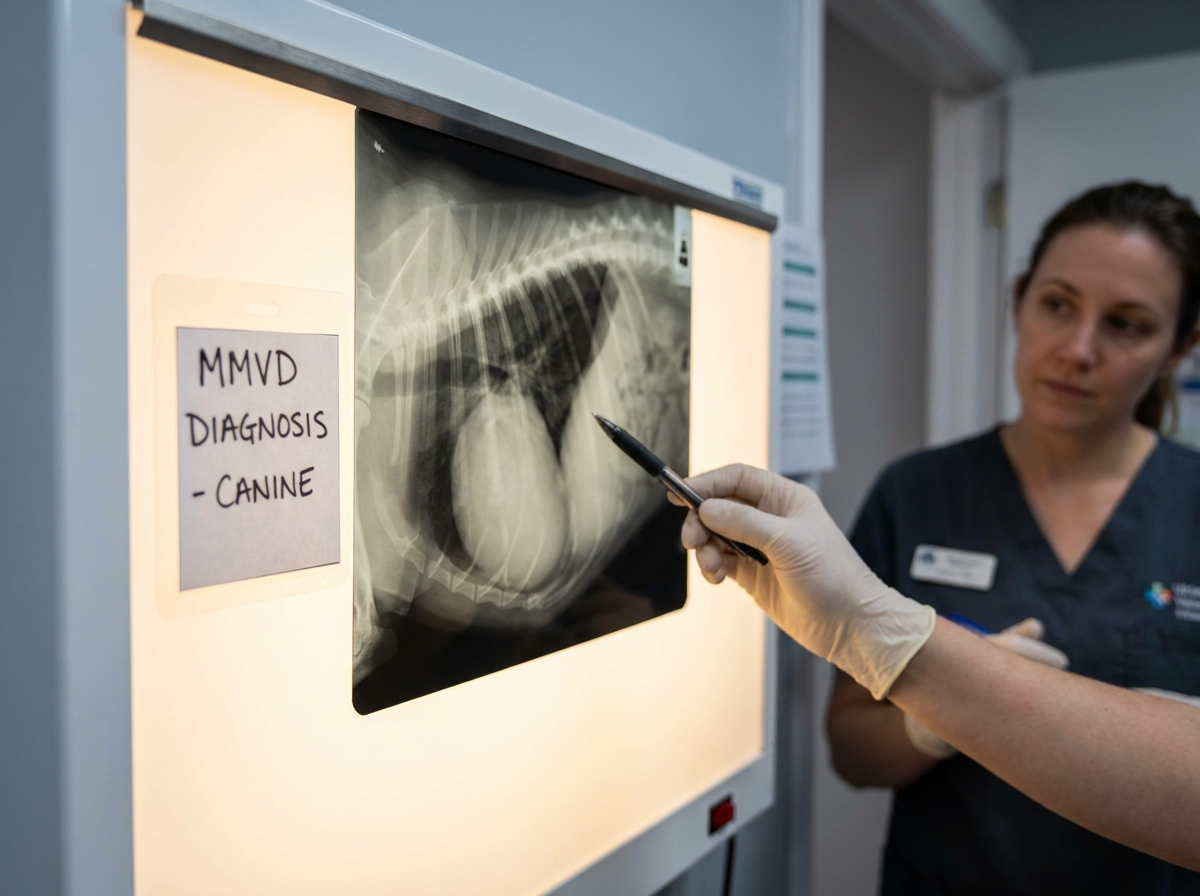
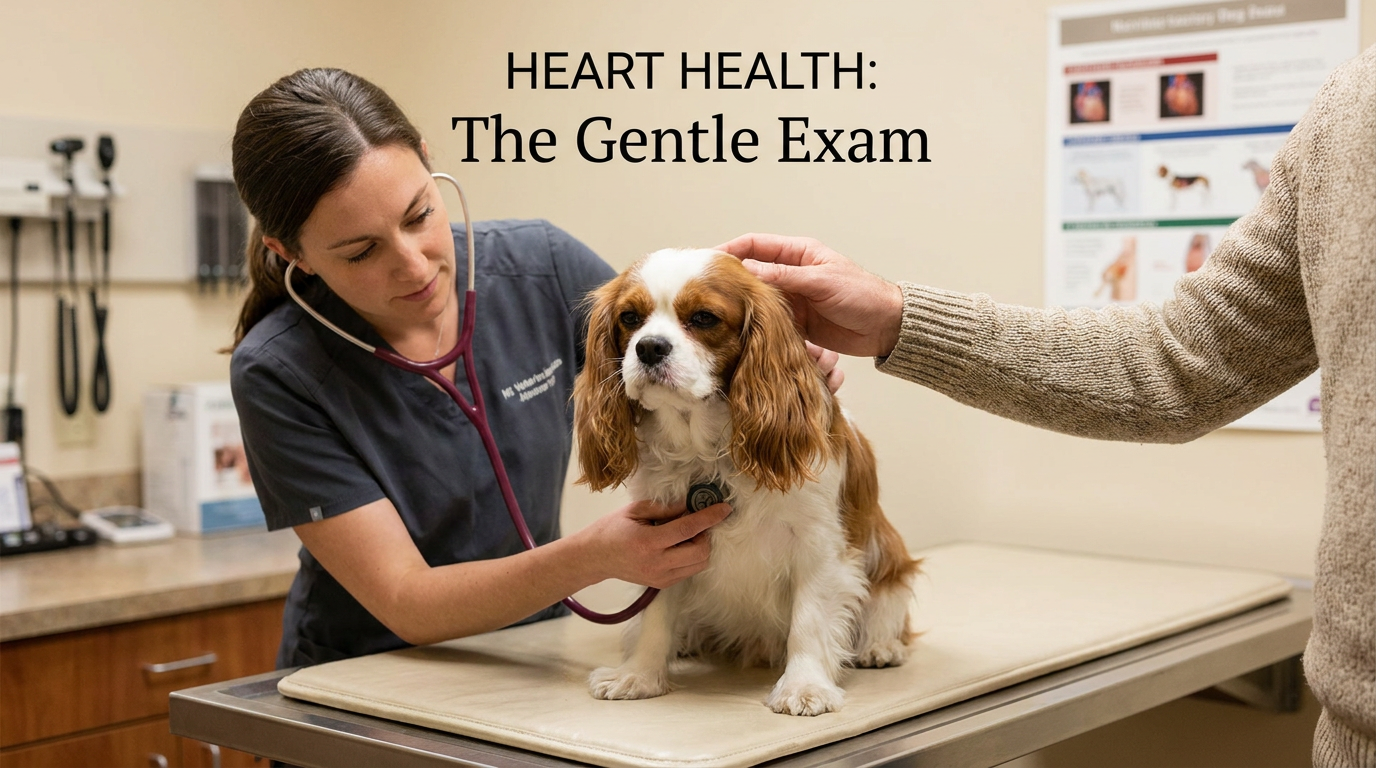
The owner who brings the dog in for a cough at night should expect a full physical exam, a cardiac auscultation, and a chest X-ray as the first three steps. The cardiac auscultation identifies a heart murmur (a whooshing sound between the normal "lub-dub" sounds) and rates it on a 1-6 scale. The chest X-ray assesses heart size (vertebral heart score), pulmonary vessels, and the lung field for evidence of congestion.
The owner who brings the cat in for increased respiratory rate should expect a similar workup, with the addition of an NT-proBNP blood test, which is a biomarker that helps distinguish cardiac from respiratory causes of breathing changes in cats. The cat with a high NT-proBNP and a normal chest X-ray may have early hypertrophic cardiomyopathy (HCM), the most common heart disease in cats.
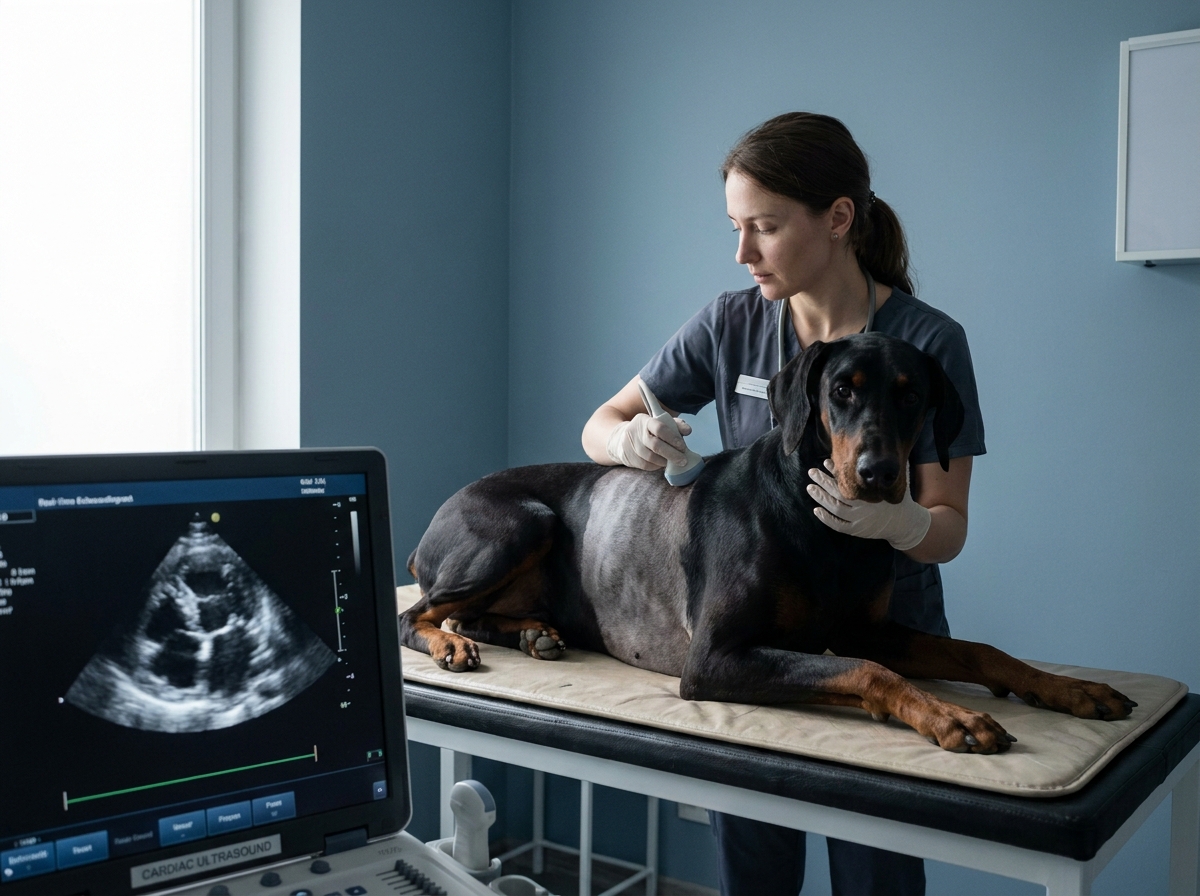
The diagnostic workup at the first visit typically identifies the type and severity of heart disease. The follow-up diagnostics — echocardiogram (heart ultrasound), blood pressure, ECG — are usually scheduled within 1-2 weeks to confirm the diagnosis and stage the disease. The echocardiogram is the gold standard: it shows the heart chambers in motion, the valve function, the wall thickness, and the contractility. The information from the echo is what the cardiologist uses to decide on treatment.
The three most common conditions and what each looks like
Myxomatous mitral valve disease (MMVD) in dogs. The most common heart disease in dogs, particularly in small breeds (Cavalier King Charles spaniels, dachshunds, toy poodles, miniature schnauzers). The mitral valve degenerates over time, becomes leaky, and allows blood to flow backward into the left atrium. The result is left-sided heart enlargement, pulmonary congestion, and eventually congestive heart failure. The disease progresses through four stages (A, B1, B2, C, D), with treatment starting at stage B2 in most cases.
Dilated cardiomyopathy (DCM) in dogs. A disease of the heart muscle itself, with the heart becoming progressively weaker and the chambers dilating. Common in large and giant breeds (Doberman pinschers, boxers, Great Danes, Irish wolfhounds). The disease has a long preclinical phase (years in some breeds), and treatment with pimobendan in the preclinical phase has been shown to delay the onset of congestive heart failure by an average of 9-15 months.
Hypertrophic cardiomyopathy (HCM) in cats. The most common heart disease in cats, characterized by thickening of the heart muscle. The thickened muscle reduces the chamber size and impairs filling. Common in Maine Coons, Ragdolls, and British Shorthairs (genetic forms), and in any cat as a secondary condition (hyperthyroidism, hypertension). The disease can progress to congestive heart failure or to aortic thromboembolism (a blood clot that lodges in the hind legs, causing sudden paralysis).
The treatment at each stage
The treatment for MMVD in dogs: stage B2 (heart enlargement without clinical signs) is treated with pimobendan, a drug that increases the heart's contractility. The EPIC trial showed that starting pimobendan at stage B2 delays the onset of congestive heart failure by an average of 15 months. Stage C (congestive heart failure) is treated with pimobendan plus a diuretic (furosemide), plus an ACE inhibitor (enalapril or benazepril), plus dietary sodium restriction. Stage D (refractory congestive heart failure) is treated with the addition of spironolactone, possibly pimobendan dose escalation, and consideration of advanced interventions.
The treatment for DCM in dogs: pimobendan in the preclinical phase, ACE inhibitors in the clinical phase, and the addition of diuretics as congestive heart failure develops. Antiarrhythmic drugs (sotalol, mexiletine, amiodarone) for dogs with ventricular arrhythmias, which are common in Dobermans and boxers.
The treatment for HCM in cats: there is no proven treatment for preclinical HCM. Once congestive heart failure develops, the treatment is furosemide (often injectable initially, then oral), plus an ACE inhibitor or pimobendan (the evidence in cats is more limited than in dogs), plus a calcium channel blocker (diltiazem) or beta blocker (atenolol) in some cases. The cat with aortic thromboembolism is treated with anticoagulants (clopidogrel) and supportive care.
The at-home monitoring that catches decompensation
The most important at-home monitoring for a dog or cat with heart disease is the sleeping respiratory rate. Count the breaths per minute while the pet is sleeping, and log the count. A normal count is below 30 for a dog, below 40 for a cat. A count that is consistently above 30 (dog) or 40 (cat), or a count that has increased by 20% or more over baseline, is a signal of impending congestive heart failure. The owner who catches the early signal has the option of calling the vet for a medication adjustment before the pet is in crisis.
The other at-home monitoring: appetite, activity, attitude. The dog that is eating less, the cat that is hiding more, the dog that is reluctant to go on walks — all of these are signals that the heart disease is progressing. The owner who notices the signals and reports them at the next vet visit, or sooner if the changes are dramatic, is the owner whose pet is most likely to stay ahead of the disease.
The realistic prognosis
MMVD in dogs: with treatment, the median survival from the onset of congestive heart failure is 9-12 months for small breeds, 6-9 months for larger breeds. With early treatment at stage B2, the median survival from the time of diagnosis is 3-5 years. The dog that is diagnosed early and treated aggressively has the best prognosis.
DCM in dogs: with treatment starting in the preclinical phase, the median survival from the time of diagnosis is 2-4 years. The Doberman has the worst prognosis — the median survival with treatment is closer to 1-2 years.
HCM in cats: the prognosis varies widely. The cat with mild preclinical HCM can live a normal lifespan. The cat with congestive heart failure has a median survival of 6-18 months with treatment. The cat with aortic thromboembolism has a median survival of 3-6 months, and many owners elect euthanasia at the time of the thromboembolism because of the severity of the condition.
The one-page summary
The early signals of heart disease are subtle, and the owner who knows them is the owner who brings the pet in early. The diagnostic workup at the first vet visit identifies the type and stage. The treatment at each stage is evidence-based and well-defined. The at-home monitoring (sleeping respiratory rate, appetite, activity) catches decompensation before the pet is in crisis. The prognosis is best when the disease is caught early. The owner who is informed and proactive is the owner whose pet has the best outcome.