


Common pet toxins: a household checklist and what to do in the first hour
In emergency practice, the poisonings that end badly almost never do so because the toxin was exotic. They go badly because the owner waited — "he seemed fine for a few hours" — and by the time they arrived, the window to decontaminate had closed. With most toxins, the single biggest variable in the outcome is how fast you act, not how much your pet ate.
This is the room-by-room checklist I wish every owner had on the fridge, with the specific amounts that cross from "watch him" into "we need to see you now."
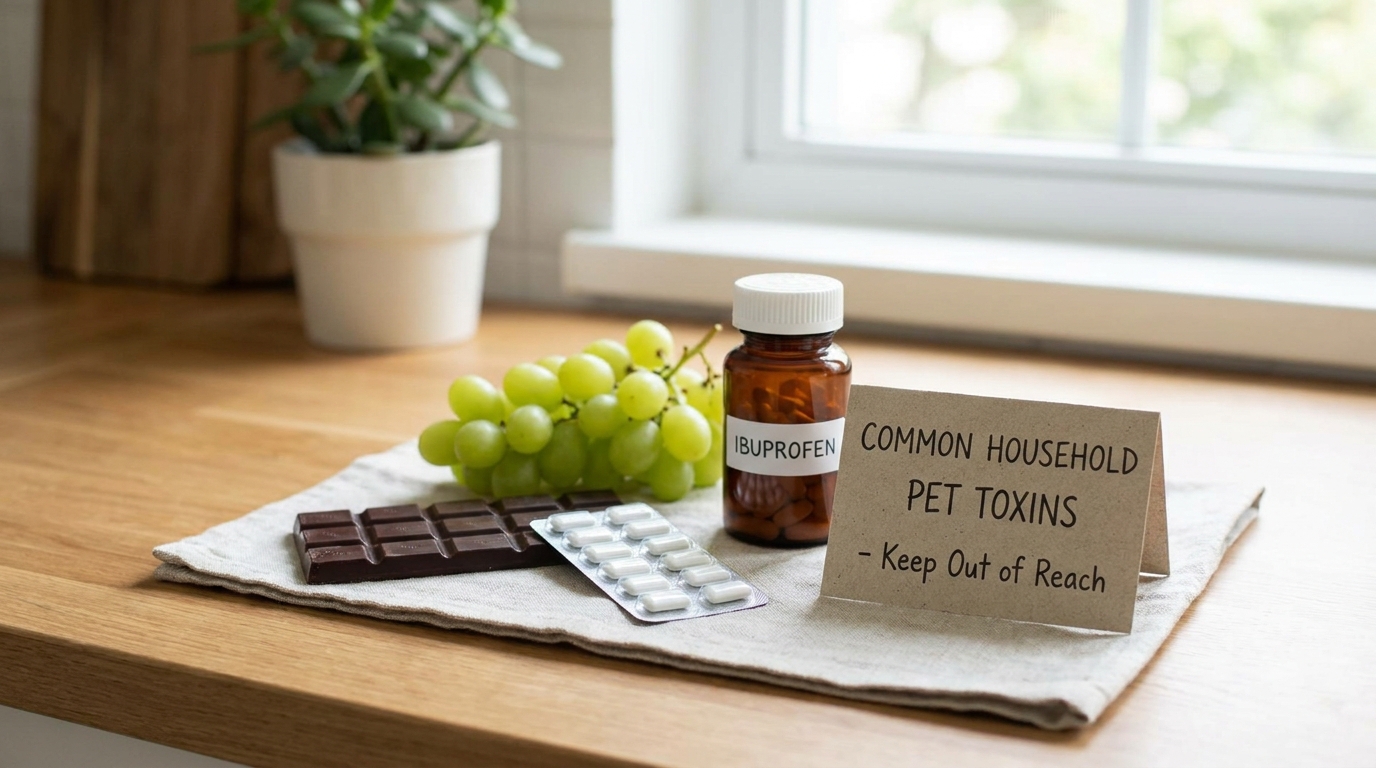
The first-hour rules that apply to every poisoning
Before we get into specific toxins, four rules govern the first hour regardless of what your pet ate:
- Call a poison line first, not last. In the U.S., the ASPCA Animal Poison Control Center (888-426-4435) and the Pet Poison Helpline (855-764-7661) are staffed 24/7 by toxicologists. There is a consultation fee (around $85–100), but the case number they give you lets your ER vet start treatment immediately instead of re-researching the toxin.
- Do not induce vomiting unless a professional tells you to. Making a pet vomit is dangerous with corrosives (batteries, drain cleaner), petroleum products, or in an animal that is already dizzy or seizing — the vomit gets aspirated into the lungs. Never use salt or your fingers.
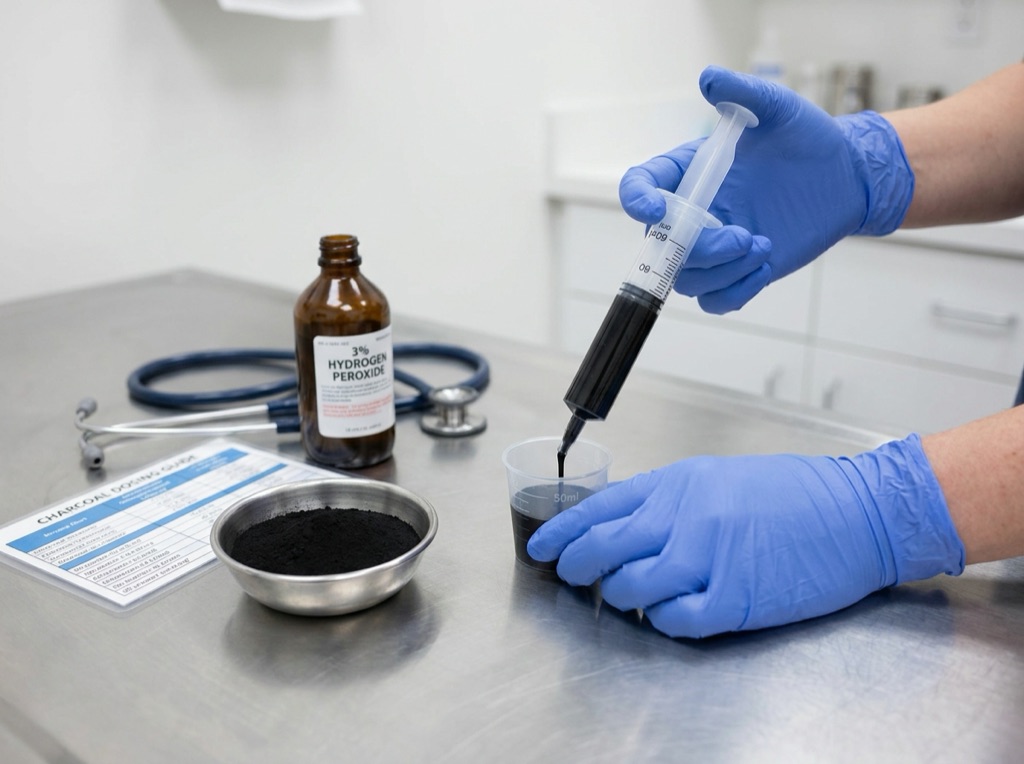
- Never give hydrogen peroxide to a cat. In dogs, 3% hydrogen peroxide at 1 mL per pound (max 45 mL) is the standard at-home emetic *when instructed*, but in cats it causes severe, sometimes fatal hemorrhagic gastritis. Cats are decontaminated at the clinic, not the kitchen.
- Bring the packaging. The label — active ingredient, concentration, and how much was in the container — turns guesswork into a precise dose calculation.
Kitchen and pantry: the big four
The kitchen is where most dogs get into trouble. Four foods account for the majority of the calls I take.
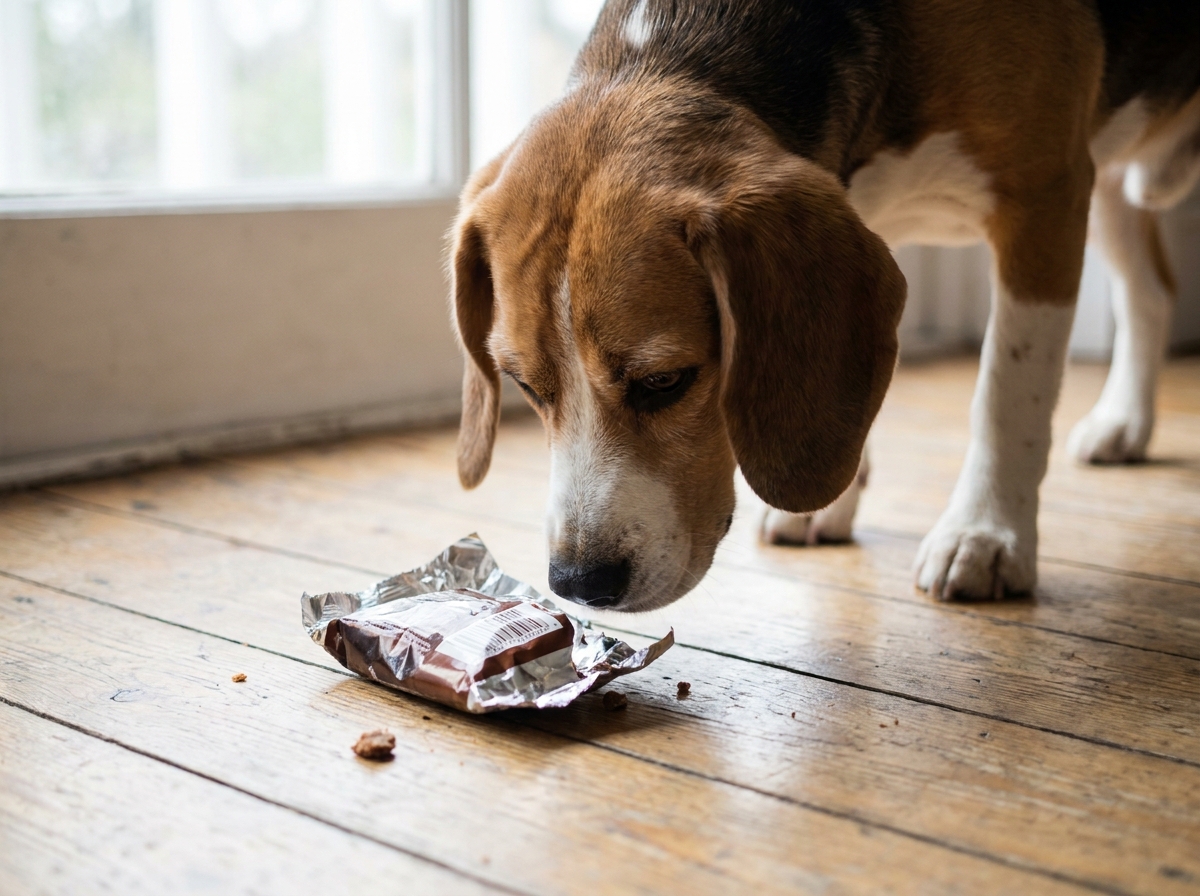
Chocolate. The toxic agents are theobromine and caffeine. Danger scales with darkness: baking chocolate and cocoa powder are roughly 10x more toxic than milk chocolate. The rough threshold for signs is 20 mg/kg of theobromine (agitation, vomiting), with cardiac and seizure risk climbing above 40–60 mg/kg. In practical terms, a 10 kg dog eating one ounce of baker's chocolate is an emergency; the same dog eating a single milk-chocolate chip is not.
Xylitol. This sugar-free sweetener (gum, mints, peanut butter, baked goods, some medications) is far more dangerous than chocolate and acts faster. In dogs it triggers a massive insulin release; 0.1 g/kg causes life-threatening hypoglycemia within 15–60 minutes, and 0.5 g/kg causes acute liver failure. A couple of pieces of gum can put a small dog in a coma. There is no home treatment — this is a drive-now toxin.
Grapes and raisins. The toxic dose is famously unpredictable — some dogs eat a handful with no effect, others develop acute kidney failure from a few. Because we cannot predict sensitivity, we treat any ingestion as potentially toxic and decontaminate.
Onions, garlic, leeks, and chives. These damage red blood cells and cause anemia, cats being far more sensitive than dogs. Signs (weakness, pale gums, red-brown urine) are often delayed 2–4 days, so a "he's fine" evening means nothing here.
The medicine cabinet: pills are the deadliest room
More pets die from human and veterinary medication overdoses than from any pantry item.
- NSAIDs (ibuprofen, naproxen, and even carprofen at overdose). Ibuprofen causes stomach ulcers and, at higher doses, kidney failure. In dogs, GI signs start around 50 mg/kg and kidney injury around 175 mg/kg; cats are affected at roughly half those numbers. One 200 mg tablet can ulcerate a small dog's stomach.
- Acetaminophen (Tylenol / paracetamol). Cats have essentially no safety margin — a single 500 mg tablet can be fatal, causing the tell-tale brown gums, facial swelling, and difficulty breathing (methemoglobinemia). The antidote, N-acetylcysteine, works only if given early.
- ADHD stimulants and antidepressants. Amphetamines and SSRIs cause agitation, tremors, dangerously high temperature, and serotonin syndrome. These need aggressive in-hospital sedation.
- Vitamin D analogs (including psoriasis creams and some rodenticides). Cause a calcium spike that quietly destroys the kidneys over days.
Store every medication — human and pet — above counter height, and never leave a weekly pill organizer on a nightstand. Dogs chew them open like candy.
Garage, garden, and rodenticides
Anticoagulant rodenticides (brodifacoum, bromadiolone) block vitamin K and cause internal bleeding that appears 3–5 days after ingestion — long after the pet "seemed fine." The antidote is vitamin K1 at 3–5 mg/kg/day for 3–4 weeks, but only after the exposure is caught. Newer bromethalin baits cause brain swelling instead and have no antidote, which is why identifying the active ingredient on the box is critical.
Ethylene glycol (antifreeze) is sweet-tasting and lethal in tiny amounts — as little as 1.5 mL/kg in dogs and 0.5 mL/kg in cats. A cat can be poisoned licking it off a paw. The antidote (fomepizole, or ethanol) must be started within hours, before the crystals wreck the kidneys.
Slug and snail bait (metaldehyde) causes severe tremors and hyperthermia within an hour. Fertilizers, cocoa mulch, and compost round out the garden hazards.
Cats and plants: the lily emergency
For cats specifically, true lilies (Lilium and Hemerocallis species) — Easter, Tiger, Day, Asiatic — are a category unto themselves. Every part is nephrotoxic, including the pollen and the vase water. A cat that brushes pollen onto its coat and grooms it off can go into kidney failure. If you find your cat has bitten a lily, chewed a leaf, or has yellow pollen on its face, this is an immediate ER visit — treatment within 18 hours is the difference between survival and dialysis-or-death.
Other worrying plants: sago palm (liver failure in dogs), oleander and foxglove (cardiac), and dieffenbachia (oral swelling).
When to escalate: the drive-now thresholds
Call the poison line for guidance, but go to the emergency clinic without waiting if any of these apply:
- Any ingestion of xylitol, ethylene glycol, a true lily (cat), acetaminophen (cat), or rodenticide — regardless of how well your pet seems.
- Seizures, tremors, or twitching
- Collapse, stumbling, or extreme weakness
- Difficulty breathing or brown/blue/pale gums
- Repeated vomiting, especially with blood
- A body temperature over 40 °C (104 °F)
- Ingestion of any unknown quantity of medication or an unknown substance in a pet that is now acting off
The reassuring flip side: many exposures — a single milk-chocolate chip, a lick of a properly diluted cleaner, a mouthful of grass — genuinely are "watch at home" events. That is exactly why the phone call matters. A toxicologist can tell you in five minutes whether you have a monitoring situation or a two-minutes-to-the-car situation.
Your prevention checklist
- Program both poison-control numbers into your phone tonight.
- Keep chocolate, xylitol gum, and grapes in closed cabinets, not counters or bags on the floor.
- Store all medication above counter height; never leave pill organizers out.
- Lock the garage: antifreeze, rodenticide, and slug bait behind a door pets cannot open.
- Keep true lilies out of any home with cats — no exceptions.
- Keep a bottle of unexpired 3% hydrogen peroxide for dogs (never cats), to use only when a professional directs you.
---
Threshold doses above are guidelines to help you gauge urgency, not treatment instructions — decontamination and antidotes must be dosed by a veterinarian for your specific pet. When in doubt, call a poison-control line and head to the nearest emergency clinic. This article is informational and does not replace an in-person exam.