

Cockatiel daily care checklist: the 30-minute routine that keeps a small parrot healthy
The cockatiel (Nymphicus hollandicus) is the smallest of the cockatoo family and one of the most popular pet parrots in the world. The cockatiel that is well cared for is the cockatiel that lives 15-25 years, that breeds readily, that is active and engaged, and that is a joy to live with. The cockatiel that is not well cared for is the cockatiel that develops behavior problems, that has chronic health issues, and that has a lifespan shortened to 5-10 years. The difference is the daily routine, the equipment, and the consistency of the care. In this article I will walk through the daily 30-minute routine that every cockatiel owner should run, the equipment that the routine requires, the weekly and monthly additions to the routine, the health monitoring that catches problems early, and the mistakes that shorten the cockatiel's life.
The daily 30-minute routine
The 30-minute routine is the core of cockatiel care. The 30 minutes are split across the morning and the evening, with the morning being the more intensive period. The morning routine (15-20 minutes):
- 5 minutes: refresh the water. The water dish is emptied, cleaned, and refilled with fresh, room-temperature water. The cockatiel that has clean water is the cockatiel that is less likely to develop bacterial or fungal infections.
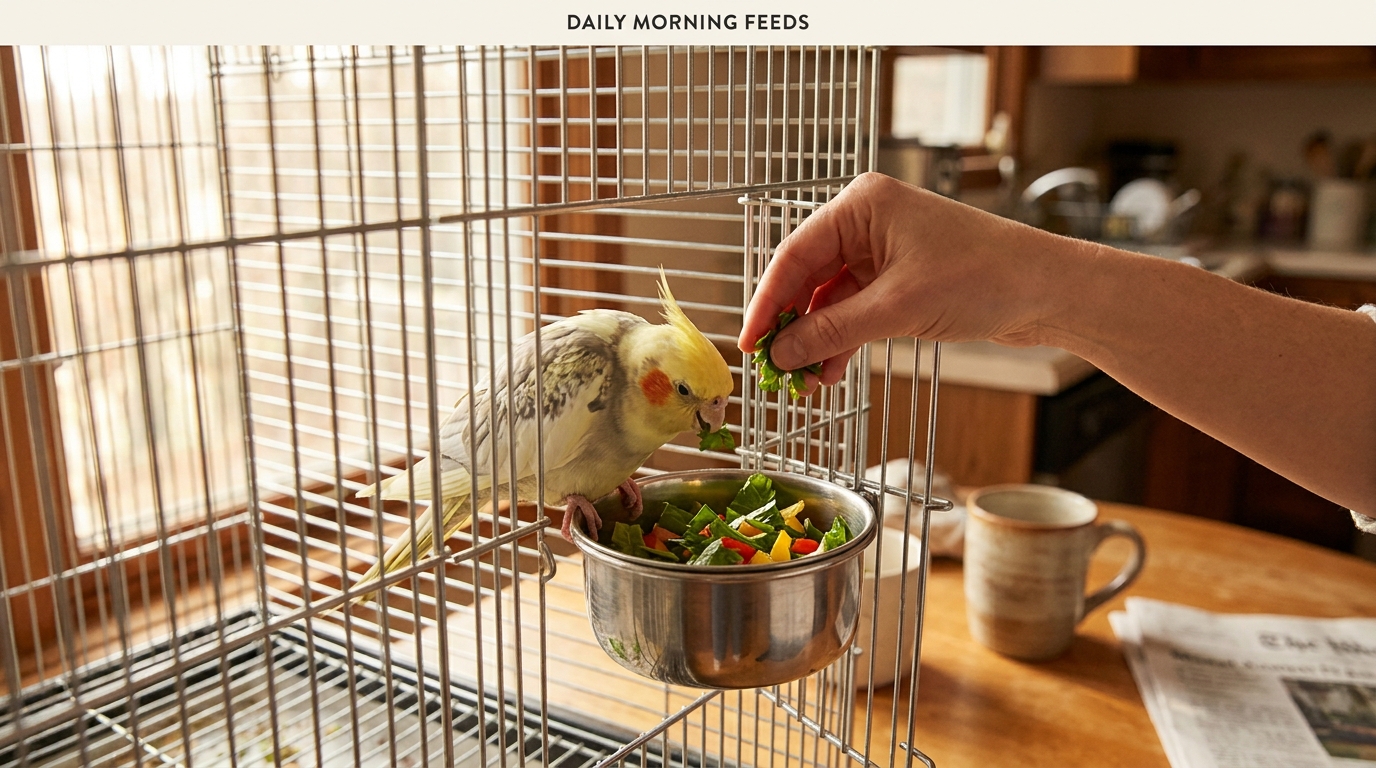
- 5 minutes: refresh the food. The seed mix or the pelleted diet is refreshed, the fresh vegetables from the previous day are removed (fresh vegetables left overnight can grow bacteria), and the new fresh vegetables are added. The daily fresh vegetable rotation: dark leafy greens (kale, collard, dandelion), grated carrot, broccoli florets, bell pepper. The seed mix should be a small portion (20% of the total diet) for an adult cockatiel, with the pellets and the vegetables making up the other 80%.
- 5 minutes: clean the cage floor. The droppings, the discarded food, and the feathers are removed. The newspaper or the paper liner is replaced. The cockatiel that has a clean cage floor is the cockatiel that has a lower parasite load and a lower bacterial load.
- 5 minutes: observe the cockatiel. The owner watches the cockatiel for signs of health or illness: bright eyes, clean nares, smooth feathers, active behavior, normal droppings. The owner who observes daily is the owner who catches the first sign of illness before the illness becomes serious.
The evening routine (10-15 minutes):
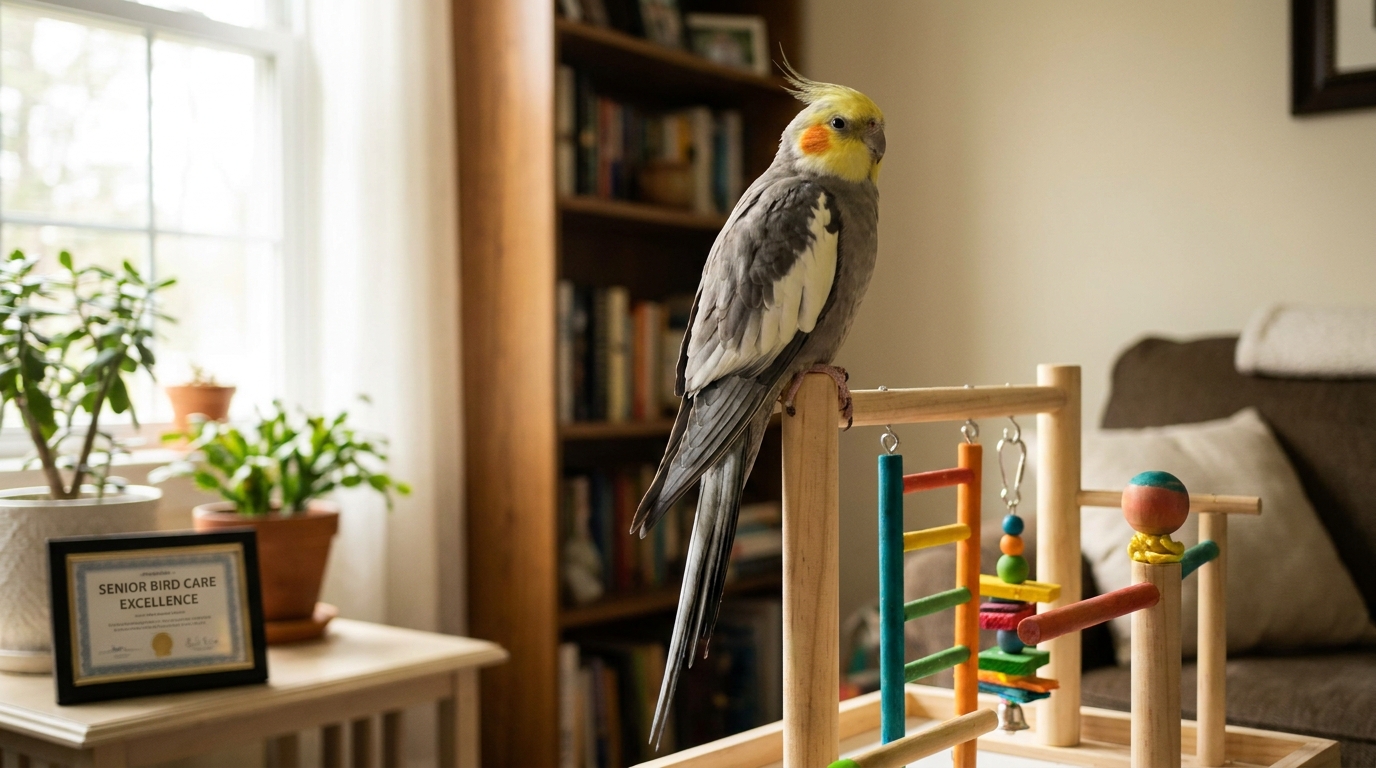
- 5 minutes: out-of-cage time. The cockatiel is let out of the cage for supervised out-of-cage time, either in a bird-safe room or on a play stand. The out-of-cage time is critical for the cockatiel's physical and mental health. The caged cockatiel with no out-of-cage time is the cockatiel that develops behavior problems.
- 5 minutes: training or interaction. The cockatiel is engaged in a training session (target training, recall training, trick training) or in interactive play (foraging toy, shredding toy, talking time with the owner). The cockatiel that has daily interaction is the cockatiel that is bonded to the owner and that has the mental stimulation that prevents behavior problems.
- 5 minutes: cage prep for the night. The cage is covered with a light cloth to signal the end of the day, the night light is turned on (a small red or blue night light, to prevent night fright), and the cockatiel is settled in for the night.
The equipment
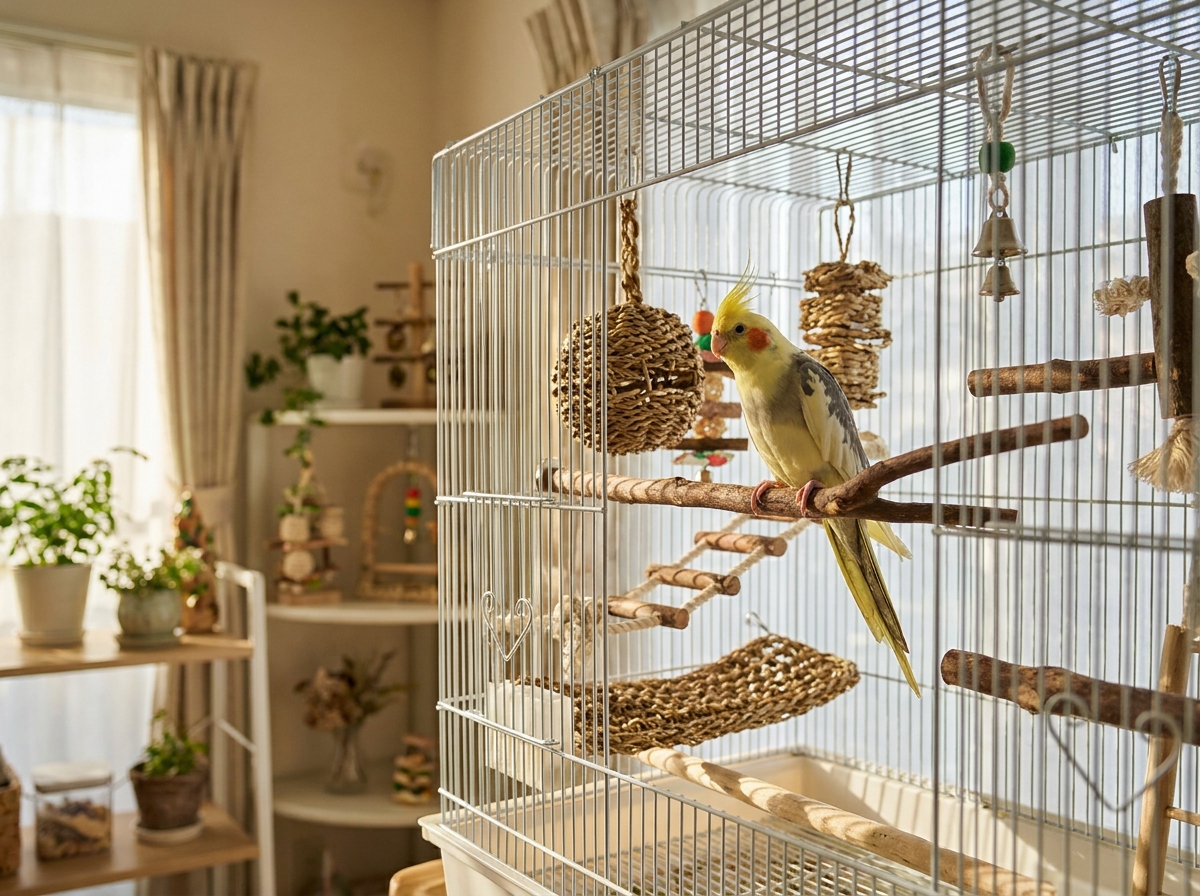
The minimum equipment for the daily routine: a water dish (stainless steel or ceramic, not plastic, which can harbor bacteria), a food dish (similarly stainless steel or ceramic), a cuttlebone or mineral block, a variety of perches (natural wood, rope, concrete — not all the same diameter, to exercise the feet), a cage that is the right size (minimum 24x18x24 inches for a single cockatiel), a play stand for out-of-cage time, and a small vacuum or a broom and dustpan for cage cleaning.
The equipment that improves the routine: a gram scale for weekly weighing, a mister or a spray bottle for the weekly bath, an air purifier for the room (to reduce the dust and the dander), a UV lamp for the room (the cockatiel needs UVB exposure to synthesize vitamin D3, which is necessary for calcium absorption), and a bird-safe humidifier for the dry winter months.
The weekly additions
The weekly additions to the daily routine:
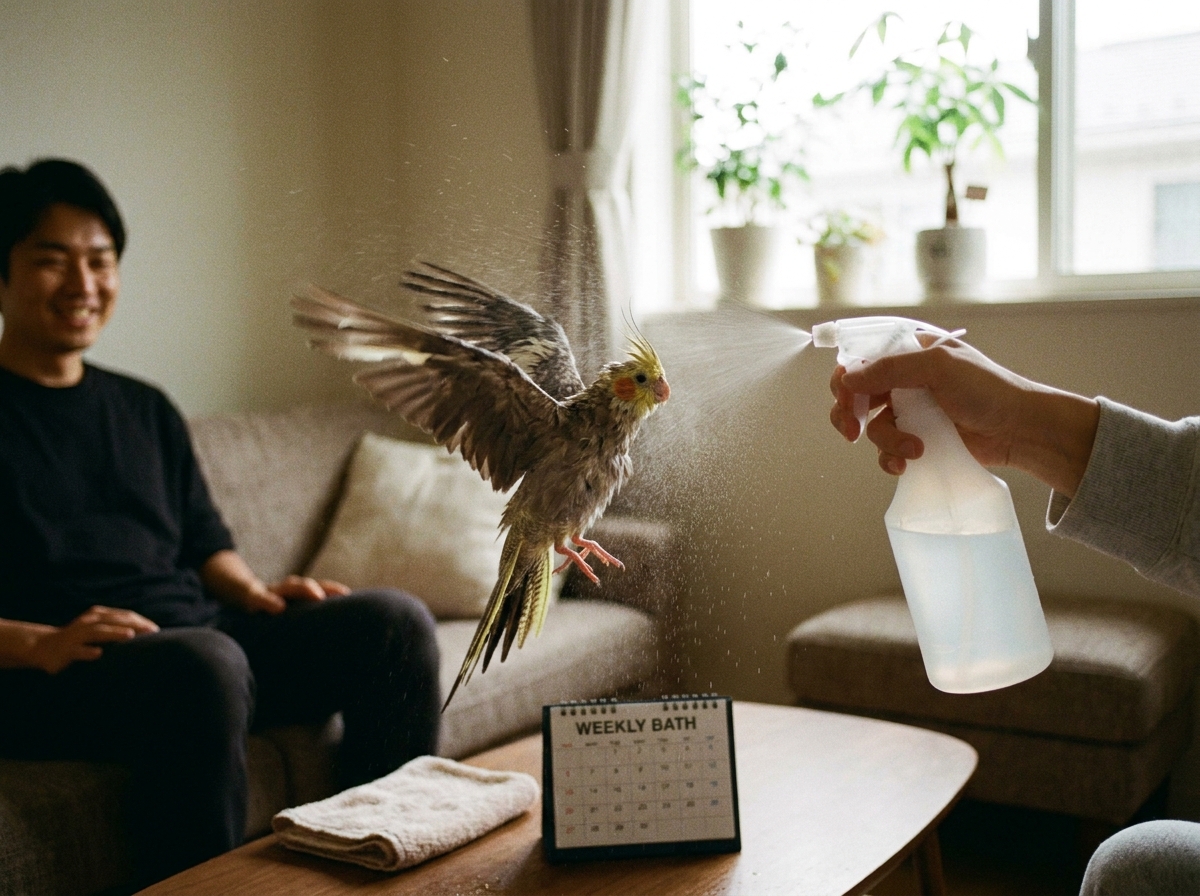
- A bath or shower. The cockatiel that gets a weekly bath is the cockatiel that has healthy feathers and skin. The bath can be a shallow dish in the cage, a misting with a spray bottle, or a shower with the owner (the cockatiel on the owner's shoulder in the bathroom, with the shower misting both the owner and the bird). The bath frequency can be increased during the molting season, when the new feathers benefit from the added moisture.
- A weigh-in. The cockatiel is weighed on a gram scale, and the weight is logged. The cockatiel that is losing weight without a clear reason is the cockatiel that may be ill, and the weight loss is often the first sign. The weight loss of more than 10% of body weight warrants a vet visit.
- A cage deep-clean. The perches, the toys, and the cage bars are wiped down with a bird-safe disinfectant (a dilute vinegar solution or a commercial bird-safe product). The weekly deep-clean is the prevention of the bacterial and fungal buildup that the daily spot-clean cannot address.
- A toy rotation. The toys in the cage are rotated with the toys that have been in storage. The cockatiel that has the same toys every day is the cockatiel that gets bored. The toy rotation is the enrichment that keeps the cockatiel mentally engaged.
The monthly additions
The monthly additions to the daily and weekly routine:
- A nail trim. The cockatiel's nails grow continuously, and the nails that get too long can catch on the cage bars or on the toys. The nail trim is done with a small animal nail clipper, with care taken not to cut the quick (the blood vessel inside the nail). The owner who is not confident can have the vet or the groomer do the nail trim.
- A wing trim (optional, debated). The wing trim prevents flight, and the wing trim is recommended for the cockatiel that is allowed out of the cage in an un-bird-proofed room. The wing trim is debated because the wing trim prevents the natural behavior, and the flight-capable cockatiel is the cockatiel that has the better physical and mental health. The decision is the owner's, with the understanding that a flight-capable cockatiel requires a bird-safe environment.
- A vet check. The annual vet check is the comprehensive health assessment. The vet examines the cockatiel, weighs the cockatiel, checks the droppings, and may run blood work or other diagnostics. The annual vet check is the safety net that catches the issues that the daily observation cannot.
The health monitoring
The signs that the cockatiel is healthy: bright and alert eyes, clean and dry nares, smooth and well-preened feathers, normal droppings (green and white, with a formed fecal component and a white urate component), active and engaged behavior, normal appetite, normal vocalization. The signs that the cockatiel is ill: fluffed feathers (the cockatiel is trying to conserve heat), sitting on the bottom of the cage (a seriously ill bird), discharge from the nares or the eyes, changes in the droppings (watery, discolored, or bloody), changes in the appetite, changes in the vocalization (the talkative cockatiel that goes quiet, or the quiet cockatiel that becomes loud), labored breathing, or any change in the cockatiel's normal behavior.
The cockatiel is a prey animal, and the prey animal hides illness until the illness is advanced. The daily observation is the owner's tool for catching the early signs, and the early intervention is the difference between a treatable condition and a fatal condition.
The mistakes
The first mistake: the all-seed diet. The seed mix is high in fat and low in vitamins and minerals, and the cockatiel that is fed only seeds is the cockatiel that develops fatty liver disease, obesity, and vitamin deficiencies. The fix: the seed mix is 20% of the diet at most, with the pellets and the fresh vegetables making up the other 80%.
The second mistake: the small cage. The cockatiel that is kept in a cage that is too small is the cockatiel that does not have the space to move, to fly short distances, and to maintain physical health. The fix: a cage that is at least 24x18x24 inches, with the cockatiel allowed out of the cage for several hours per day.
The third mistake: the lone cockatiel with no social interaction. The cockatiel is a social bird, and the cockatiel that is kept alone with no interaction is the cockatiel that develops depression, feather plucking, and screaming. The fix: daily interaction, training, and out-of-cage time. The cockatiel that has the daily interaction is the cockatiel that is behaviorally healthy.
The fourth mistake: the no-vet cockatiel. The cockatiel that does not see a vet until the cockatiel is seriously ill is the cockatiel that often does not survive. The fix: an annual vet check, with the vet experienced in avian medicine.
The one-page summary
The cockatiel daily care routine is 30 minutes total, split between morning and evening. The morning routine is 15-20 minutes: water, food, cage clean, observation. The evening routine is 10-15 minutes: out-of-cage time, training or interaction, cage prep for the night. The weekly additions: bath, weigh-in, deep clean, toy rotation. The monthly additions: nail trim, optional wing trim, annual vet check. The owner who runs the routine is the owner whose cockatiel lives 15-25 years. The owner who does not is the owner whose cockatiel lives 5-10 years. The routine is the work. The routine is what makes the difference.