
Canine atopic dermatitis: triage first, environmental control second
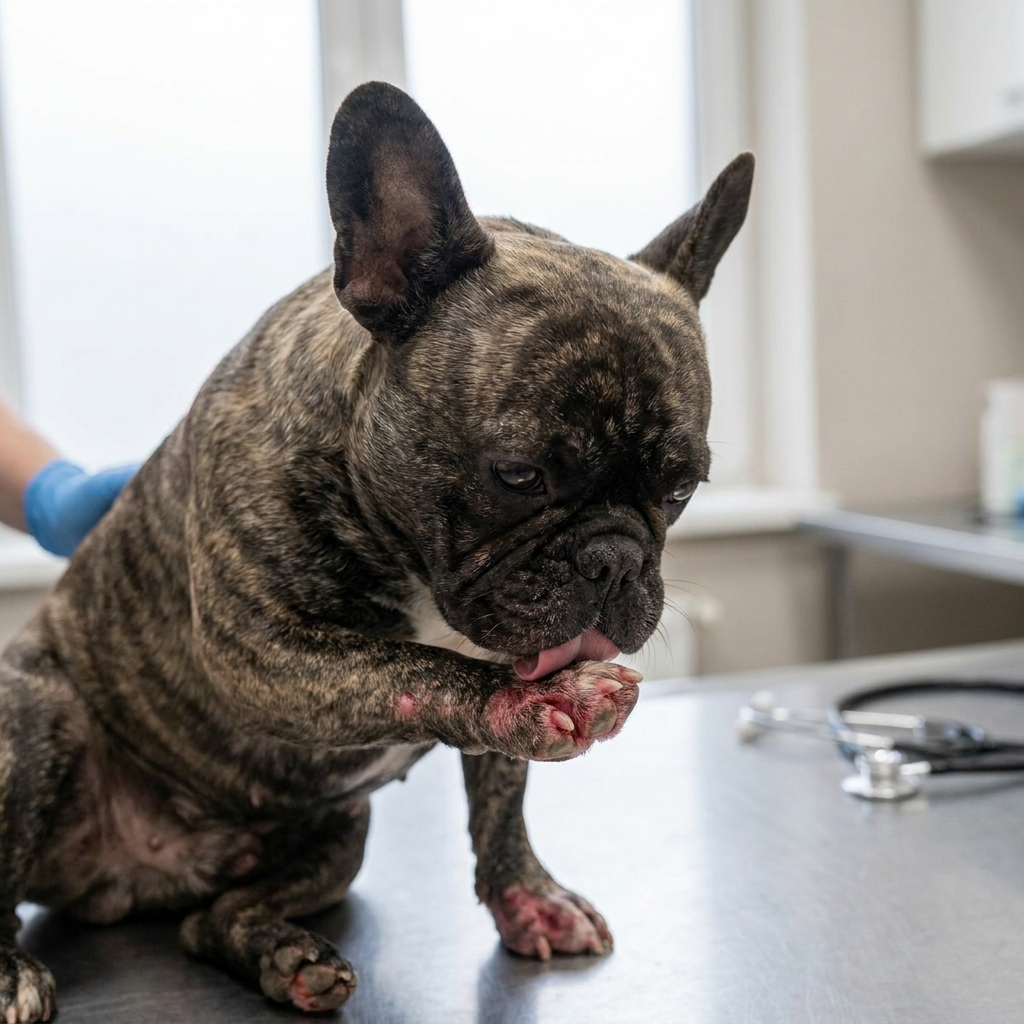
A French Bulldog comes in with red, smelly armpits. The owner has spent several hundred dollars on over-the-counter allergy shampoo and a "limited ingredient" food. The dog is still scratching. The home is clean. The owner is frustrated.
This is the most common atopic dermatitis story in clinic, and almost every case has the same shape: the environmental controls were skipped or attempted in the wrong order. In my dermatology referral practice, environmental control is the layer that decides whether a dog ends up on a lifetime of oclacitinib, or on a maintenance dose every other day.
Here is the triage-first framework I use — room-by-room checklist, the named drugs, and the line where home alone stops being enough.
What we mean when we say "atopic dermatitis" — and what we don't
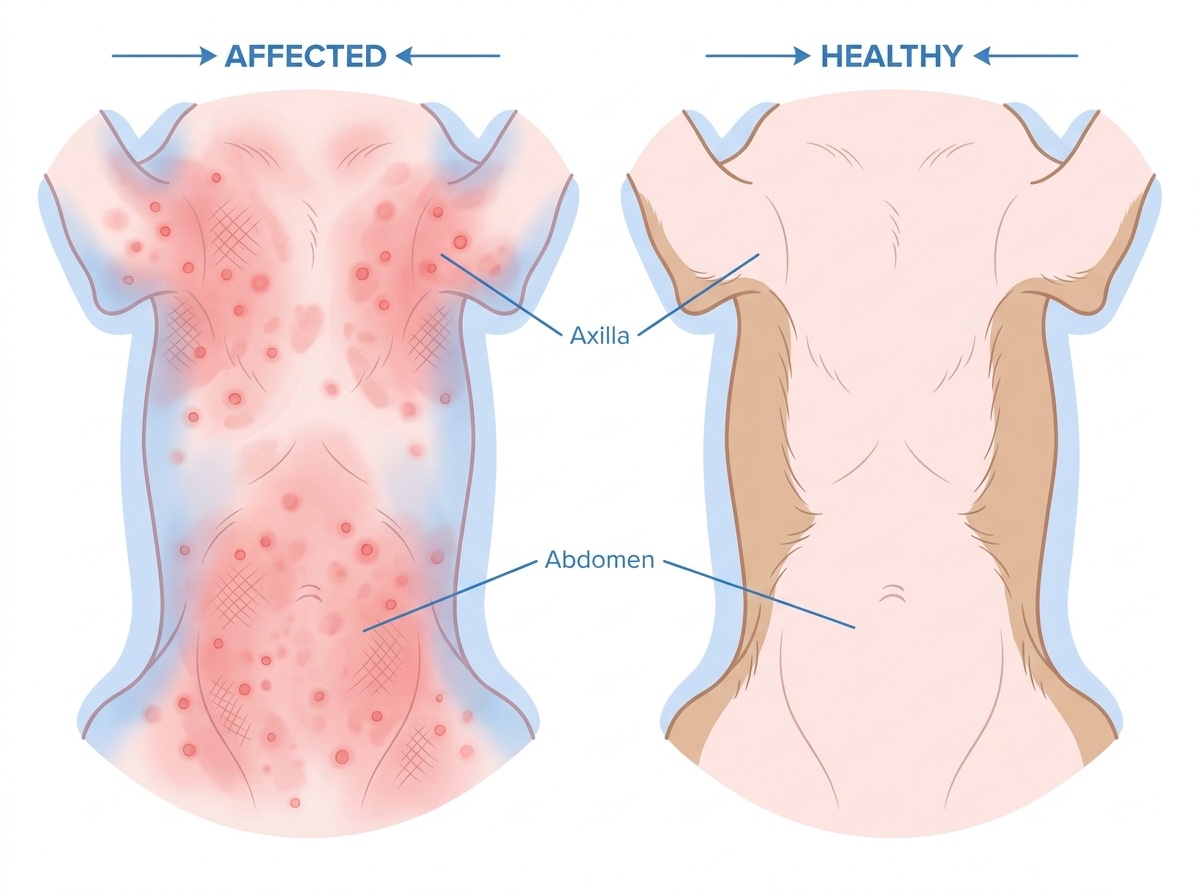
Canine atopic dermatitis (cAD) is a genetically predisposed, inflammatory, pruritic skin disease driven by IgE antibodies against environmental allergens — chiefly house dust mites, storage mites, and regional pollens. Onset is typically between 6 months and 3 years. Hot spots are the face, ear pinnae, axillae, abdomen, inguinal region, paws, and perineum.
What it is not: a food allergy, a flea allergy, a behavioural itch, or a "skin problem" a wash, balm, or change of diet will fix on its own.
Two facts owners should know upfront:
- ~90% of itchy dogs have more than one contributing cause — usually atopy plus fleas, secondary infection, or a food component.
- Serum IgE or "allergy panel" tests are not diagnostic for atopic dermatitis. They may help guide immunotherapy formulation, but a positive result does not by itself prove a dog is allergic to that allergen. The diagnosis is made on history, exam, and ruling out everything else.
Triage first: three things to rule out before you blame the home
Before spending a weekend vacuuming, your vet should rule out — in this order:
- Flea allergy dermatitis (FAD). A single flea bite can keep an allergic dog pruritic for 2–3 weeks. Confirm rigorous, year-round adulticide coverage on every animal in the home. Capstar (nitenpyram) as an environmental "clean-out," plus a monthly or quarterly systemic (Bravecto/fluralaner, NexGard/afoxolaner, Simparica/sarolaner, Credelio/lotilaner). Topicals like Advantage or Frontline are *not* adequate for FAD-sensitised dogs.
- Secondary infection. *Malassezia* yeast and *Staphylococcus* pyoderma amplify itch. Cytology (tape prep, Diff-Quik stain) takes 5 minutes in clinic. Treat the infection first, then judge remaining itch.
- Cutaneous adverse food reaction (CAFR). Up to ~30% of itchy dogs have a food component. Confirmed by an 8-week elimination diet with a novel or hydrolyzed protein (Royal Canin Ultamino, Hill's z/d, Purina HA) — *no* other proteins, treats, or flavoured meds. Serum or saliva food "allergy" tests are unreliable.
If any of those three come back positive, environmental control is still worth doing — but the immediate itch relief and prognosis will come from treating the underlying condition. Skipping triage is why so many owners believe "home management doesn't work."
Environmental allergens: the usual suspects
The four categories every atopic dog is reacting to, in approximate order of contribution:
- House dust mites — soft furnishings, mattresses, dog beds, carpets, fabric toys.
- Storage mites — dry pet food, flour, grain, kitchen pantries. Relevant if the dog eats kibble in a humid home.
- Outdoor pollens — tree (spring), grass (late spring/early summer), weed (late summer/fall). Highly regional — ragweed across North America, grass pollen in northern Europe and the UK.
- Indoor moulds — Alternaria, Cladosporium, Aspergillus in damp basements, bathrooms, kitchens, houseplant soil, HVAC drip trays.
A practical rule of thumb: year-round itch points to dust or storage mites; seasonal itch that tracks the local pollen calendar points to pollens. Most dogs have both — the plan has to address both.
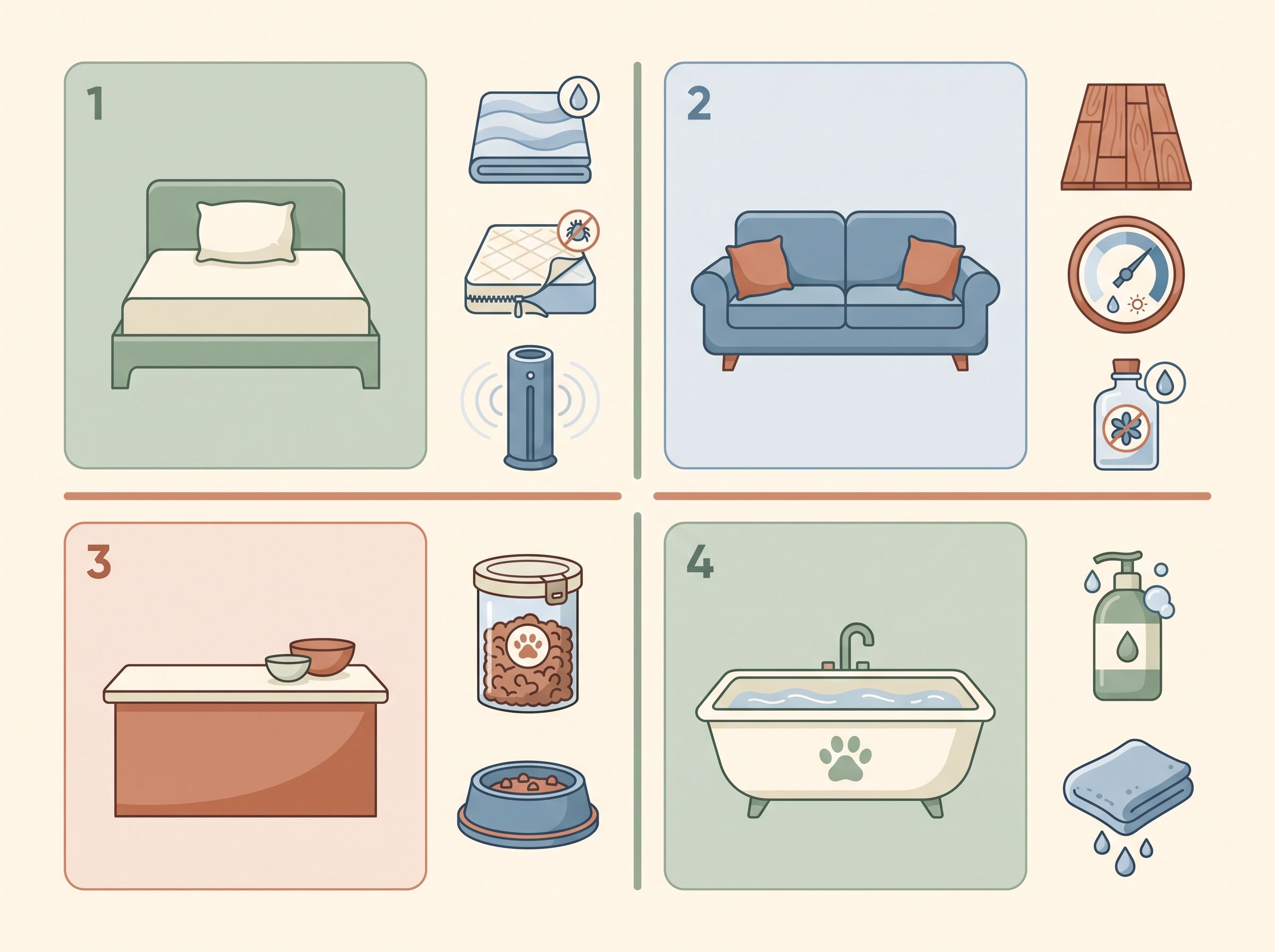
The home environmental control checklist, room by room
This is what I walk clients through on a single A4 printout. Items ranked by estimated effect-per-dollar.
Bedroom (the highest-priority room)
- Replace fabric dog beds with washable synthetic covers, washed weekly at ≥ 60 °C (140 °F). Heat kills mites; cooler cycles do not.
- Cover any human mattress the dog sleeps on with an allergen-impermeable encasement. Not a "mattress pad" — a true allergen-barrier cover.
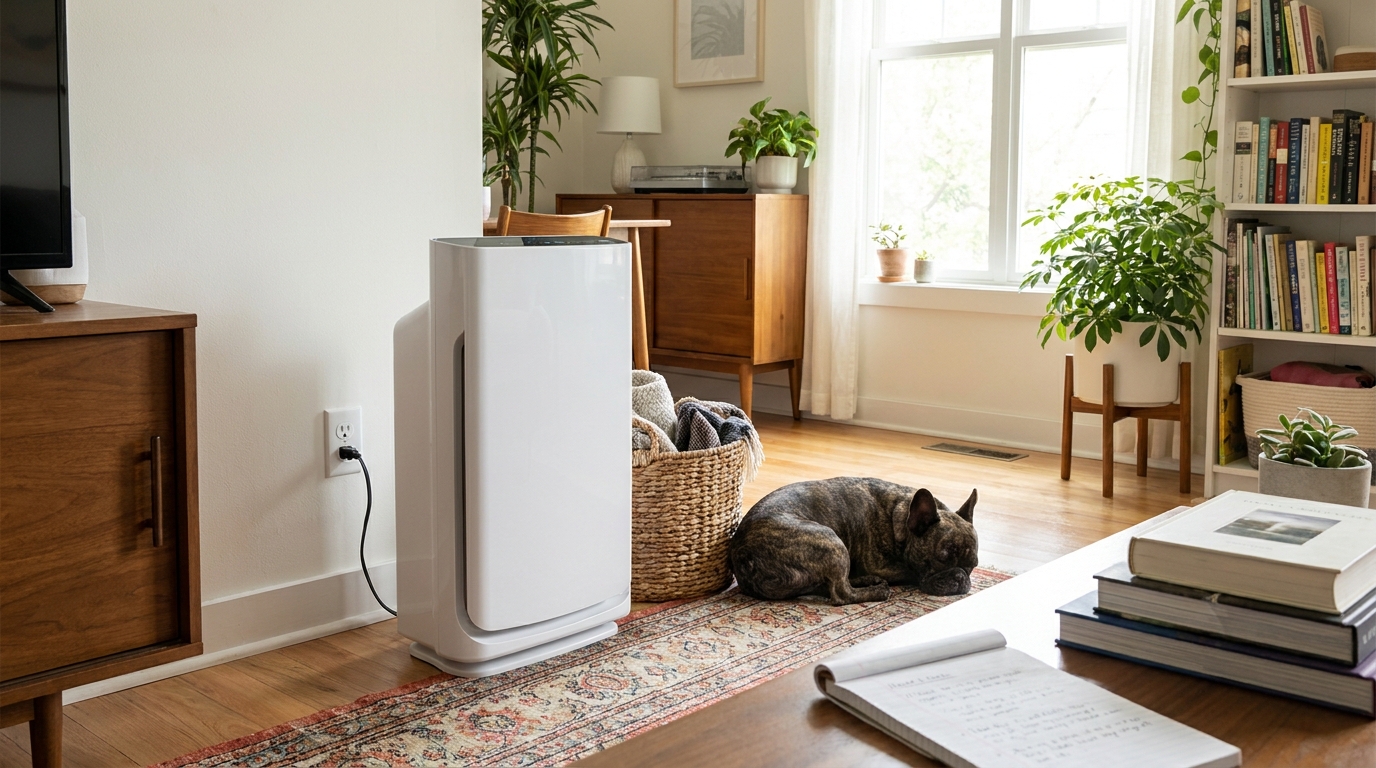
- HEPA air purifier running 24/7 in the room, sized for the room's square footage. Replace the filter every 6–12 months.
Living areas
- Replace wall-to-wall carpet with hard flooring where possible. If not, vacuum three to four times per week with a sealed-system vacuum (true HEPA exhaust), and steam-clean monthly. *Vacuuming does not kill mites* — it removes allergen-carrying dust. Vacuum + steam is what works.
- Keep indoor relative humidity between 40–50%. Dust mites do not thrive below ~45%. A $30 hygrometer tells you whether the dehumidifier is worth running.
- Reduce soft furnishings. Fabric ottomans, throw blankets, fabric lampshades, toy baskets. Each one removed is one less mite reservoir to manage. Fabric dog toys can go in the freezer for 24 hours weekly.
- Fragrance-free cleaning products, detergents, dryer sheets, candles. Reliable irritants to inflamed skin even when not strictly allergenic.
Kitchen and food storage
- Store dry kibble in an airtight container. Don't stockpile months of food. Wash the container between bags. Storage mites can colonise an open bag within weeks.
- Wash food and water bowls daily in hot water. Switch from plastic (micro-cracks harbour biofilm) to ceramic or stainless.
Bathing and topical care
- Bathe weekly with a fragrance-free, soap-free, hypoallergenic shampoo — Douxo S3 Calm, Virbac Allermyl, or Hill's Derm Defense. Leave the lather on for 5–10 minutes before rinsing. Frequency matters more than brand.
- Wipe paws, groin, and belly after outdoor walks during pollen season. A damp microfibre cloth or hypoallergenic wipe (Douxo, MalAcetic) physically removes surface allergens.
Outdoor exposure
- Walk timing. Grass pollens peak midday; ragweed peaks late afternoon. Adjust walk times outside the peak window if the dog's itch tracks the pollen season.
- Rinse paws on entry in a shallow tray of water, then towel-dry. One of the cheapest interventions with measurable effect on paw-licking behaviour.
Drugs and doses — when environmental control alone isn't enough
For most dogs with established atopic dermatitis, environmental control reduces flare frequency but does not abolish itch. Pairing the checklist above with one of the following drug classes is the standard of care. None of these is a substitute for the others.
Oclacitinib (Apoquel, Zoetis)
- Indication. Acute flare control and maintenance of chronic pruritus.
- Dose. 0.4–0.6 mg/kg orally, twice daily for up to 14 days, then once daily for maintenance.
- Onset. Within 4 hours — first-line because of the speed.
- Cautions. Not approved under 12 months of age. Avoid in pregnancy and lactation. Watch for papillomas, demodicosis, warts with chronic use.
Lokivetmab (Cytopoint, Zoetis)
- Indication. Chronic pruritus; particularly useful when owners cannot give pills.
- Dose. 1–3.3 mg/kg subcutaneously, every 4 to 8 weeks as needed.
- Onset. 1–3 days. Slower than Apoquel, no daily dosing, no perceived systemic side effects.
- Note. Monoclonal antibody against IL-31 (the itch cytokine). Treats itch only — secondary infections still need separate treatment.
Ciclosporin (Atopica, Elanco; or generic)
- Indication. Maintenance when Apoquel cost is prohibitive.
- Dose. 5 mg/kg orally, once daily for 30 days, then taper to every other day, then twice weekly.
- Onset. 6–8 weeks for full effect.
- Cautions. Vomiting, soft stool, appetite loss first 2 weeks — give with food. Gingival hyperplasia can develop over years.
Allergen-specific immunotherapy (ASIT)
- Indication. Confirmed atopic dogs with identified allergens via serum or intradermal testing.
- Regimens. Subcutaneous injection (customised serum) or sublingual drops (daily). Lifelong commitment; re-evaluate at 9–12 months.
- Response rate. ~60–80% improve; ~25% reach remission off drugs.
Adjuncts
- Cortavance spray (hydrocortisone aceponate) ~0.5 mL per 5 kg, twice weekly on localised hot spots.
- Omega-3 fatty acids at 50–75 mg/kg combined EPA+DHA daily with food.
- Antimicrobial therapy per cytology — chlorhexidine or miconazole + chlorhexidine (Malaseb, Douxo Pyo) for Malassezia; systemic antibiotics for true pyoderma.

When to escalate — the thresholds that should change your plan
Stop waiting and call your primary vet within 24 hours if any of these appear:
- Skin is weeping, oozing, or has a yeasty smell. Almost always secondary infection.
- Skin lesions spread past 25% of body surface, or new patches appear on the face, eyelids, or genitals.
- New ear shaking, head tilt, or ear odor. Around half of atopic dogs develop recurrent otitis externa; early intervention prevents the middle-ear complications.
- Itch score (0–10) stays above 4 for more than 4 weeks despite a strict environmental plan and a confirmed flea prevention trial.
Go to an emergency clinic tonight if any of these:
- Facial swelling with breathing difficulty, pale gums, or collapse.
- Widespread hives plus vomiting or diarrhoea (anaphylactic pattern).
If your dog isn't getting better, the most useful escalation beyond your GP vet is a board-certified veterinary dermatologist (ACVD or ECVD diplomate). Plan for a 1–2 month wait; ask your GP vet for a referral letter and a placeholder script for Apoquel or Cytopoint to bridge the gap.
The 4-week home plan — what to actually start on Monday
If everything above feels like too much, here's the sequence I'd prioritise for a dog newly diagnosed with cAD:
- Week 1. Wash every fabric bed at ≥ 60 °C, start weekly hypoallergenic bathing, confirm rigorous flea control on every pet.
- Week 2. Add a HEPA purifier in the bedroom, run a dehumidifier to 40–50% RH, switch to fragrance-free cleaning products.
- Week 3. Reassess itch score. If still ≥4/10, contact your vet about Apoquel or Cytopoint. If better, hold and continue the routine.
- Week 4. If the vet confirms a pure environmental pattern, discuss referral for intradermal or serum testing, with a long-term plan toward ASIT and reduced drug burden.
Atopic dermatitis is a chronic disease. The dogs who do best in my practice are the ones whose owners treat it like asthma — daily environmental discipline, scheduled anti-itch coverage, and a relationship with a vet who knows the dog's baseline. Drugs buy comfort. Environmental control buys time off drugs. The goal is to need less of the first by being more disciplined about the second.
---
Reviewed by Hannah Kim, DVM, Cert. VD, Pacific Pet Dermatology. Last updated 10 July 2026. General information, not a substitute for an in-person dermatology consultation.