

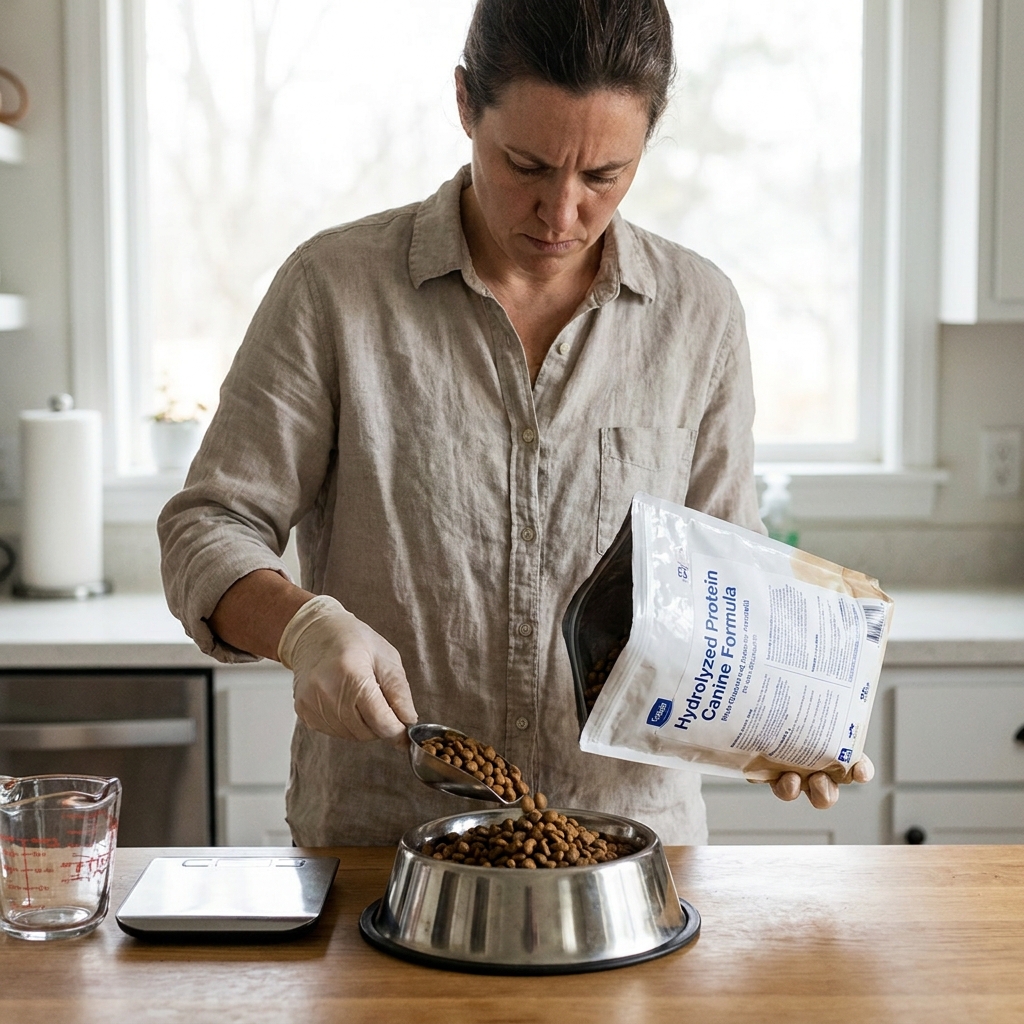
The 8-week elimination diet trial
A dog or cat with chronic itching, recurrent ear infections, hot spots, or gastrointestinal signs may have a food allergy. Serum IgE tests and intradermal skin tests for food are unreliable. Hair and saliva tests sold online are worse. The only reliable way to diagnose a food allergy is the elimination diet trial: feed a novel or hydrolyzed protein source exclusively for 8 weeks, watch for the allergy signs to resolve, then reintroduce the original diet to confirm.
In theory, the protocol is simple. In practice, the details determine whether you get a real answer or 8 weeks of confusion. The most common reasons an elimination diet trial fails are not biological - they are protocol violations. The dog got a treat. The cat licked the toddler's plate. The owner fed a different brand of treats thinking it was the same. The trial failed because the test was contaminated.
This article is the protocol I use in my own practice, the details I check at every recheck, and the mistakes I see most often.
The two protein options
There are two paths for an elimination diet:
Path 1: Novel protein
A protein source the animal has not been exposed to before. For a dog that has eaten chicken, beef, lamb, and fish-based commercial foods, the novel protein might be rabbit, venison, kangaroo, duck (if not in the current diet), or even horse (in some markets). For a cat, novel proteins include rabbit, venison, duck, and some game meats.
The catch: most commercial pet foods, even those marketed as "limited ingredient," contain trace amounts of common proteins from shared production lines. A true novel protein diet usually has to be home-prepared or sourced from a small manufacturer with dedicated equipment.
The other catch: many dogs and cats have been exposed to a wider range of proteins than their owner realizes, including through treats, table scraps, and flavored medications. A "novel" protein that the animal has actually had before will not work.
Path 2: Hydrolyzed protein
The protein source is broken down into small peptides that the immune system cannot recognize. The most common commercial options are Hill's z/d, Royal Canin Hypoallergenic, and Purina HA. These are complete and balanced, require no home preparation, and remove the "what counts as exposure" question.
The trade-off: cost. A hydrolyzed diet can be 2-3 times the price of a regular maintenance diet. For a 25-kg dog eating 1000 kcal per day, the difference over 8 weeks is meaningful. For a cat, the cost is more manageable.
The other trade-off: palatability. Hydrolyzed diets taste different, and some animals refuse them. If the animal will not eat the diet, the trial cannot proceed.
I default to hydrolyzed for most cases. The protocol is cleaner, the owner does not have to manage home preparation, and the diagnostic result is more reliable.
What counts as exposure (and what does not)
During the 8-week trial, the animal eats only the chosen elimination diet. Anything else is exposure and may invalidate the trial.
Excluded
- All treats, including dental chews, rawhide, bully sticks, dental sticks
- All table scraps, including "just a tiny piece"
- Flavored medications (some chewable medications are flavored with chicken, beef, or other proteins)
- All other pet foods, including the food the other pets in the household eat
- Supplements and probiotics that contain protein (some do)
- Toothpaste (most pet toothpaste is flavored with poultry or other proteins)
- Flavored toys (rare but possible)
Allowed (in most cases)
- The elimination diet in measured amounts
- The elimination diet as treats (kibble from the daily ration can be set aside as training treats)
- Water
- Prescription medications that are not flavored, given in a pill swallow or mixed with a small amount of the elimination diet
The two-week check is when the protocol violations usually surface. The owner says the animal is not improving. We go through the list. "Is anyone else feeding the dog?" "What about the cat's food - does the dog ever get into it?" "What about the flavored heartworm preventive?" Almost always, there is a contamination source that has been overlooked.
The 8-week schedule
The trial runs 8 weeks minimum. Some clinicians recommend 10-12 weeks. The reasoning for 8 weeks: most cutaneous signs of food allergy improve within 4-6 weeks, and 8 weeks gives 2-4 weeks of stable improvement to confirm the diagnosis. Some animals, particularly cats with severe gastrointestinal signs, take longer to respond.
The schedule:
- Week 1: Transition to the elimination diet. Mix 25% new diet with 75% old diet on day 1, 50/50 on day 3, 75% new on day 5, 100% new on day 7. The slow transition reduces digestive upset from the diet change.
- Weeks 2-4: Strict elimination. The animal eats only the elimination diet. Treats (if any) are the elimination diet kibble. No exceptions. Watch for improvement in the original signs.
- Weeks 5-6: Continued elimination. If signs are improving, the trial is on track. If not, investigate for protocol violations.
- Weeks 7-8: Continued elimination. Most animals that are going to respond show clear improvement by week 8.
- Week 8 decision point:
- If the animal has improved significantly, the next step is the rechallenge (see below).
- If the animal has not improved, the most likely explanations are (1) the allergy is environmental, not food; (2) the animal is not on a true elimination diet (contamination); (3) the animal has a different primary problem that is not allergy at all.
The rechallenge
If the animal has improved, the next step is the rechallenge. This is the part many owners skip, but it is the part that actually confirms the diagnosis.
The protocol: at week 8, transition back to the original diet (or to a single protein source that was a major component of the original diet) over 3-5 days. Watch for the return of the original signs over the next 2-4 weeks.
- If the signs return within 2-4 weeks, the food allergy diagnosis is confirmed. The animal should be maintained on the elimination diet long-term, or a slower rechallenge can identify which specific protein is the problem.
- If the signs do not return, the original improvement may have been due to something else - seasonal allergy change, a coincidental resolution, or a placebo-style effect on the owner's observation. The elimination diet may not be needed long-term, but the diagnosis is unclear.
The rechallenge is also the part that identifies which specific protein is the culprit. A dog that improved on a rabbit-based elimination diet can be rechallenged with one protein at a time: chicken for 2 weeks, beef for 2 weeks, fish for 2 weeks. The protein that triggers the sign return is the allergen.
Common mistakes
The most common failures I see:
1. The flavored medication
Heartworm preventives, NSAIDs, and many other medications come in flavored chewable forms. The flavors are often proteins - chicken, beef, pork, fish. A dog on an elimination trial that is given a flavored heartworm preventive has been exposed. Switch to a non-flavored alternative for the trial period.
2. The other pet's food
A dog in a multi-pet household often has access to the other pet's food. The cat's food, the other dog's food, the hamster's pellets, the rabbit's treats. Any of these can be a contamination source. Feed the other pets separately, in a room the trial animal cannot access, or on a high surface the trial animal cannot reach.
3. The toddler
Children drop food. A dog that gets into the toddler's snacks is contaminated. The most common contamination sources in my own client base are cheerios, goldfish crackers, and string cheese. None of these are on the elimination diet. None of them are "just a tiny piece."
4. The flavored toothpaste
Pet toothpaste is typically flavored with poultry or malt. Most dogs lick it up like a treat. The flavored toothpaste is a contamination source. Either skip toothbrushing for the 8 weeks, or use a non-flavored alternative like a baking soda paste or a plain chlorhexidine solution (with vet approval).
5. The "limited ingredient" treat that is not
Many commercial treats marketed as "limited ingredient" or "single protein" are produced on shared equipment and contain trace amounts of other proteins. A truly single-protein treat has to be either the elimination diet kibble set aside, or a treat from a manufacturer with documented testing for cross-contamination. Most "limited ingredient" treats do not meet this standard.
6. The misread signs
Some signs of food allergy improve slowly. A dog that has had chronic ear infections for two years does not clear the yeast in the ears in 2 weeks because the elimination diet started. The full resolution of secondary infections takes 6-10 weeks even if the underlying allergy is controlled. Owners who give up at week 3 because the signs have not resolved completely may abandon a working trial.
The bottom line
The 8-week elimination diet trial is the gold standard for diagnosing food allergy in dogs and cats. The trial works when the protocol is followed strictly. The trial fails when the animal is exposed to a contamination source that the owner did not think to mention. The success of the trial depends on the owner's attention to detail, not the choice of protein. Hydrolyzed diets are easier to manage than novel protein diets. The rechallenge is what actually confirms the diagnosis. Be patient, be strict, and be honest about the contamination sources at every recheck.
About the author
Hannah Kim is a veterinary dermatologist and nutritionist based in Vancouver with a DVM from the Western College of Veterinary Medicine and a residency in dermatology. She has spent 12 years working exclusively on allergic skin disease and food-related dermatology in dogs and cats, with a particular interest in the intersection of diet, microbiome, and skin health. See her full profile at [authors/Hannah Kim/](../Hannah%20Kim.md).