

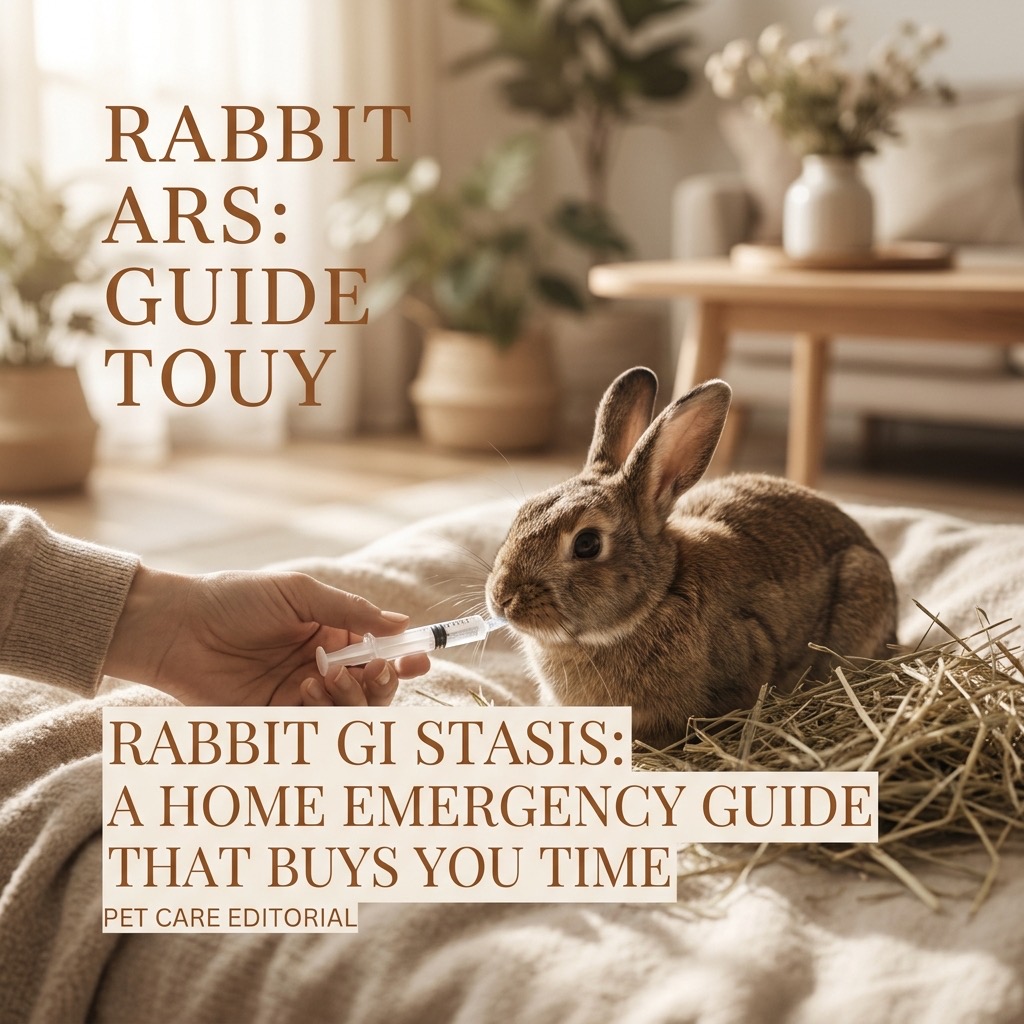
Rabbit GI stasis: a home emergency guide that buys you time
Gastrointestinal stasis in rabbits is the most common emergency I see in rabbit practice. It is also one of the most time-sensitive — a rabbit that goes 24 hours without eating develops a cascade of complications that turn a recoverable condition into a fatal one. The first 12 hours at home are where the owner can make the biggest difference.
This is what to do at home in those 12 hours, and when to recognise that the situation has gone beyond home care.
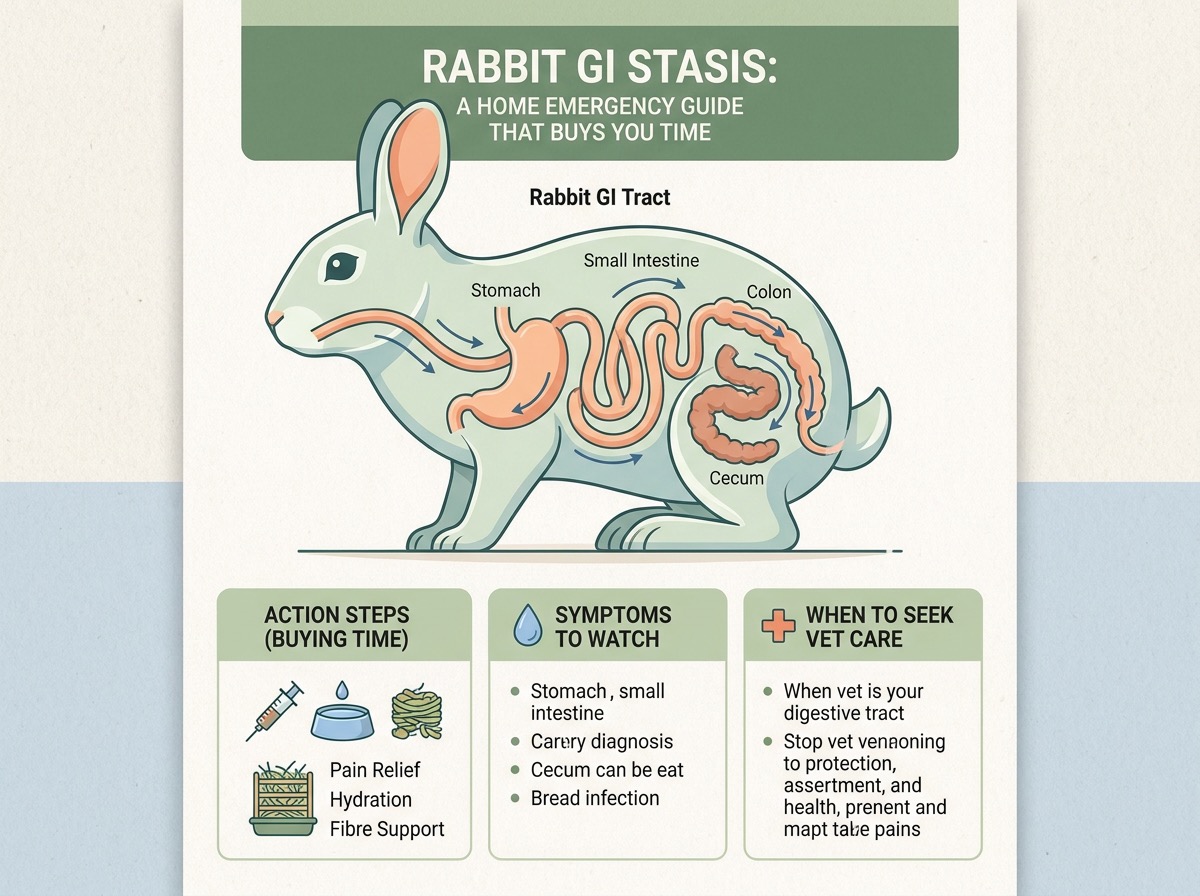
What GI stasis actually is
GI stasis is not "constipation" in the human sense. It is a slowdown or stoppage of the entire digestive tract. In rabbits, the GI tract depends on continuous motility — the constant movement of food through the stomach and intestines, driven by fibre and normal bacterial fermentation. When motility slows or stops:
- Gas accumulates in the stomach and intestines
- Bacterial populations shift: the normal fibre-fermenting bacteria die back, gas-producing bacteria take over
- The liver is affected: prolonged anorexia leads to hepatic lipidosis (fatty liver), which can be fatal
- Dehydration develops quickly in a rabbit that is not eating or drinking
- The stomach can rupture in severe cases, particularly if the rabbit has ingested hair, carpet, or other material
Without intervention, GI stasis progresses from a slowdown to a complete stop, then to a life-threatening cascade within 24–48 hours.
The early signs: what to watch for
The earliest signs of GI stasis are subtle and easy to miss:
- Reduced appetite: the rabbit is slower to eat, eats less, or shows interest in food but doesn't eat
- Reduced or absent droppings: fewer droppings, smaller droppings, or no droppings at all
- Reduced activity: less interest in exploring, more time sitting hunched
- Loud stomach sounds (or silence): a healthy rabbit's stomach gurgles audibly. Stasis often produces loud gurgling, then silence
- Posture change: the rabbit sits hunched, often with teeth grinding (a sign of pain)
The later signs (12+ hours):
- No droppings for 12+ hours: emergency
- Refusal of all food, including treats: emergency
- Lethargy, unresponsiveness: emergency
- Teeth grinding, hunched posture, unwillingness to move: emergency
- Distended, painful abdomen: emergency
The common causes
GI stasis usually has a triggering factor. The most common:
Diet-related (most common cause)
- Insufficient fibre: rabbits on insufficient hay (less than 80% of diet by volume) have chronically slow gut motility. Fibre is what drives the constant movement of the rabbit digestive tract
- Too many pellets: pellets are calorie-dense and reduce hay intake. A rabbit that fills up on pellets doesn't eat enough hay
- Sudden diet change: changing pellet brands, hay types, or vegetable offerings can disrupt the gut microbiome and slow motility
- Stress-induced anorexia: a change in environment, new pet, construction noise, or loss of a companion can cause a rabbit to stop eating temporarily
Pain-related
- Dental disease: malocclusion, molar spurs, or tooth root infection make chewing painful. The rabbit stops eating
- GI gas or bloat: primary gas accumulation (often from fermentation changes) causes pain, which causes the rabbit to stop eating, which worsens the stasis
- Urinary tract issues: sludge or stones cause pain, leading to anorexia and secondary stasis
- Skin wounds, abscesses, arthritis: any source of significant pain can cause anorexia
Environmental
- Temperature stress: heat above 28°C (82°F) or cold below 10°C (50°F) can suppress appetite
- Recent travel or boarding: stress-related anorexia
- Loss of a companion rabbit: grief causes anorexia in bonded rabbits
Medical
- Infection: bacterial enteritis, E. cuniculi, respiratory infection
- Organ disease: liver disease, kidney disease, heart disease
- Dental abscess: often missed on home exam
In a rabbit with no obvious diet or stress cause, the stasis has a higher chance of having a serious underlying cause that needs vet diagnosis.
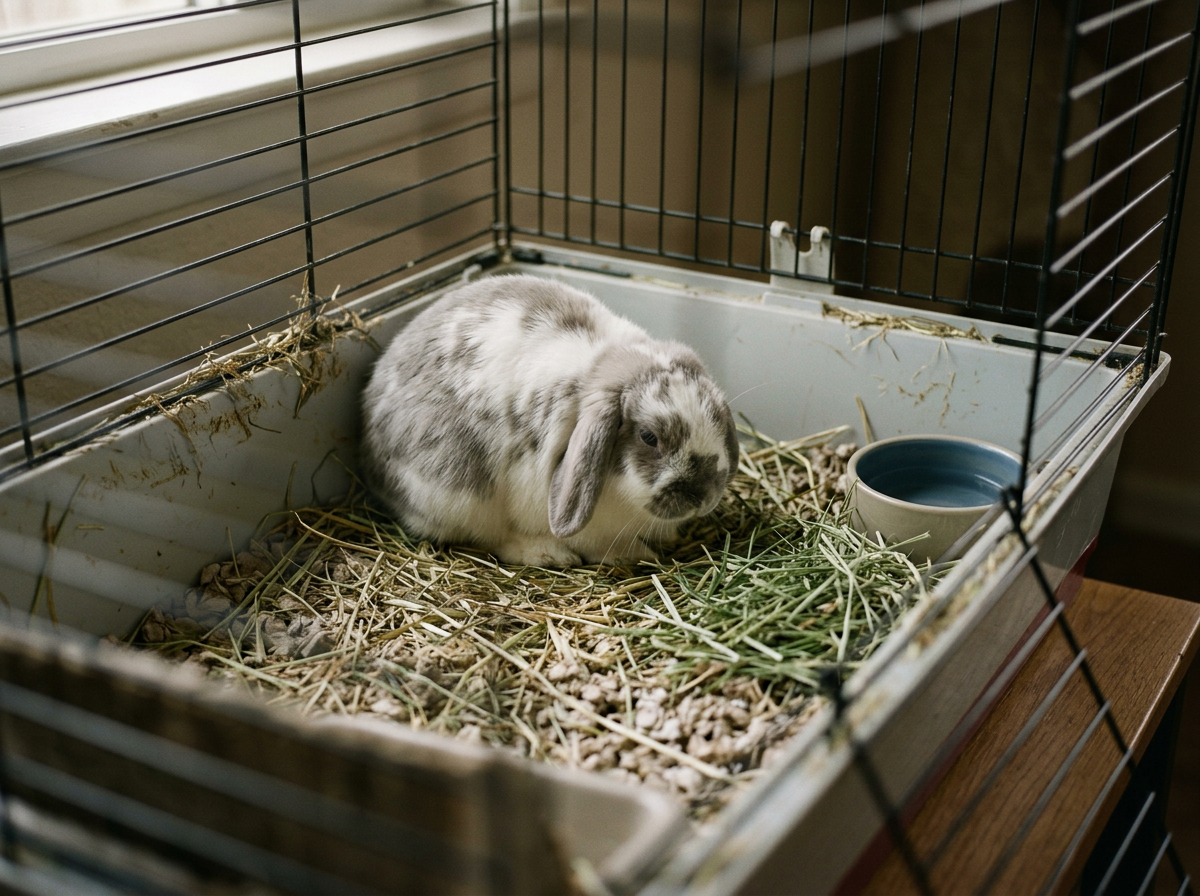
What to do at home in the first 12 hours
Step 1: confirm the rabbit is still drinking (within 1 hour)
If the rabbit is still drinking water:
- Continue offering fresh water (multiple sources if possible)
- Note how much water is consumed
If the rabbit is NOT drinking:
- Begin syringe-feeding water (see Step 3 below)
- This is the first step toward dehydration treatment
Step 2: offer the highest-fibre food available (within 2 hours)
The goal is to restart gut motility. Fibre drives motility. The highest-fibre foods:
- Fresh hay (timothy, orchard grass, meadow hay): offer multiple types, in multiple locations
- Fresh grass: if available, this is even better than hay
- Herbal hay alternatives: if the rabbit refuses timothy hay, try orchard grass or meadow hay
- Dried herbs: parsley, basil, mint, dill, cilantro — fresh herbs are often more attractive than hay to an off-food rabbit
Do NOT offer:
- Pellets: too calorie-dense, will fill the rabbit up without fibre
- Treats (yogurt drops, seeds, fruit): high sugar, can worsen gut dysbiosis
- Vegetables high in sugar (carrots, fruit): same issue
- Critical Care or recovery food: useful, but as a later step, not the first food to offer
If the rabbit eats hay or herbs within the first 2–4 hours: this is a good sign. Continue offering and observe droppings.
If the rabbit refuses everything for 4+ hours: escalate to syringe feeding.
Step 3: syringe-feed water and critical care (within 6 hours)
If the rabbit is not eating hay and not drinking on its own:
Syringe feeding technique
- Use a 1 mL or 3 mL syringe (no needle)
- Wrap the rabbit in a towel (burrito wrap) for restraint
- Position the syringe in the side of the mouth, behind the front teeth, in the gap where there are no teeth
- Slowly dispense 0.5–1 mL at a time
- Allow the rabbit to swallow between syringes
- Stop if the rabbit struggles excessively (stress is counterproductive)
Volumes
- Water: 5–10 mL per kg per hour, divided into hourly sessions. A 2 kg rabbit should get 10–20 mL per hour
- Critical Care (Oxbow): 50–100 mL per kg per day, divided into 4–6 feeding sessions. A 2 kg rabbit should get 100–200 mL per day total, or 15–30 mL per session, 6 times per day
Critical Care is a ground hay-based recovery food that provides fibre, hydration, and nutrition in a form that can be syringe-fed. It is the standard intervention for rabbit GI stasis at home.
If you don't have Critical Care:
- Grind pellets to a fine powder, mix with water to a thick paste consistency, syringe-feed
- Baby food vegetables (no onion, no garlic): an emergency substitute, less ideal than Critical Care but better than nothing
Step 4: gentle abdominal massage (within 6 hours)
Once the rabbit is tolerating syringe feeding:
- With the rabbit on a soft surface, gently palpate the abdomen
- A healthy rabbit's abdomen is soft and doughy
- A stasis rabbit's abdomen may feel firm, gassy, or have palpable hard masses (hair, food)
- Gentle massage in a clockwise direction (matching normal gut motility) can help move gas through
If the rabbit shows pain on palpation (flinches, vocalises): stop massaging and head to the vet.
Step 5: encourage movement (within 8 hours)
Light exercise stimulates gut motility. With the rabbit willing:
- Allow free-roam time in a rabbit-proofed area
- Encourage gentle hopping with a treat trail
- 10–20 minutes of activity, several times per day
Do not force exercise. If the rabbit is hunched and unwilling to move, do not push it.
Step 6: monitor droppings (continuous)
Track droppings every 2–4 hours:
- Return of normal droppings: the rabbit is recovering
- Small, dry, malformed droppings: still stasis but possibly improving
- No droppings for 12+ hours: vet visit
- Mucous-coated droppings: concerning — possible enteritis
- Blood in droppings: emergency
Step 7: warmth (continuous)
A rabbit in stasis often has reduced body temperature (especially if not eating). Provide:
- A heating pad on low under one side of the enclosure (rabbit can move off if too warm)
- Wrap the rabbit in a towel for transport
- Keep the room at 20–24°C
Do not use direct heat (heating lamp close to the rabbit, hot water bottle without barrier) — risk of burns.
When to go to the vet
The home protocol buys time, but it does not replace vet care in many cases. Go to the vet if:
- No improvement after 12 hours of home care
- No droppings for 12+ hours despite eating some food
- Teeth grinding, hunched posture, or signs of significant pain
- Distended or very firm abdomen
- Suspected foreign body ingestion (carpet, fabric, plastic, hairball)
- Concurrent symptoms: respiratory signs, urinary signs, neurological signs
- Known underlying condition: dental disease, kidney disease, E. cuniculi
- Young rabbit (under 6 months): dehydration is faster, complications are more common
The vet will:
- Physical exam: assess hydration, abdominal palpation, dental check, temperature
- X-rays: assess stomach and intestinal gas patterns, look for obstruction
- Bloodwork: CBC, chemistry, blood gas if the rabbit is critical
- Aggressive fluid therapy: subcutaneous or IV fluids
- GI motility drugs: metoclopramide, cisapride (rarely available now), ranitidine
- Pain management: meloxicam or buprenorphine
- Simethicone: for gas
- Critical Care feeding: in the clinic if home feeding is inadequate
The vet visit cost is typically £100–500 for stasis workup and treatment. Compared to the £1,500–3,000 cost of a rabbit that has gone into hepatic lipidosis or has a ruptured stomach, the early vet visit is far cheaper.
What to avoid in GI stasis
A few well-meaning but harmful interventions:
"Just give them some vegetables"
Vegetables without fibre do not restart motility. A rabbit that fills up on carrot or leafy greens without hay has the same problem as a rabbit not eating at all. Fibre is what drives motility.
"Wait and see if it gets better"
GI stasis that doesn't improve within 12 hours will not improve without intervention. Waiting beyond 24 hours risks hepatic lipidosis, which is often fatal.
"Give them a laxative"
Laxatives designed for humans or dogs are dangerous for rabbits. Laxatives for cats (Laxatone, petrolatum-based) are also not appropriate. Hairball remedies marketed for rabbits (papaya enzyme, pineapple enzyme) have no evidence base. They are not harmful but they delay proper treatment.
"Force-feed them pellets"
Pellets without enough hydration can swell in the stomach and worsen the situation. Critical Care (already hydrated) or pellets ground and mixed with water are safer.
"Bath them to warm them up"
Rabbits should never be bathed. Bathing causes severe stress, can lead to hypothermia, and is generally counterproductive. Use a heating pad and warm towel instead.
After the rabbit recovers
Once the rabbit is eating and producing droppings normally, the work is not done. Steps to prevent recurrence:
Hay, hay, hay
The rabbit's diet should be 80%+ hay by volume. If the rabbit is not eating enough hay, identify why:
- Boredom: offer multiple hay types (timothy, orchard, meadow, oat, botanical)
- Dental pain: vet check for malocclusion
- Quality: fresh, fragrant hay; not dusty, not stemmy
- Access: hay should be available 24/7 in multiple locations (rack, litter box, scattered)
Limit pellets
For an adult rabbit (over 6 months), pellets should be 1/4 cup per day maximum (about 25 g). Over-feeding pellets is the most common cause of reduced hay intake.
Encourage water intake
- Multiple water sources (bowl, bottle)
- Fresh water daily
- Some rabbits prefer bowls; some prefer bottles
- Add a small amount of unsweetened apple juice to the water if the rabbit is reluctant (not for everyday use)
Reduce stress
- Consistent environment
- Adequate space (minimum 12 square feet of run space for a single rabbit)
- Compatible companion rabbit if possible (bonded pairs are healthier)
- Hiding places and quiet retreats
Regular vet checks
- Annual exam including dental check
- Biannual exam for rabbits over 5 years old
- Weight monitoring (weight loss is often the first sign of GI issues)
When stasis keeps recurring
If a rabbit has recurrent stasis episodes (more than 2–3 per year), there is almost always an underlying cause that needs addressing:
- Dental disease: common, often missed. Need skull X-rays or CT to diagnose
- E. cuniculi: a parasite that can cause neurological and kidney issues. Test with blood titres
- Chronic pain: arthritis, spondylosis, kidney disease
- Stress: unresolved environmental or social issue
- Diet still wrong: even with good intentions, hay intake may be inadequate
Work with an experienced rabbit vet to identify the underlying cause.
The bottom line
GI stasis in rabbits is a common, time-sensitive emergency. The first 12 hours at home — offering high-fibre food, syringe-feeding water and Critical Care, gentle massage, monitoring droppings — can prevent the cascade into hepatic lipidosis and death. The cases that do well are the ones where the owner recognised the early signs, intervened at home within the first 4 hours, and reached the vet by the 12-hour mark if home care was not working. The cases that don't are the ones where the owner waited for the rabbit to "start eating on its own" through 24–48 hours of anorexia. Trust the early signs. Intervene early. Get to the vet when home care is not enough.
---
About the author: [Ravi Patel](../Ravi%20Patel.md) is an MSc in Exotic Animal Medicine from Edinburgh with 18 years of practice, and a founding member of the Wildlife and Exotic Animal Veterinary Association (India).