
Pet skin: a home self-check checklist that catches problems before the vet visit
The pet that develops a skin problem — a lump, a lesion, an infection, a parasite — is the pet that the owner often does not notice until the problem is advanced. The lump that was 2 mm in March is the lump that is 2 cm in October. The lesion that the owner thought was a scratch is the lesion that turns out to be a hot spot. The patch of thin fur that the owner attributed to seasonal shedding is the patch that is a dermatophyte infection. The pet that is examined weekly by the owner is the pet whose skin problems are caught at the early stage, and the early-stage skin problem is the problem that is more treatable, less expensive, and more likely to have a good outcome. In this article I will walk through the 5-minute weekly skin check, the head-to-tail protocol, the normal findings and the abnormal findings, the documentation that supports the vet visit, and the cases that warrant an immediate vet call.
The principle: 5 minutes weekly catches what an annual exam misses
The annual vet exam is comprehensive but brief. The vet examines the pet in 15-30 minutes, and the vet is looking for the obvious abnormalities. The vet does not have the time to do a head-to-tail skin check, and the vet does not have the longitudinal view of the pet's skin. The owner who lives with the pet sees the pet every day, and the owner who does a 5-minute weekly check sees the small changes that the annual exam misses. The combination of the owner's weekly check and the vet's annual exam is the most effective skin monitoring.
The 5-minute weekly check is not a difficult or technical procedure. The check is a systematic head-to-tail palpation and visual inspection, and the check can be done while the pet is being petted, brushed, or treated. The 5 minutes is the total time, and the check becomes faster with practice.
The head-to-tail protocol
The check starts at the head and works backward, and the check is done in the same order every time so the owner develops a habit and does not miss areas.
The head and the face. Look at the eyes (clear, no discharge, no cloudiness), the ears (clean, no odor, no redness, no discharge), the nose (clean, no discharge, no crusting), the mouth (gums pink, teeth clean, no lumps on the lips or the gums). Feel the chin for any lumps or swellings. Look at the skin around the eyes, the lips, and the chin for any redness, hair loss, or scratching.
The neck and the chest. Run your hands over the neck and the chest, feeling for any lumps, bumps, or swellings. Look at the skin for any redness, hair loss, or flaking. Feel the axillary area (the "armpit") for any swelling or tenderness.
The back and the sides. Run your hands over the back and the sides, feeling for any lumps, bumps, or swellings. Look at the skin for any redness, hair loss, or flaking. Pay particular attention to the dorsal midline (the area along the spine), which is a common site for fleas, ticks, and skin tumors.
The abdomen and the groin. Lift the pet and look at the abdomen. The abdomen is a common site for rashes, hot spots, and skin tumors. Feel the abdomen for any lumps, bumps, or swellings. Look at the groin area for any redness, hair loss, or scratching.
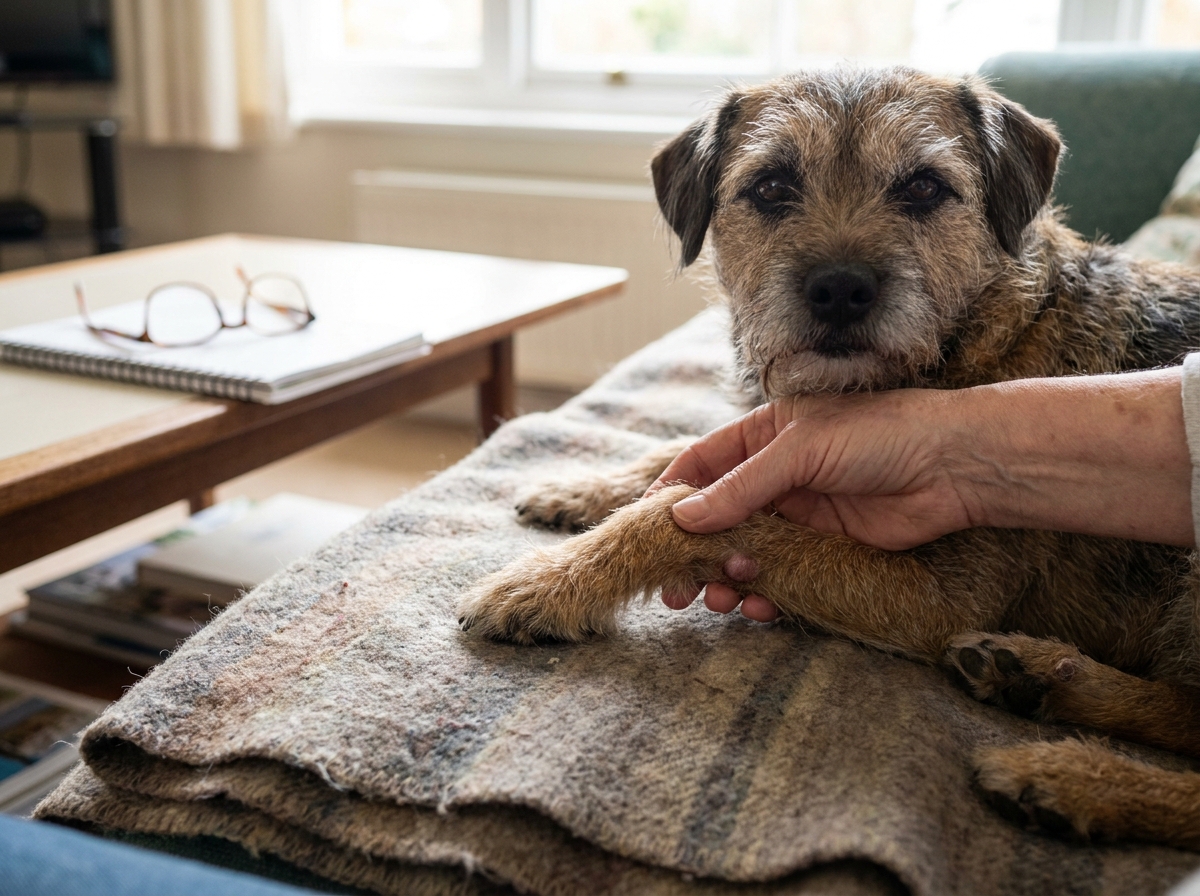
The legs and the paws. Run your hands over each leg, feeling for any lumps, bumps, or swellings. Look at the paws for any redness between the toes, any broken or torn nails, any foreign material (grass awns, foxtails) between the toes. Look at the paw pads for any cuts, abrasions, or growths. The paws are a common site for cuts, abrasions, and inter-digital cysts.
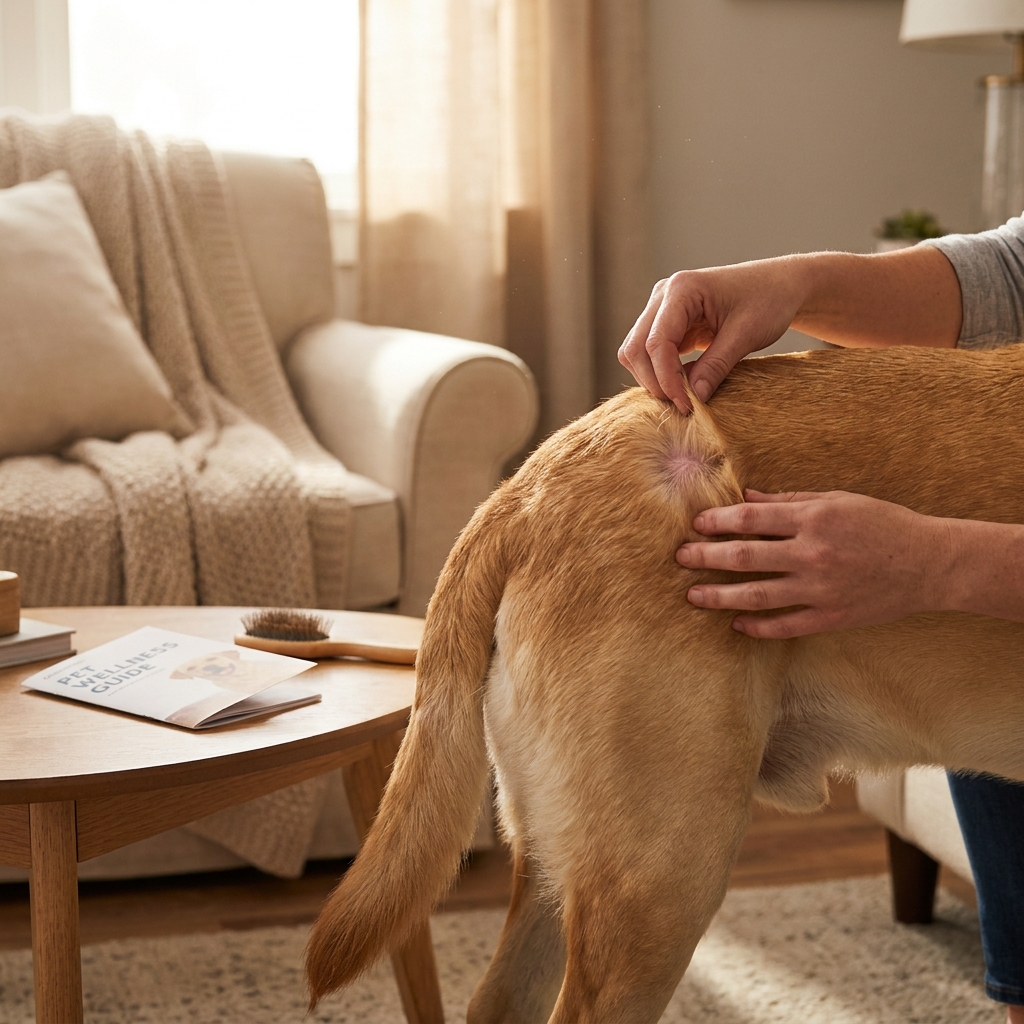
The perineum and the tail. Lift the tail and look at the perineum (the area around the anus). The perineum is a common site for impacted anal glands, perianal fistulas, and perianal tumors. Look at the tail for any hair loss, matting, or skin lesions. The base of the tail is a common site for flea dirt.
The axillary and the inguinal areas. The axillary area (the "armpit") and the inguinal area (the "groin") are common sites for hot spots, skin fold dermatitis, and skin tumors. Lift the pet's legs and look at these areas.
The normal findings and the abnormal findings
The normal findings: the skin is smooth, the coat is shiny, the skin is free of redness, hair loss, flaking, and lumps. The pet does not scratch, lick, or chew at the skin during the check. The ears are clean, the eyes are clear, the nose is moist but not dripping. The gums are pink, the teeth are clean, the breath is not foul.
The abnormal findings: any new lump, bump, or swelling (especially one that is growing or that is not freely movable under the skin), any area of hair loss, any redness or rash, any hot spot (a moist, red, painful area of skin), any crusting or scaling, any odor from the skin or the ears, any discharge from the eyes, the nose, or the ears, any change in the pet's scratching, licking, or chewing behavior. The abnormal findings are the findings that warrant a vet visit or, in the case of a rapidly growing lump or a hot spot, an immediate vet call.
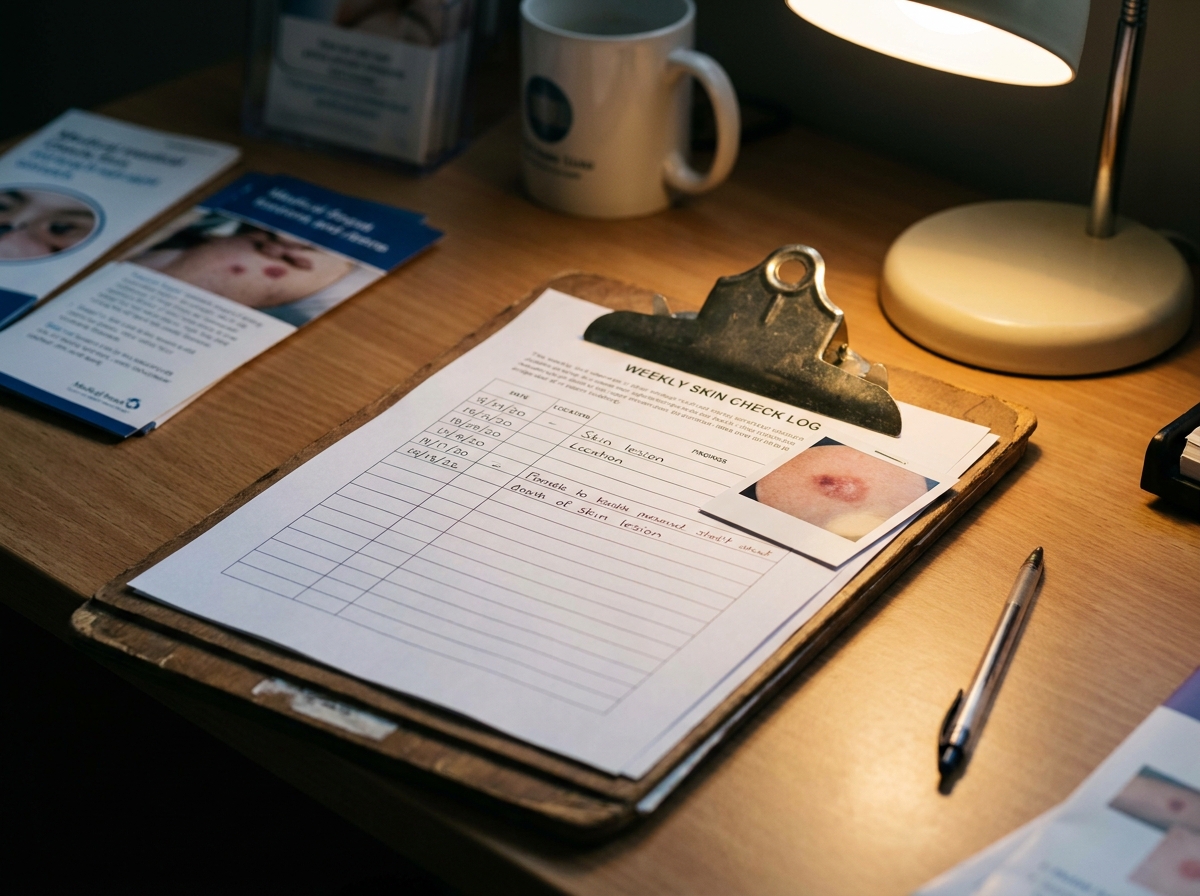
The documentation: the owner who is doing the weekly check is the owner who is also documenting the check. A simple log: the date, the findings, any photos of the abnormal findings. The log is what allows the owner to identify the changes over time, and the log is what allows the vet to see the changes since the last exam.
The cases that warrant an immediate vet call
The cases that warrant an immediate vet call, not a wait-and-see: a rapidly growing lump (especially one that has doubled in size in 2-4 weeks), a hot spot (a moist, red, painful area that the pet is scratching or licking intensely), a sudden and severe rash, any sign of an allergic reaction (facial swelling, hives, vomiting), a sudden and severe hair loss, a sudden change in the skin color (yellow, blue, or pale), any sign of a skin infection that is spreading rapidly, or any finding that the pet is in pain.
The cases that warrant a routine vet visit (not immediate): a small lump that is stable, a small area of hair loss, a mild rash, a chronic but stable skin condition, any finding that has been present for more than 2-4 weeks without significant change. The owner who documents the findings and the timeline is the owner who can present the vet with the information that supports the diagnosis.
The most common findings and what they mean
The most common findings: the small lump on the trunk (lipoma in dogs, sebaceous cyst in cats), the patch of hair loss on the back (flea allergy dermatitis in dogs, psychogenic alopecia in cats), the red moist area on the rump or the thigh (hot spot in dogs, flea allergy dermatitis in cats), the small scab on the head or the neck (a healing scratch, a flea bite, or an early skin tumor), the redness between the toes (inter-digital cyst, atopic dermatitis, or contact dermatitis), the flaky skin on the back (seborrhea, dry skin, or dermatophyte infection).
The owner who finds any of these findings does not need to panic. The owner who finds any of these findings does need to document the finding, monitor the finding weekly, and present the finding to the vet at the next visit (or sooner if the finding is changing rapidly). The vet can diagnose most of the common findings on physical exam, and the vet can perform additional diagnostics (skin cytology, skin scraping, skin biopsy) for the findings that require more workup.
The honest summary
The 5-minute weekly skin check is the most effective skin monitoring tool the owner has. The head-to-tail protocol, the documentation, the recognition of the abnormal findings, the timely vet visit — each of these is a small investment of time that produces a large return in early detection and in successful treatment. The owner who runs the protocol is the owner whose pet has the small lump caught at 2 mm rather than the 2 cm lump that requires aggressive treatment. The owner who does not run the protocol is the owner whose pet has the advanced disease that is harder to treat. The check is the work. The check is what makes the difference.