

End-of-life care and the euthanasia decision: the HHHHHMM scale, the hospice plan, and the goodbye
The euthanasia decision is the hardest decision the pet owner will ever make, and the decision is the decision that the owner wants to make with the best information, the best support, and the best framework. The owner who makes the decision alone, without the information and the support, is the owner who second-guesses the decision for years. The owner who makes the decision with the information, the support, and the framework is the owner who makes the decision with the clear conscience. In this article I will walk through the HHHHHMM scale, the hospice care plan, the decision framework, the euthanasia procedure, the goodbye, the grief, and the resources for the owner who is facing the decision.
The HHHHHMM scale: the structured assessment
The HHHHHMM scale, developed by Dr. Alice Villalobos, is the most widely used quality of life scale in veterinary medicine. The scale evaluates seven domains, each on a 0-10 scale, with a total maximum score of 70. The domains: Hurt, Hunger, Hydration, Hygiene, Happiness, Mobility, More good days than bad. The scale is logged weekly (or more often if the pet is declining rapidly), and the trend is what drives the decision.
The interpretation: a score above 35 means the pet's quality of life is acceptable. A score below 35 means the pet's quality of life is not acceptable. A score that is declining week over week, regardless of the absolute value, is the signal that the pet is declining. A score that is stable is the signal that the pet is stable. A score that is improving is the signal that the pet is responding to the treatment.
The HHHHHMM scale is the data that supports the decision. The owner who logs the score weekly is the owner who has the data to share with the vet, and the owner who has the data is the owner who can make the decision with the information.
The hospice care plan
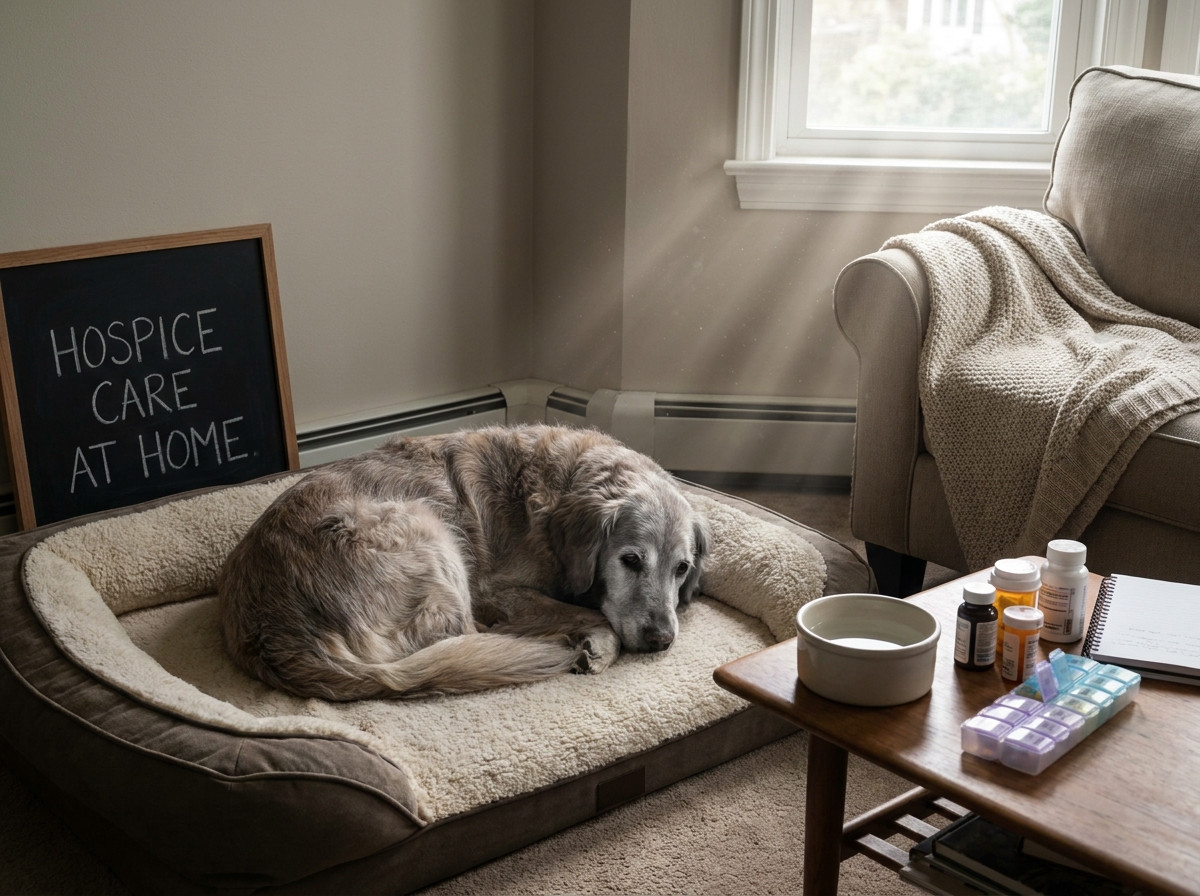
The hospice care plan is the plan for the pet that is in the late stage of a terminal condition, when the cure is not possible but the comfort is. The hospice plan focuses on the comfort, the pain management, the nutrition, the hydration, the hygiene, and the emotional support for the pet and the owner.
The comfort: the pet is kept in a quiet, comfortable, familiar environment. The favorite bed, the favorite blanket, the favorite person. The pet is not subjected to the stressful procedures (the vet visits, the diagnostic tests, the treatments) that are not going to change the outcome.
The pain management: the pain is controlled with the appropriate medications. The pain medications for the hospice pet include the NSAIDs, the opioids (codeine, tramadol, fentanyl patches), the gabapentin, and the other medications that the vet prescribes. The pain management is the most important part of the hospice care, and the pet that is in pain is the pet that is not in a state of acceptable quality of life.
The nutrition: the pet is offered the favorite foods, the high-calorie foods, the foods that the pet will eat. The appetite stimulant (mirtazapine) is used if needed. The syringe feeding is used if the pet is willing to accept the food from the syringe. The feeding tube is considered for the pet that is willing to accept the food from the tube but not from the syringe. The nutrition is the support for the body, and the body that is supported is the body that has the longer survival.
The hydration: the pet is offered the water frequently, the subcutaneous fluids are administered if the pet is dehydrated, the water intake is monitored. The hydration is the support for the kidneys and the circulation, and the pet that is hydrated is the pet that has the better organ function.
The hygiene: the pet is kept clean. The pet that is soiled is bathed, the pet that has the matting is groomed, the pet that has the urine scald is cleaned and the barrier cream is applied. The hygiene is the comfort, and the pet that is clean is the pet that is more comfortable.
The emotional support: the pet is given the attention, the affection, the physical contact that the pet needs. The pet that is at the end of life is the pet that benefits from the human connection, and the human connection is the comfort that the pet can feel.
The decision framework
The decision to euthanize is the decision that the owner makes, and the decision is the decision that the vet supports. The decision is not the vet's decision. The vet provides the medical information, the prognosis, the quality of life assessment, and the options. The owner provides the values, the goals, the willingness to continue the care, and the decision.
The decision is the most personal decision, and the decision is the decision that no one can make for the owner. The owner who has the HHHHHMM data, the vet's assessment, the hospice plan, the support of the family, and the time to make the decision is the owner who is in the best position to make the decision. The owner who is rushed, who is alone, who is uninformed is the owner who is not in the best position.
The questions to ask before the decision: is the pet in pain that cannot be controlled? Is the pet still eating and drinking? Is the pet still able to do the things that the pet enjoys? Is the pet still responsive to the family? Is the pet having more bad days than good? Is the owner able to provide the care that the pet needs? Is the owner able to afford the care that the pet needs? The answer to most of these questions is the signal that the time is approaching, and the answer to all of these questions is the signal that the time is now.
The "better a week too early than a day too late" principle. The owner who waits until the pet is in the obvious distress is the owner who has waited too long. The pet that is euthanized when the pet still has some good days is the pet that is euthanized with the dignity. The pet that is euthanized when the pet is in the obvious distress is the pet that is euthanized after the suffering. The principle: better a week too early than a day too late.
The euthanasia procedure
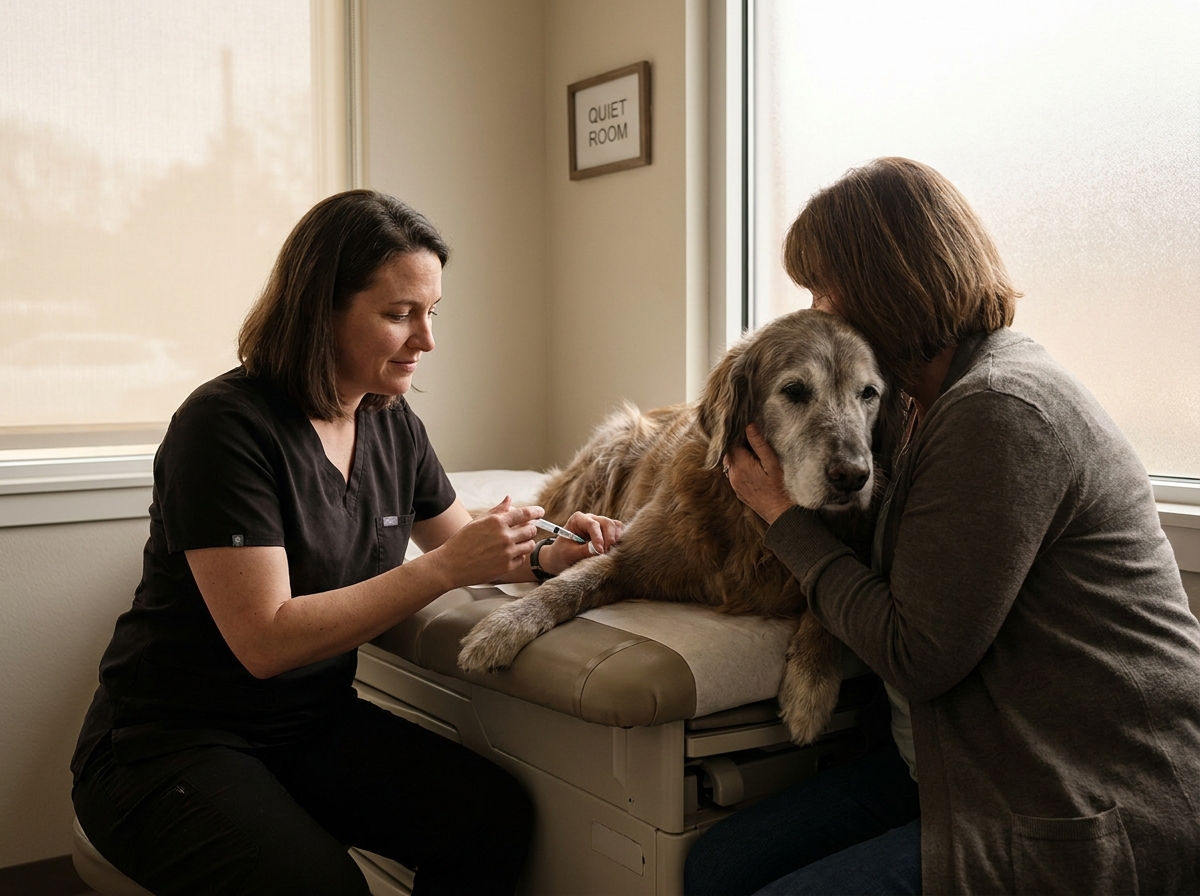
The euthanasia procedure is the procedure that the vet performs, and the procedure is the procedure that is designed to be the peaceful, the painless, the dignified. The owner should know what to expect, and the owner should be prepared for the experience.
The preparation: the owner decides whether to be present. The owner who wants to be present is the owner who says goodbye in person, and the owner who does not want to be present is the owner who says goodbye before the procedure. Both choices are valid, and the vet supports both.
The pre-euthanasia: the owner is given the time to spend with the pet before the procedure. The pet is given the favorite treats, the favorite toys, the time with the family. The pre-euthanasia is the goodbye, and the goodbye is the part that the owner remembers.
The procedure: the vet places an IV catheter (or uses the existing IV if the pet has one), the vet administers the euthanasia solution (the pentobarbital or the pentobarbital combination), the pet falls asleep within seconds, and the pet passes within 1-2 minutes. The procedure is painless, and the pet does not experience the distress.
The aftercare: the owner decides on the aftercare. The options: the home burial (where legal), the pet cemetery burial, the cremation (the private cremation with the ashes returned, the communal cremation without the ashes returned). The vet provides the aftercare options, and the vet can often arrange the aftercare for the owner.
The goodbye
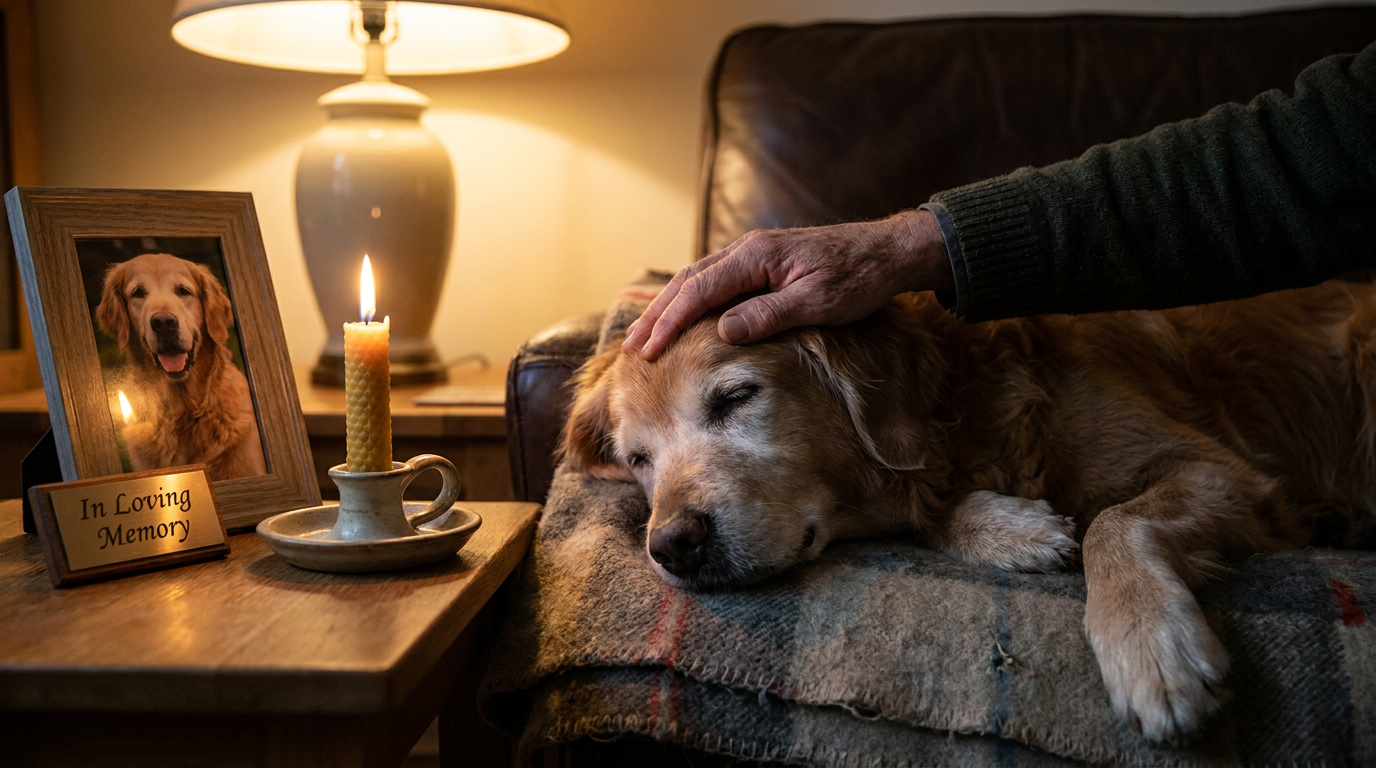
The goodbye is the part that the owner remembers, and the goodbye is the part that the owner needs to do in the way that the owner needs to do it. The goodbye can take many forms: the verbal goodbye, the written goodbye, the photo, the last walk, the last meal, the last time on the favorite bed. The owner who does the goodbye in the way that the owner needs to do it is the owner who has the closure.
The children in the household: the children should be told the truth (the pet is dying, the pet is being helped to die, the pet will not be coming back), and the children should be given the chance to say goodbye. The children who are not told the truth are the children who develop the anxieties, the fears, and the unresolved grief. The children who are told the truth and given the chance to say goodbye are the children who develop the healthy grief.
The other pets in the household: the other pets often show the signs of the grief (the loss of appetite, the lethargy, the searching behavior, the changes in the routine). The other pets that are allowed to see the deceased pet and to sniff the body are the other pets that often resolve the grief faster. The other pets that are not allowed to see the deceased pet are the other pets that may search for the deceased pet for days or weeks.
The grief
The grief is the normal response to the loss, and the grief is the response that the owner should not suppress. The owner who is grieving is the owner who is processing the loss, and the owner who is processing the loss is the owner who is healing. The owner who is suppressing the grief is the owner who is delaying the healing.
The stages of the grief: denial, anger, bargaining, depression, acceptance. The stages are not linear, and the stages are not predictable. The owner who is in the denial stage is the owner who is not yet accepting the loss. The owner who is in the anger stage is the owner who is angry at the pet for dying, at the vet for not saving the pet, at the family for not understanding. The owner who is in the bargaining stage is the owner who is bargaining with the higher power for the pet to come back. The owner who is in the depression stage is the owner who is feeling the loss. The owner who is in the acceptance stage is the owner who is integrating the loss into the life.
The resources for the grief: the pet loss support groups (in person and online), the pet loss counselors, the books on the pet loss, the online communities (the Reddit r/petloss, the various pet loss forums). The owner who is grieving should not be alone, and the owner who is grieving should reach out for the support.
The other pets in the household: the decision about when to get the next pet is the personal decision. The owner who gets the next pet immediately is the owner who is not grieving. The owner who waits months or years is the owner who is grieving. The right time is the time that the owner is ready, and the owner should not be pressured by the family or the friends.
The most important sentence in this article
The euthanasia decision is the hardest decision the owner will ever make, and the decision is the decision that is made with the HHHHHMM data, the hospice plan, the vet's support, and the family's input. The owner who makes the decision with the information is the owner who makes the decision with the clear conscience. The owner who makes the decision alone is the owner who second-guesses the decision. The framework is the support. The framework is what makes the difference.