

Xylitol Toxicity in Dogs vs Cats: What Pet Owners Need to Know
Xylitol shows up in more products than most people realize — sugar-free gum, peanut butter, baked goods, toothpaste, "natural" chewable vitamins, even some peanut butter brands marketed as healthy. For dogs, even a small amount can trigger a life-threatening drop in blood sugar within minutes, and a larger dose can cause acute liver failure. Cats, by contrast, almost never ingest enough to cause problems, and the toxic dose appears to be substantially higher.
This article explains the actual mechanism, the dose thresholds we use in the ER, what to do at home in the first 30 minutes, and exactly when to escalate.
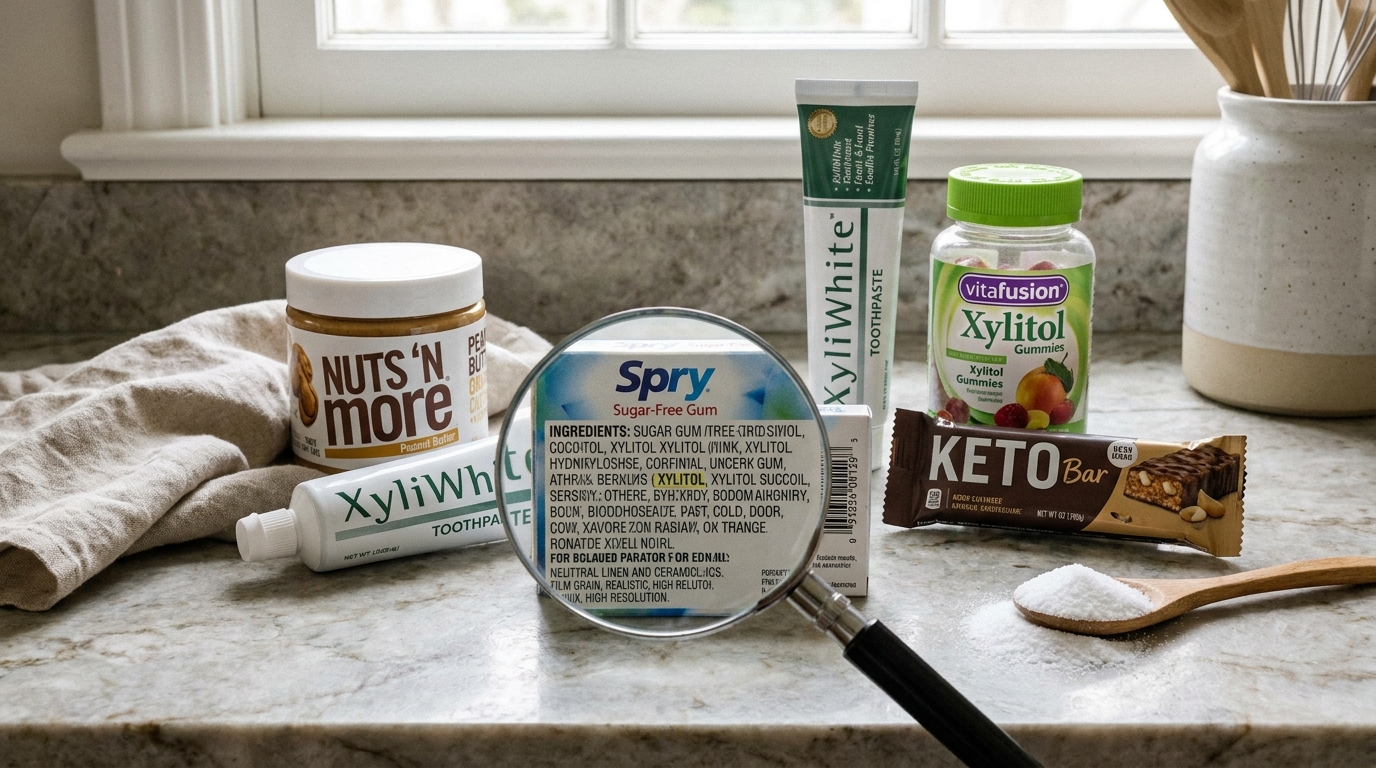
What xylitol actually is and where it hides
Xylitol is a five-carbon sugar alcohol used as a sweetener. It occurs naturally in small amounts in fruits and vegetables, but the commercial product is industrially produced from birch or corn biomass. It has about 2.4 kcal per gram (about 60% the calories of table sugar), a low glycemic index, and documented dental anti-caries properties — which is why it has become a default sweetener in "sugar-free" products.
In the United States, the FDA does not require xylitol to be flagged in the ingredient list with any special warning, so a product labeled simply "sweetened with sugar alcohol" can contain it. Common hiding places:
- Sugar-free gum and mints — the classic source. One piece of gum can contain 0.3–1.0 g of xylitol.
- Peanut butter and nut butters — many "no sugar added" brands use xylitol. Always check the label.
- Baked goods — keto, low-carb, and diabetic-friendly cookies, muffins, and protein bars.
- Toothpaste and mouthwash — both human and some pet dental products.
- Chewable medications and supplements — gummy vitamins, melatonin chews, probiotic gummies.
- Sugar-free puddings, jellies, and ice creams.
- Some "natural" sweetener packets sold for coffee and baking.
If you share human food with a dog, or if a dog can counter-surf, every one of these categories is a risk.
Why dogs react so severely
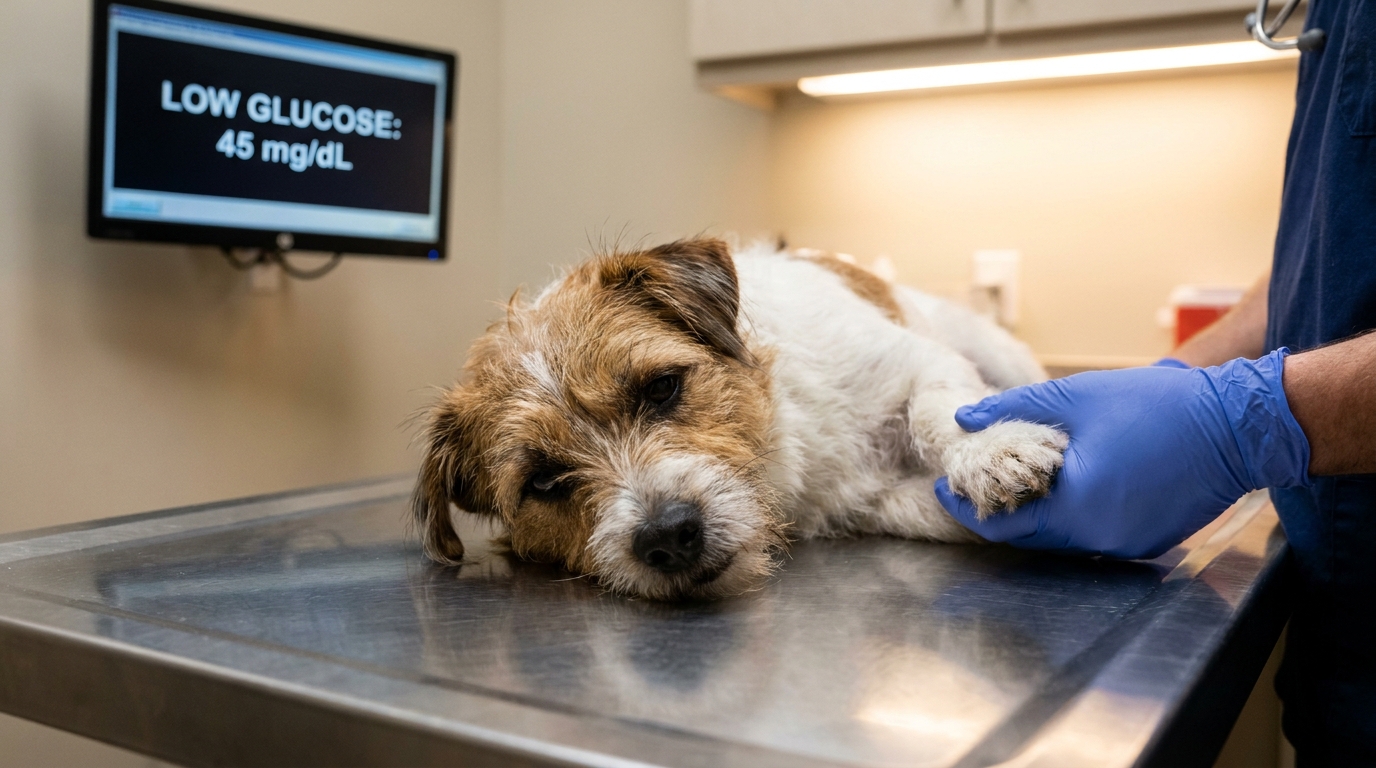
Dogs absorb xylitol rapidly from the small intestine. Within minutes, xylitol stimulates the pancreatic beta cells to release a large pulse of insulin — far more than the actual glucose load warrants. Blood glucose then crashes. In a 10-kg dog, hypoglycemic seizures can begin as early as 10–15 minutes after ingestion, and full collapse can follow within 30–60 minutes.
In addition, at higher doses xylitol appears to be directly hepatotoxic. The mechanism is not fully mapped, but adenosine triphosphate depletion and oxidative injury to hepatocytes are the leading theories. Liver values can begin to rise at 8–12 hours, and fulminant hepatic failure can develop over 24–72 hours, sometimes even when the initial hypoglycemic episode was mild.
Toxic dose thresholds in dogs
These are the published ranges used in veterinary toxicology. They are conservative and intended to trigger veterinary evaluation, not to predict individual outcomes.
- 0.05 g/kg (50 mg/kg): the lowest dose reported to cause hypoglycemia. A 10-kg dog eating a single piece of gum at the lower end (~0.3 g) is in this range.
- 0.1 g/kg (100 mg/kg): clear hypoglycemia risk. Vomiting may precede the sugar crash.
- 0.5 g/kg (500 mg/kg): significant risk of acute hepatic necrosis. The threshold is the one we plan treatment around — at or above this dose, we monitor liver enzymes for 72 hours and start hepatoprotectants.
A quick mental model: one piece of sugar-free gum with 1 g of xylitol can be fatal to a 5-kg dog.
Why cats are at lower risk — but not zero
Cats are obligate carnivores with a strong neophobic response to novel sweet tastes. They lack a functional sweet-taste receptor (the Tas1r2 gene is a pseudogene in domestic cats), so they generally will not voluntarily eat xylitol-sweetened food. Case reports of feline xylitol toxicosis are rare, and the experimentally documented hypoglycemic dose in cats is roughly 5–10× higher than in dogs on a per-kg basis.
That said, "lower risk" is not "no risk." We have seen cats in the ER for xylitol exposure after drinking a xylitol-sweetened protein shake the owner left on a nightstand, or after chewing the cap of a toothpaste tube. A cat that does ingest a meaningful amount should be treated as a genuine emergency, not waved off.
First aid at home: the first 30 minutes
If you witness or strongly suspect xylitol ingestion in a dog, do these four things in order.
- Remove the source. Take the package away, wipe out the mouth if there is residual product, and prevent access to anything else. Do not spend more than 30 seconds on this.
- Estimate the dose. Look at the package, find the xylitol content per piece or per gram, and weigh the dog. A 10-kg dog that ate 5 g of xylitol is in a very different risk category from a 30-kg dog that ate 1 g.
- Do not induce vomiting at home unless a vet specifically tells you to. Hydrogen peroxide at home doses is unpredictable in dogs, and if the dog is already becoming hypoglycemic, aspiration is a real risk. Activated charcoal does not bind xylitol well. The fastest correct action is transport.
- Call the ASPCA Animal Poison Control Center (888-426-4435; fee applies) or Pet Poison Helpline (855-764-7661) en route to the clinic. Have the package in your hand when you call. The toxicologist can calculate the dose and tell the ER team exactly which protocol to prep.
If the dog is collapsed or seizing, skip the phone call and go directly to the nearest emergency clinic.
What to expect at the ER
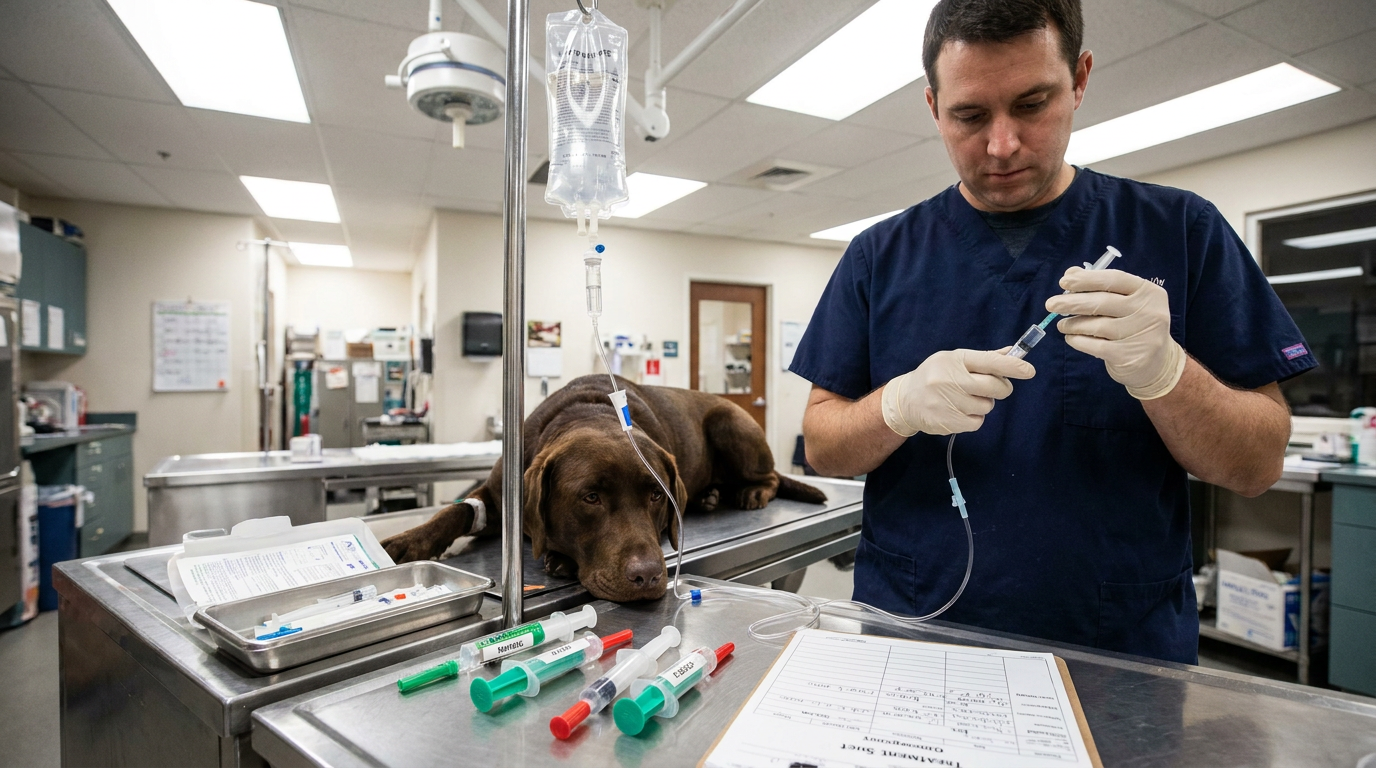
A confirmed or suspected xylitol ingestion at >0.1 g/kg usually triggers a 24–72 hour hospitalization. The standard protocol:
- Blood glucose checked on arrival and every 1–2 hours for the first 12 hours. If glucose drops below 60 mg/dL, we start a dextrose CRI — typically D5% in crystalloids titrated to keep glucose in the 80–120 mg/dL range, or a D50W bolus of 0.5–1 mL/kg IV in acute collapse.
- Baseline bloodwork including CBC, full chemistry, and coagulation panel. We recheck liver enzymes (ALT, ALP, bilirubin, GGT) at 12, 24, and 48 hours.
- Hepatoprotectants at doses above 0.5 g/kg: N-acetylcysteine 140 mg/kg IV loading, then 70 mg/kg IV q6h for 7 doses, plus S-adenosylmethionine (SAMe) 20–40 mg/kg PO once daily on an empty stomach.
- Antiemetic if vomiting: maropitant (Cerenia) 1 mg/kg SC once daily, or ondansetron 0.5–1 mg/kg IV q8h.
- Gastroprotectant for any dog with a meaningful dose: omeprazole 1 mg/kg PO q12h or pantoprazole 1 mg/kg IV q12h.
- Monitoring for coagulopathy — liver failure can produce DIC, so we check PT/PTT at 24 and 48 hours.
Most dogs that reach a vet in time survive. The ones that do not are typically the dogs that were "put to bed to sleep it off" and arrived 12+ hours later in fulminant liver failure.
When to escalate: clear red flags
Go to the emergency clinic immediately if any of the following are true:
- Any known or probable xylitol ingestion in a dog, regardless of dose. Phone triage has too high a miss rate.
- Estimated dose above 0.1 g/kg in a dog.
- Any dose in a cat with observed ingestion.
- Vomiting, lethargy, ataxia (wobbliness), or collapse within 4 hours of suspected exposure.
- Seizures or loss of consciousness — these are immediately life-threatening.
- Yellowing of the gums, sclera, or inner ear at any point in the 72-hour window — this signals hepatic crisis.
Do not wait for symptoms. Hypoglycemia can outrun your ability to drive to a clinic, and liver damage may be silent for the first 12 hours.
Prevention: a household sweep you can do today
A small, deliberate pass through the kitchen and bathroom prevents almost every xylitol case we see.
- Read every "sugar-free," "keto," "low-carb," and "no sugar added" label in the house. If xylitol is in the ingredient list, lock it in a high cabinet.
- Audit your peanut butter. Several mainstream brands in North America now include xylitol. The brands that have, at various times, included it include some "natural" and "no sugar added" lines from large grocers and a few specialty nut butter companies. Check the label each time you buy, because formulations change.
- Lock the bathroom cabinet. Toothpaste, mouthwash, and chewable vitamins belong behind a child lock in any home with a counter-surfing dog.
- Do not leave protein shakes, smoothies, or baked goods on low tables. Dogs get to them.
- Educate house guests. A visiting relative who leaves gum in a purse on the floor is a classic exposure route.
- For cat households, the risk is lower, but the same sweep is still worth doing — particularly if you have a curious young cat.
The bottom line
For dogs, xylitol is a true emergency. The hypoglycemic phase is fast, dramatic, and reversible if you get to a vet within the first 1–2 hours. The liver phase is slower, quieter, and far more dangerous. For cats, the practical risk is much lower because cats do not seek out sweet foods, but ingestion of a meaningful amount is still a reason to call the poison hotline and head to the clinic.
If you take one thing from this article, let it be this: any suspected xylitol ingestion in a dog is a "go now" event, not a "wait and see" event. Save the ASPCA Animal Poison Control number (888-426-4435) in your phone before you need it.
---
Dr. Sofia Martinez is an emergency and surgical veterinarian. This article is for educational purposes and is not a substitute for direct veterinary care. If you suspect your pet has ingested xylitol, contact your nearest emergency clinic or the ASPCA Animal Poison Control Center immediately.