


Cutaneous adverse food reaction (CAFR) is the third most common cause of allergic skin disease in dogs and a leading non-flea, non-environmental trigger in cats. Despite being common, it is consistently underdiagnosed, because the only reliable test is a strict feeding trial followed by a controlled challenge. Serum IgE panels and intradermal food tests have poor sensitivity and specificity and should not be used to make or rule out the diagnosis. If you are reading this, you are probably about to run — or are mid-way through — the gold standard. This guide walks you through every step.
Who Needs an Elimination Diet Trial: Triage Criteria
Before committing 8 weeks of feeding discipline, confirm the pet fits the clinical picture. CAFR should be strongly suspected when any of the following are present:
- Non-seasonal pruritus that has not improved with 4–6 weeks of strict flea control and environmental management
- Perineal, inguinal, axillary, or facial erythema with self-trauma (dogs), or head-and-neck pruritus with eosinophilic plaques (cats)
- Concurrent gastrointestinal signs: soft stool, increased frequency, or borborygmus in 10–30% of CAFR cases
- Age of onset under 1 year or sudden onset in an adult with no environmental change
- Partial or no response to allergen-specific immunotherapy after 6 months
- Concurrent otitis externa that recurs within 2 weeks of stopping topical therapy
If two or more of these criteria are met, run the trial. If only one is present but pruritus is severe and non-seasonal, run it anyway — the cost of a missed CAFR diagnosis is years of chronic medication.
Choosing the Protein: Novel vs Hydrolyzed
You have two evidence-supported options. Novel protein diets use a single carbohydrate and protein source the pet has never eaten (rabbit, venison, kangaroo, alligator, or horse paired with sweet potato or green pea). Hydrolyzed protein diets break the source protein into peptides under ~10 kDa, theoretically too small to cross-link IgE on mast cells.
Decision rules I use in practice:
| Patient profile | Preferred option |
|---|---|
| Young animal, limited diet history | Novel protein (cheaper, more palatable) |
| Pet has eaten many protein sources already | Hydrolyzed (less risk of cross-reactivity) |
| Concurrent IBD or severe enteropathy | Hydrolyzed (better digestibility) |
| Finicky eater, feline patient | Novel protein (hydrolyzed kibble is often refused) |
| Owner cannot reliably read every label | Hydrolyzed (single product, no ingredient math) |
Whichever you choose, home-cooked novel diets are not validated as a stand-alone test, because unmeasured ingredients and mineral imbalances introduce confounders. Use a commercial product with published ingredient composition.
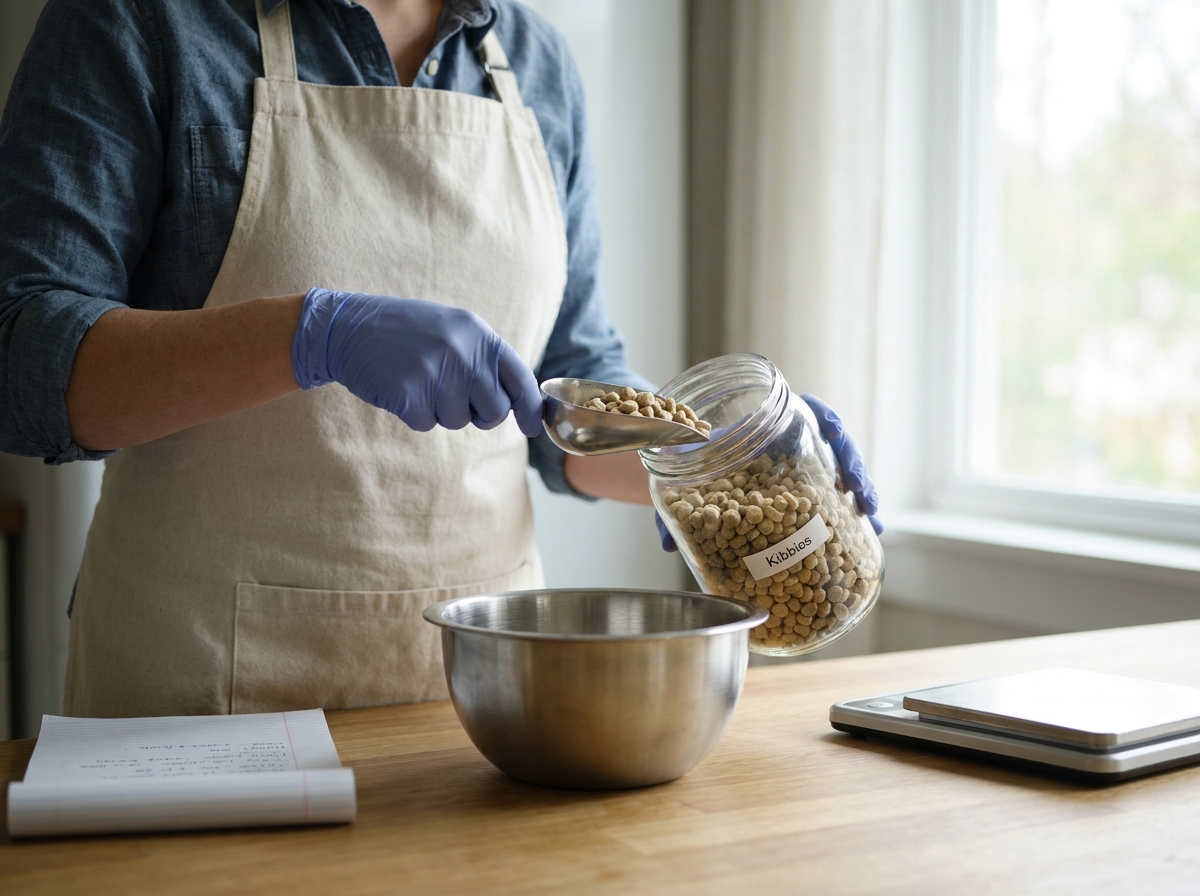
The Strict 8-Week Protocol
Strict means strict. The most common reason a trial fails is a single stolen treat, a flavored medication, or a lick of the other pet's bowl.
Permitted during the trial:
- The chosen elimination food, measured to maintenance calories
- Plain water
- Approved non-flavored medications, given with a small amount of the elimination food
Not permitted:
- Treats, chews, dental sticks, rawhides, flavored toothpastes
- Table food of any kind
- Flavored preventives (some heartworm and tick products are beef or chicken flavored — switch to unflavored)
- Access to other pets' food bowls
- Flavored supplements, omega-3 chews, probiotic pastes that contain chicken or fish
Divide the daily ration into 3–4 meals to reduce scavenging-driven frustration. For multi-pet households, feed the trial pet in a separate room or behind a baby gate. For cats, remove access to kitchen counters and table scraps by confining the cat during human meals.
Managing Pruritus During the Trial
Most owners will not tolerate 8 weeks of an itchy pet. Plan a rescue protocol at the start so compliance holds. None of the medications below cross-react with the dietary antigen, so they do not invalidate the trial.
- Oclacitinib (Apoquel): 0.4–0.6 mg/kg PO q12h for up to 14 days, then taper to q24h. Safe to use long term if needed during the trial. Avoid in dogs under 12 months.
- Lokivetmab (Cytopoint): 2 mg/kg SC as a single dose, repeat every 4 weeks. Works in ~80% of atopic dogs, slightly lower in pure food-allergy cases.
- Prednisolone (rescue only if Apoquel/Cytopoint unavailable): 0.5 mg/kg PO q24h for 7 days, then 0.25 mg/kg q48h. Taper to the lowest effective alternate-day dose. Steroids do not interfere with the trial but can mask secondary infections, so examine the skin before prescribing.
- Antihistamines (adjunct, modest effect): diphenhydramine 2 mg/kg PO q8–12h, or hydroxyzine 2 mg/kg PO q12h. Sedation is the main side effect; efficacy is <30% as monotherapy.
Secondary bacterial or yeast infections should be treated with topical chlorhexidine 2–4% or miconazole-chlorhexidine shampoo every 3–7 days. Oral antibiotics or antifungals do not invalidate the trial but should be documented in the record.

The Challenge Phase: Confirming the Diagnosis
If pruritus has dropped by ≥50% on a validated visual analog scale by week 8, the pet is a trial responder. Do not stop here — you still need to confirm the offending antigen.
- Reintroduce the previous diet in its original form, suddenly, over 3–5 days. Add the old protein source back as a topper or mixed in.
- Watch for relapse over the next 14 days. A return of pruritus within 7–14 days is a positive challenge and confirms CAFR.
- If pruritus returns, switch back to the elimination food and wait 2–4 weeks for the skin to settle.
- Single-antigen rechallenges: introduce one previous protein (chicken, beef, dairy, wheat, soy, egg) every 2 weeks. Whichever triggers the relapse is the offender.
Many owners stop at step 1, which is acceptable for management but not for full identification. If you can persuade the owner to do the rechallenges, you can move the pet to a rotation diet that includes safe proteins, which is nutritionally more sustainable long term than a single hydrolyzed product for life.
When to Escalate: Stop the Trial and Recheck
Most trials run smoothly, but call the clinic or re-examine the patient early if any of the following occur:
- Worsening pruritus or new pustules, oozing, or crusting at any point — this is secondary pyoderma or a misdiagnosis (scabies, demodicosis), not a CAFR failure.
- Vomiting, diarrhea, or inappetence lasting more than 48 hours on the elimination diet — may indicate a dietary intolerance rather than an allergy, or a separate GI disease.
- No improvement at all by week 6 — review the household for accidental exposure before week 8. If none found, reconsider the diagnosis entirely.
- Improvement then sudden flare during the trial — strongly suggests a hidden protein source; perform a label audit of every product the pet touches.
- Weight loss exceeding 10% of body weight — recheck caloric intake; elimination diets are often calorie-dilute.
Common Pitfalls and How to Avoid Them
Three mistakes account for the majority of "failed" trials:
- The flavored preventive. Heartworm, tick, and joint supplements are the #1 cause of accidental exposure. Switch to a tablet or non-flavored topical at least 2 weeks before starting the trial and keep it switched for the full 8 weeks.
- The "just a little" treat. A single 1-cm cube of chicken breast contains enough intact protein to trigger a sensitive dog. Owners who cannot enforce zero-treat rules should board the pet or hand off feeding entirely to one household member.
- The flavored medication. Antibiotic suspensions, prednisolone syrups, and many compounded liquids are beef- or fish-flavored. Check with the pharmacy and request an unflavored suspension or a tablet/capsule formulation.
Putting It All Together
A well-run 8-week trial answers the question serum tests cannot: does this pet have a food allergy, and if so, to what? It is cheap, it is diagnostic, and it is the only path to long-term nutritional management without lifelong immunosuppression. Pick the protein, plan the rescue medications at the start, document the rules in writing for the owner, and schedule a 2-week and 6-week check-in to catch accidental exposures early. At week 8, you will either have a confirmed CAFR diagnosis and a clear management plan, or you will have ruled out food and can focus the workup on atopic dermatitis, flea allergy, or a primary keratinization disorder.